

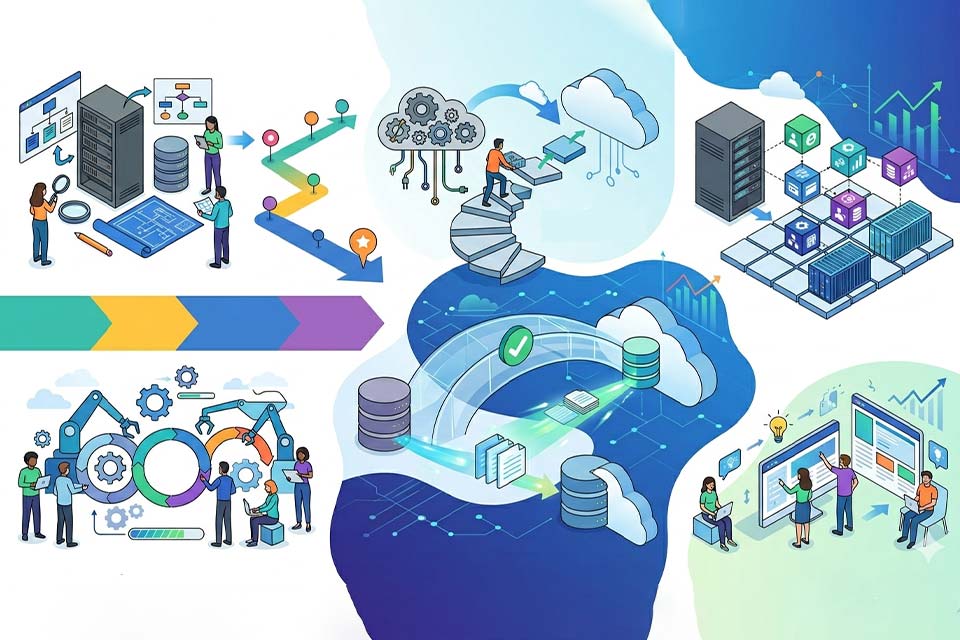
Although digital technologies are evolving rapidly, legacy systems still form the backbone of many modern enterprises. These systems, many of which were built decades ago, still support mission-critical operations across industries such as banking, healthcare, manufacturing, retail, and government.
Legacy infrastructure continues to run large volumes of daily business activities, ranging from enterprise resource planning (ERP) platforms to customer databases and financial transaction systems. These systems were once the state of the art, but many organizations are struggling to make them work in today’s fast-paced environment of agility, scale, and digital innovation. This growing challenge has put CIO strategies for modernization at the center of enterprise transformation initiatives.
Legacy systems still exist mainly because they’re so deeply embedded in core business operations. It can be very expensive, very time-consuming, and very risky to replace them totally. In many cases, these systems have been customized over the years to meet unique organizational requirements, which makes migration even more complex.
Furthermore, legacy platforms often hold important historical data and support workflows that businesses depend on every day. That leads organizations to often stick with legacy systems rather than disrupt business with massive replacements. Thus, effective CIO strategies must balance the need for innovation with the realities of operational dependency.
But the pressure to transform digitally has increased dramatically in recent years. Businesses are expected to offer seamless digital experiences, real-time analytics, cloud-based services, and AI-driven capabilities. Customers want to interact faster, employees want modern collaboration tools, and competitors keep adopting advanced technologies that increase efficiency and responsiveness. Legacy systems often lack the flexibility to support these modern requirements, creating barriers to innovation and hindering organizational growth. That has forced enterprises to rethink their IT environments and look at modernization initiatives as a priority within the overall business transformation goals.
If organizations wait to modernize, they risk significant operational and financial exposure. Legacy systems are prone to cybersecurity threats, compliance challenges, and performance failures. Many legacy platforms also demand specific maintenance skills that are becoming harder to find in today’s workforce. As technical debt grows, maintenance costs increase, and businesses have less to invest in innovation. Also, companies that don’t modernize may find it hard to compete in increasingly digital markets where speed, agility, and customer experience are key differentiators. Such challenges underline the need for CIOs to adopt proactive strategies to ensure long-term business resilience.
While modernization is necessary, enterprises can’t afford to be broadly disrupted during transformation initiatives. Financial loss, customer dissatisfaction, and reputational damage may result from system downtime, data migration failures, and operational interruptions. Business continuity is therefore one of the most important considerations in modernization efforts. A successful transformation requires a phased, well-managed approach to upgrading infrastructure, while keeping operations running smoothly. Great CIO strategies don’t just look at what new technologies they want to adopt, but also how they can minimize risk and maintain stability in the transition.
One of the defining leadership challenges for CIOs today is modernizing legacy systems without disruption. They must simultaneously drive innovation, improve operational efficiency, strengthen security, and maintain business continuity in an increasingly complex IT environment. This balancing act requires strategic planning, organizational alignment, and long-term vision. The best CIO strategies are those that allow enterprises to modernize incrementally, integrate new technologies seamlessly, and remain competitive while maintaining operational reliability.
Understanding Legacy Systems in Enterprise IT
Legacy systems continue to form a foundation of enterprise IT environments worldwide. As cloud computing, AI, and digital-first business models become more popular, many organizations still rely on technologies that are decades old to support critical functions. They are often deployed to manage vital processes, including financial transactions, inventory management, customer information, supply chain logistics, and regulatory reporting.
With the rapid pace of digital transformation initiatives, it has become more important to understand the value and limitations of legacy infrastructure. Today’s tech leaders must craft smart CIO strategies around legacy modernization to strike a balance between innovation and operational continuity.
What Are Legacy Systems?
Legacy systems are older technology infrastructures, applications, software platforms, and databases that are still actively used in an organization. These systems were often built years or even decades ago, and were built to solve business requirements that existed at the time. While they may no longer meet modern technological standards, they still support essential operations due to their reliability and deep integration into enterprise workflows.
Legacy environments could include on-premises enterprise resource planning (ERP) systems, mainframe computers, older customer relationship management (CRM) platforms, and legacy database architectures. Many organizations also have legacy applications that have been heavily customized over the years, making them hard to replace or migrate without significant disruption. Considering the complexity and scale of their work environments, legacy systems are still prevalent in some industries like banking, healthcare, manufacturing, telecommunications, and government.
These industries often work with legacy infrastructure, and that infrastructure forms the backbone of mission-critical activities that cannot afford to go down. For example, financial institutions may still use mainframe systems to process millions of transactions a day in a secure and reliable way. Likewise, health care organizations often run on legacy platforms that house sensitive patient data and enable clinical workflows. Before modernization efforts can take off, it’s critical that effective CIO strategies understand how these systems support the overall business operations.
Why Legacy Systems Persist?
The trend for modernization is on the rise, but legacy systems still exist for several tactical and strategic reasons. One big reason is the expense of replacing infrastructure that supports the entire enterprise. Massive modernization projects usually involve significant investments in software, hardware, migration services, workforce training, and process redesign. In many organizations, the financial and operational risks of replacement outweigh the short-term benefits.
Legacy systems persist in part because they are so tightly integrated with core business processes. Organizations have customized these systems over the years to support unique workflows, compliance needs, and operational processes. Replacing them could create major challenges in terms of interoperability, data migration, and process continuity. And many companies are deciding to keep existing infrastructure, building modernization initiatives on top of it over time.
Legacy systems are also kept alive by regulatory and compliance dependencies. Industries like finance, healthcare, and government are subject to strict regulatory regimes where stable, auditable, and secure systems are a requirement. Companies are often wary of introducing disruptive changes because compliance is often already validated on older platforms. In addition, these systems may have years of experience with employees and IT teams, creating institutional familiarity and dependence on the workforce that can slow the pace of modernization.
Legacy systems are also known to be dependable. Many have worked non-stop for years with little interruption, instilling a sense of operational confidence in organizations. Some aspects of the systems are a bit old, but they are often very stable and can handle large transaction volumes. Hence, CIO strategies should take into account not only the technological constraints, but also the trust the organization has in the current systems.
The Modernization Imperative
Legacy systems are still doing important things, but the push for modernization has gotten a lot more stronger in the last few years. Customers are demanding more frictionless digital experiences, real-time services, and personalized interactions across multiple channels. Companies that rely exclusively on legacy infrastructure find it difficult to live up to these expectations and are therefore unable to compete in digital markets.
At the same time, many enterprises are adopting cloud-first business strategies to enhance scalability, agility, and operational efficiency. Cloud platforms enable faster deployment, lower infrastructure costs, and improved collaboration. But legacy systems are often not compatible with modern cloud-native environments, thereby creating barriers to transformation. Modernization has become a prime focus for enterprise CIOs.
Organizations also want to embed artificial intelligence, machine learning, and advanced analytics into their operations. These technologies require modern data architectures and real-time processing capabilities that older systems may not support well. If businesses don’t modernize, they risk losing out on automation, predictive insights, and innovation.
Cybersecurity concerns exacerbate the need for transformation. Older systems can be more vulnerable to cyber threats because they may lack regular security updates or support. As cyberattacks become more sophisticated, organizations need to modernize their infrastructure to strengthen resilience and stay ahead of the curve on security standards. CIOs, therefore, incorporate forward-looking strategies that build flexible, secure, and scalable IT environments to support long-term business growth while minimizing operational disruption.
Risks Associated With Legacy Systems
Legacy systems remain essential for supporting critical enterprise operations, but their continued use poses significant risks that can impact performance, security, financial stability, and competitiveness. But as companies increasingly turn to digital technologies for growth and innovation, aging infrastructure can be an obstacle to transformation.
Without modernizing their IT environments, organizations will face operational disruptions, increased costs, and a lack of market agility. This has made it critical for CIOs to implement proactive strategies for detecting and preventing the risks associated with aging enterprise systems.
1. Risks in operation
One of the most pressing issues with legacy systems is operational instability. Older infrastructure faces a greater risk of system downtime, unexpected outages, and performance failures due to aging hardware, unsupported software, and limited vendor support.
Even minor disruptions can have serious implications for enterprises that rely on around-the-clock system availability for customer transactions, supply chains, financial reporting, and internal workflows. As such, effective CIO strategies will need to incorporate a focus on operational continuity and how to overcome the limitations of outdated technology environments.
Legacy systems also constrain an organization’s agility and scalability. The traditional platforms were not built to handle today’s fast-changing business requirements, making it hard for businesses to react quickly to market shifts or customer demands. When adding new applications or rolling out digital capabilities or expanding services, it often involves a lot of customization or manual intervention. Such inflexibility hampers innovation and impairs organizations’ ability to adapt to new opportunities.
Another major operational challenge is the inability to interact with modern applications and cloud-based platforms. Legacy systems are often built with obsolete architectures and proprietary technologies that are incompatible with modern software environments. As businesses adopt AI, automation, analytics, and cloud services, integration gaps can create inefficiencies and fragmented workflows. Effective CIO strategies are critical in enabling a more seamless interface between legacy infrastructure and modern digital ecosystems.
2. Security and Compliance Issues
Security vulnerabilities are among the most serious risks of legacy systems. Older software and infrastructure may not be regularly updated or patched for security vulnerabilities, leaving organizations vulnerable to cyberattacks, malware, ransomware, and data breaches. Threat actors often target legacy systems because they are known to be vulnerable and easier to exploit. In heavily regulated industries, a single breach can result in significant financial penalties and reputational damage.
Another increasing challenge for organizations operating legacy environments is compliance with modern requirements. The regulatory landscape for data privacy, cybersecurity, financial reporting, and industry governance is changing rapidly. Modern compliance controls, auditing processes, and reporting requirements may not be supported by legacy systems. As a result, enterprises may find it difficult to maintain regulatory alignment while managing legacy infrastructure. CIOs’ holistic approaches enable organizations to revamp security paradigms and bolster compliance preparedness.
Legacy environments also complicate data privacy and governance issues. Many legacy systems were not built for today’s large data ecosystems or advanced privacy needs. Poor data management practices, limited encryption capabilities, and fragmented storage environments can increase the risk of unauthorized access and compliance violations. Modern enterprises require secure, centralized, and well-governed data infrastructures to support digital transformation and customer trust.
3. Financial Risks
For many organizations, legacy systems are a financial drain. Replacing old infrastructure may seem expensive, but the ongoing maintenance costs for aging systems can become an even greater burden over time. A lot of a company’s IT budget is often spent on maintaining aging hardware, purchasing special support services, and fixing recurring performance issues. Forward-looking CIO strategies are looking to drive down these long-term operational costs through phased modernisation initiatives.
Another financial challenge is a growing shortage of people who understand legacy technologies. Many older programming languages, systems, and platforms are no longer widely taught or supported, and it can be difficult for organizations to find qualified talent. As experienced professionals retire, companies are encountering more and more risks around workforce gaps and knowledge loss.
Increased financial risks from technical debt accumulation. The modernization delay often leads to temporary fixes, workarounds, and inefficient system integrations that add to operational complexity. Technical debt builds up over time and reduces IT efficiency, slows development cycles, and limits opportunities for innovation. Good CIO strategies enable organizations to address technical debt before it becomes a significant inhibitor of growth.
4. Business Competitiveness Challenges
Legacy systems can be a major drag on a company’s ability to compete in digital markets. In companies with outdated infrastructure, legacy environments can slow down innovation cycles because it is hard to bring new technology to market quickly. Longer implementation times for product development, customer engagement initiatives, and operational improvements hinder market responsiveness.
Moreover, organizations that depend on aging systems may find it difficult to provide the seamless digital experiences that customers have come to expect. Today’s consumers want personalized services, real-time support, mobile access, and integrated digital interactions. Legacy infrastructure is often not flexible enough to support these expectations effectively. As digital transformation accelerates across industries, CIO strategies will be key to remaining competitive, enabling innovation, and ensuring long-term business.
Also Read: CIO Influence Interview With Jake Mosey, Chief Product Officer at Recast
Top CIO Strategies for Legacy Systems Modernization
Modernizing legacy systems has become one of the top priorities of enterprise technology leaders. Organizations today are moving from legacy infrastructure to modern digital environments and are faced with balancing innovation, operational continuity, and security with cost optimization. Modernization is not a one-time effort. It requires long-term planning, careful execution, and alignment with the business. With enterprises accelerating digital transformation, solid CIO strategies are key to making sure modernization efforts enhance agility without disrupting core business operations.
1. Embrace a Phased Modernization Approach
A key CIO strategy for lowering risk in modernization is to take a phased approach to transformation, rather than attempting to replace an entire system all at once. Big replacement projects can cause operational instability, budget overruns, and extended downtime. Incremental modernization allows organizations to migrate systems piece by piece while maintaining business continuity.
This phased approach allows companies to focus on the systems that matter the most. CIOs can find the applications or infrastructure elements that are the biggest bottlenecks to operations, pose the biggest security vulnerabilities, or limit the customer experience. Upgrading these critical systems early can deliver measurable benefits while minimizing current business risks.
Phased modernization also has the advantage of minimizing operational disruption. This way, instead of turning off whole environments, businesses can progressively modernize specific workloads without disturbing existing operations. This approach allows IT teams to test integrations, verify system performance, and fix issues before moving ahead with modernization efforts. The top strategies for CIOs are about finding the right balance between the speed of transformation and the stability to keep services running without interruption.
2. Use Hybrid IT Architectures
Hybrid IT architectures have become a vital element in contemporary enterprise transformation initiatives. Many organizations can’t just rip out legacy infrastructure due to operational dependencies and compliance requirements. Instead, they mix traditional systems with cloud-native environments to produce flexible and scalable ecosystems.
Many successful CIO strategies involve integrating legacy platforms into public, private, or hybrid cloud environments. Hybrid architectures allow organizations to modernize some workloads while running mission-critical systems on existing infrastructure. This approach minimizes the risk of migration and offers businesses more flexibility when handling applications and data.
The advantages of hybrid cloud adoption include enhanced scalability, cost-efficiency, improved disaster recovery capabilities, and accelerated deployment cycles. Organizations can use cloud platforms to host analytics, artificial intelligence, and customer-facing applications while keeping sensitive workloads in secure on-premises environments.
Integration strategies are important to maintain the coexistence of old and new systems. CIOs will have to develop secure communications channels, standardized data flows, and interoperability frameworks that enable legacy applications to converse with cloud-native services seamlessly. By using holistic CIO strategies, organizations can modernize in phases without compromising operational performance.
3. API Led Integration
API-led integration has become one of the most effective ways for businesses with legacy systems to modernize. Rather than immediately swap out entire systems, organizations can use APIs to connect legacy infrastructure to modern applications and digital services.
API-based architectures can be used by businesses to create interoperability between legacy platforms, cloud applications, mobile services, analytics tools, and AI-driven systems. APIs let organizations expose specific functions or data from legacy systems without having to rewrite the entire infrastructure. This simplifies modernization while extending the value of current investments
Another benefit of API-led modernization is enhanced data sharing and operational efficiency. Enterprises can centralize information flows across departments and applications so that faster decisions can be made and better customer experiences can be delivered. In today’s digital age, data connectivity is more important than ever, and APIs play a critical role in enterprise transformation initiatives.
Another big benefit is scalability. As organizations continue to expand digital services, APIs allow for easier integration of future technologies without the need to rebuild the foundational infrastructure. CIO strategies are becoming more forward-looking, with an emphasis on API ecosystems that enable agility, innovation, and long-term scalability with minimal disruption.
4. Rehosting, Refactoring, and Replatforming
Modernization efforts usually involve evaluating how existing applications will be migrated to modern environments. There are three common approaches: rehosting, refactoring, and replatforming. Each has its own benefits, depending on the organizational goals.
Rehosting (also known as “lift and shift”) involves moving applications from on-premises infrastructure to cloud environments with minimal code changes. This allows for quicker migration and lower upfront cost, but may not fully optimize applications for cloud native capabilities.
Refactoring is the process of redesigning and rewriting application components to improve scalability, performance, and compatibility with modern architectures. Refactoring gives you more long-term flexibility, but costs more investment, more development effort, and more testing.
The middle ground here is replatforming. Organizations make relatively modest changes to applications to operate more efficiently in modern environments without having to rebuild them. Many enterprises choose replatforming if they want to modernize faster, but still want to see performance and scalability improvements.
The best path to modernization is a matter of cost-benefit analysis. CIOs must consider technical debt, operational dependencies, security requirements, as well as migration complexity and long-term business objectives when choosing a path. Best practices for CIOs align modernization approaches with financial and future growth plans.
5. Data Migration Planning and Governance
Data migration is one of the most sensitive and complex parts of legacy modernization. Enterprises have huge amounts of operational, financial, and customer data stored in legacy systems. Any migration errors can result in compliance issues, operational failures or customer dissatisfaction.
Thus, maintaining data integrity is a high priority in modernization projects. CIOs must put in place processes to validate, cleanse, and securely move data across systems. Thorough testing and backup procedures are essential to avoid data loss or corruption during the migration process.
Risk mitigation strategies are essential to successful data modernization. Organizations often utilize phased migrations, sandbox testing environments, and rollback procedures to reduce the risk of disruption. Business Continuity: These safeguards help you transition critical workloads.
Governance structures are equally important. Modern enterprises need standardized policies for data access, retention, privacy, and security in hybrid environments. Good governance ensures compliance with regulatory requirements as they evolve and improves transparency and accountability. Governance is the foundation of robust CIO strategies because secure, effective data ecosystems are the foundation of digital transformation.
6. Automating IT Operations
Automation is changing the way organizations manage modern IT environments. Legacy systems often require a lot of manual monitoring, maintenance, and troubleshooting, resulting in operational inefficiencies and higher costs. Automation tools and AIOps platforms help organizations boost system reliability and reduce administrative complexity.
AIOps utilizes artificial intelligence, machine learning, and analytics to automate IT operations and proactively detect system issues. These platforms enable real-time anomaly detection, failure prediction, and infrastructure performance optimization. As enterprise environments become more complex, automation has become a key part of enterprise CIOs’ strategies.
Less manual intervention also equates to better operational efficiency. Automated workflows can manage tedious tasks such as patch management, performance monitoring, and incident response, freeing up IT teams to concentrate on strategic initiatives instead of routine maintenance.
Automation also enables greater visibility across hybrid environments by centralizing monitoring and analytics. Organizations can monitor application performance, infrastructure health, and security events more effectively, enabling faster issue resolution and better service reliability. Increasingly, automation is a key component in forward-looking CIO strategies to underpin scalability, resilience, and operational efficiency in the long term.
Role of CIO Leadership in Transformation
Technology modernization is not just a technical initiative; it is a leadership challenge. CIOs are in the thick of leading organizations through complicated transformation journeys, while at the same time keeping the lights on, the finances in order, and innovating for the business. Successful modernization requires effective communication, strategic vision, and organizational alignment.
1. Building a Modernization Vision
CIO leadership is one of the most crucial responsibilities to develop a clear modernization vision that aligns with business objectives. Technology efforts should be aligned with other organizational priorities, including customer experience, operational efficiency, revenue growth, and market competitiveness.
Successful CIOs set measurable results for modernization initiatives – less downtime, faster deployment cycles, better scalability, and improved cybersecurity. Measuring progress with clear performance metrics allows organizations to align stakeholders and to track their progress through transformation initiatives.
Strong CIO strategies also include communicating to executives, employees, and operational teams the long-term value of modernization. This guarantees the buy-in of the organization and promotes interdepartmental collaboration.
2. Managing Organizational Change
The workforce sometimes resists modernization efforts due to fears of operational disruptions, job security, or unfamiliar technology. CIOs must take the lead in driving organizational change if they want new systems and processes to be adopted successfully.
Bringing together IT, operations, finance, compliance, and business leadership teams requires collaboration across functions. Modernization impacts nearly all facets of the enterprise’s operations, so collaboration is key in minimizing disruptions and keeping productivity levels high.
Training and upskilling programs are equally critical. Employees need to have the knowledge and skills to operate modern platforms, cloud environments, and automation tools effectively. The successful CIO strategy includes workforce readiness in its transformation planning horizon.
3. Governance and Risk Management
Risk management remains a core responsibility during enterprise modernization. CIOs should build out complete roadmaps including timelines, priorities, dependencies, and contingency plans. These roadmaps help organizations navigate complex transitions while reducing operational risk.
Another key leadership responsibility is business continuity planning. CIOs must ensure that modernization initiatives do not disrupt customer service, financial operations, or regulatory compliance. Having failover capabilities, backup systems, and disaster recovery strategies in place as guards during transformation initiatives is important.
Strong governance frameworks also lead to better accountability, security, and compliance in evolving IT environments. Good CIO strategies incorporate governance at every stage of modernization to mitigate risk and enable sustainable growth.
4. Governance of the Vendor and Partner Ecosystem
Transformation of an enterprise today typically needs collaboration with external technology vendors, cloud providers, consultants, and system integrators. Choosing the right partners determines the success of modernization initiatives.
CIOs should assess vendors on scalability, security features, integration capabilities, industry expertise, and long-term reliability. Good vendor management enables an organization to avoid compatibility issues and inefficiencies in operations.
Managing third-party integrations is also important as enterprises embrace increasingly interconnected digital ecosystems. Strategic outsourcing decisions can also help support modernization by providing specialized expertise and accelerating implementation timelines. Successful CIO strategies are ultimately built on solid partnerships, strong governance, and collaboration over time to achieve sustainable digital transformation.”
Technologies Enabling Disruption-Free Modernization
Modern businesses are increasingly investing in advanced technologies to modernize legacy systems without interrupting critical business operations. Digital transformation initiatives now need scalable infrastructure, smart automation, flexible development environments, and strong security frameworks to enable innovation and operational continuity.
As organizations transition to cloud-native ecosystems and data-driven business models, technology leaders are embracing modern tools for the seamless integration of traditional infrastructure with next-generation platforms. The best CIO strategies are those that harness these technologies to accelerate modernization with the least amount of risk and disruption.
1. Cloud Computing
Cloud computing is one of the most impactful technologies driving enterprise modernization today. Organizations are moving from rigid, on-premises infrastructure to flexible and scalable cloud environments to support innovation, agility, and operational efficiency. Cloud adoption allows businesses to modernize incrementally and maintain continuity for mission-critical systems. As such, cloud transformation becomes a critical part of today’s CIO strategies based on disruption-free modernization.
Depending on their operational and compliance needs, there are several cloud deployment models that enterprises can adopt. Public cloud platforms offer scalable computing resources from third-party providers that help organizations reduce the costs of infrastructure management and accelerate the deployment cycles. Analytics, application development, collaboration platforms, and customer-facing services are common use cases for the public cloud.
Private cloud deployments offer dedicated infrastructure and enhanced control over data security, compliance, and governance. For sensitive workloads and mission-critical applications, organizations in heavily regulated industries such as finance, healthcare, and government often prefer private cloud solutions. Private cloud environments offer greater customization and support for stricter compliance requirements.
Hybrid cloud models integrate public and private cloud environments with existing on-premises infrastructure. The approach enables businesses to modernize incrementally and keep the lights on for critical systems. Hybrid architectures enable organizations to strategically move workloads based on performance, security, and compliance requirements. Many organizations rely on hybrid environments as they offer the flexibility needed for incremental transformation initiatives. That’s why forward-looking CIO strategies often focus on hybrid cloud — it’s the right balance of modernization goals and operational stability.
Cloud migration also has several operational and financial benefits. Organizations can benefit from less hardware maintenance, better scalability, faster deployment cycles, and more flexibility in managing workloads. That’s less straightforward with legacy systems. Cloud environments are more amenable to real-time analytics, AI integration, and remote collaboration. Cloud providers also have native disaster recovery and backup features that enhance business resilience. Cloud adoption is now top of mind for enterprise CIOs as a critical first step toward modernizing their IT infrastructure and ultimately scaling for the future.
2. Containerization and Microservices
Containerization and microservices architectures have changed the way modern applications are developed, deployed, and managed. In the past, enterprise systems have been built as monolithic applications, with all the pieces working together as one interconnected structure. Functional, monolithic systems are difficult to update, scale, and integrate with modern technologies. CIO initiatives to modernize have led organizations to modularize application architectures as a result of this challenge.
Containerization allows the application and its dependencies to run identically on any environment. Containers package software into isolated units that can consistently run regardless of the underlying infrastructure. This enhances portability, eases deployment, and improves scalability. More and more enterprises are turning to tools like Docker and Kubernetes, which enable them to modernize applications without starting from scratch on the infrastructure.
Microservices architectures take this idea even further by breaking monolithic applications into smaller, independent services. Each service performs a specific business function and can be developed, updated or scaled independently. This modularity reduces operational complexity and allows for faster innovation cycles.
A key advantage of containerization and microservices is better scalability. This means organizations can scale individual services according to demand rather than scaling entire applications unnecessarily. This enables companies to optimize the use of infrastructure and enhance system performance during peak loads. Enterprises rolling out scalable architectures typically incorporate the technologies into wider CIO strategies to enhance operational agility.
Another huge benefit is deployment flexibility. Today’s development teams can deploy updates, patches, and new features faster without impacting entire systems. Continuous integration and continuous delivery (CI/CD) pipelines accelerate and enhance the reliability of software delivery. These capabilities are critical for organizations looking to accelerate digital transformation with minimal downtime. Effective CIO strategies are increasingly focused on containerized environments, which are seen as a competitive advantage for modernization and long-term operational efficiency.
3. Automation and artificial intelligence
AI and automation technologies are becoming central in enterprise modernization initiatives. Organizations are tapping AI-powered solutions to maximize operational efficiency, enhance system reliability, and minimize manual intervention across their IT environments. As enterprise infrastructures become increasingly complex, automation is allowing organizations to modernize faster while still providing business continuity. Today’s enterprise CIO strategies feature AI and automation as foundational technologies for disruption-free transformation.
Predictive maintenance is one of the most valuable uses of AI in IT operations. Machine learning algorithms can analyze data on how infrastructure performs, spot anomalies, and even predict potential system failures before they happen. This proactive approach minimizes disruptions and enhances infrastructure reliability, and reduces downtime. Predictive maintenance also helps organizations optimize resource allocation and reduce operational costs associated with emergency repairs and outages.
AI-enabled monitoring tools provide insights into the health and performance of systems, applications, and networks, as well as cyber threats in real time. Such tools can automatically detect performance bottlenecks and suggest corrective actions before problems turn into failures. Organizations can be more resilient and respond more quickly by automating system monitoring and issue detection. Smart monitoring increasingly features in effective CIO strategies to achieve modernization and business continuity goals.
Automation tools also help reduce the need for manual intervention in repetitive IT tasks such as software updates, incident management, patch deployment, and infrastructure provisioning. That increases efficiency and enables IT teams to concentrate on strategic initiatives that generate more value. AI-driven optimization also improves infrastructure performance by dynamically modifying workloads, storage allocation, and network configurations according to real-time demand patterns.
Automation is the key to speeding up digital transformation initiatives. Legacy environments that are being modernized are often faced with operational complexity, fragmented systems and manual workflows. Intelligent automation simplifies these environments and brings scalability and consistency. Adopting more sophisticated automation technologies helps organizations better position themselves to execute long-term CIO strategies that focus on agility, efficiency, and innovation.
4. Low-Code and No-Code Platforms
Low-code and no-code platforms are revolutionizing enterprise application development, enabling quicker and more accessible software creation. Instead of traditional programming, users can develop applications through visual interfaces, drag-and-drop tools, and preconfigured templates on these platforms. Low-code development is now a critical part of modern CIO strategies, as enterprises seek to quickly modernize.
One of the biggest benefits of low-code and no-code platforms is speedier application modernization. Enterprise can rapidly create internal tools, workflow automation, customer portals, and operational dashboards without lengthy development cycles. This accelerates process modernization for organizations and reduces dependency on limited software engineering resources.
Fast development capabilities also enable business agility. Traditional software development projects can take months or even years to complete, especially in complex enterprise environments. Low-code platforms can significantly cut down deployment times. This allows organizations to react faster to changing business needs and customer expectations. CIOs are increasingly embedding low-code initiatives into wider strategies to accelerate digital transformation.
These platforms also enhance collaboration between IT teams and business units. Intuitive visual tools allow non-technical employees to participate in application development by building workflows and automating tasks. This helps remove development bottlenecks and allows departments to address operational challenges more effectively.
These low-code and no-code platforms are especially useful in modernization initiatives because they make integration with cloud services, APIs, analytics tools, and legacy systems easier. This allows organizations to rapidly create modern interfaces on top of existing infrastructure without having to immediately replace backend systems. This allows for incremental change with little disruption to the day-to-day business. With companies looking for faster innovation cycles, scalable low-code adoption is becoming an increasing focus in enterprise CIO strategies.
5. Tools for Modernizing Cybersecurity
Cybersecurity modernization has become a must for organizations as they transition to digital-first business models. Older systems are frequently not equipped with the advanced security features needed to protect against modern cyberattacks. Enterprises modernizing infrastructure also need to build security frameworks for data, applications, and operational continuity. As such, holistic CIO strategies make cybersecurity a core component of modernization efforts.
One of the most important security frameworks for modern businesses is Zero Trust architecture. Unlike traditional security models, Zero Trust assumes that internal systems are untrustworthy, and therefore every user, device, and application attempting to connect to enterprise resources is continuously verified. The method reduces the probability of unauthorized access and the impact of cyber-attacks.
Zero Trust frameworks are critical in hybrid and cloud environments where employees, applications and data are spread across systems. Identity, least-privilege access controls, and continuous monitoring allow organizations to improve security without sacrificing operational flexibility. Several modern CIO strategies incorporate Zero Trust principles to enhance security in the course of transformation efforts.
IAM solutions are also key to modernization efforts. IAM platforms offer user authentication, authorization and access permissions across enterprise environments. Multi-factor authentication, single sign-on and role-based access controls help organizations secure sensitive systems and simplify user access management.
Other advanced tools for cybersecurity modernization include endpoint protection, threat intelligence platforms, security information and event management (SIEM) systems, and automated incident response. These tools offer real-time insight into security risks and enable organizations to respond more effectively to evolving cyber threats. Enterprise CIOs require robust cybersecurity frameworks in their strategies – there is no digital transformation without trust, resilience and secure infrastructure.
Business Impact of Successful Modernization
Effective modernization efforts will provide wide-ranging business value beyond IT operations. Upgraded infrastructure helps organizations operate more efficiently, deliver better customer experiences, reduce operating costs and accelerate innovation. Enterprises that modernise strategically maintain their long-term competitiveness in increasingly digital markets. A well-developed CIO strategy is critical to ensuring modernization delivers measurable business value.
1. Increased operational agility
One of the biggest pluses of modernization is that it makes operations more agile. Traditional legacy systems are slower at deploying applications, updates and new services than modern IT environments. Faster deployment cycles enable companies to respond rapidly to market opportunities, customer demands and competitive pressures.
Cloud-native platforms, automation tools, and containerized architectures support continuous integration and continuous deployment practices that speed up software delivery. This means less delays due to traditional infrastructure management and manual deployment processes. Agile operational models are embraced by organizations that are more likely to align CIO strategies with modernization to boost responsiveness and scalability.
Another big plus is scalability. Modern infrastructures dynamically scale resources to fit the workload demand and guarantee a consistent performance during peak usage. Enterprises are no longer forced to depend on rigid infrastructure growth cycles that restrict operational flexibility. Scalable environments enable growth over the long term while reducing inefficiencies in infrastructure.
2. Enhanced Customer Experience
Modernization efforts have a direct impact on the customer experience. Consumers are increasingly demanding fast, personalized and frictionless digital interactions across multiple channels. Legacy systems often can’t meet these expectations due to limited integration capabilities and outdated architectures.
Modern infrastructure enables faster service delivery, real-time analytics, and personalized customer engagement. AI-powered insights, automation and integrated data platforms can help organizations become more responsive and improve customer satisfaction. Customer-centric transformation initiatives often mirror larger CIO modernization strategies.
Another major outcome of modernization is omnichannel capabilities. Companies can also combine websites, mobile apps, customer support and digital communication channels into a single ecosystem that gives a consistent user experience. This spurs engagement, develops customer loyalty and brand reputation.
3. Cost Optimization
Modernization also plays a large part in cost optimization. Supporting legacy systems can be costly because of the need for hardware, specialized maintenance services and manual operations. Many of these costs are mitigated by modern cloud-based and automated environments through improved infrastructure efficiency and resource utilization.
Cloud computing reduces the need to make significant capital investments in on-premise infrastructure and enables organizations to scale resources more efficiently. Automation also reduces time-consuming tasks and time lost to downtime. The operational improvements enable enterprises to reallocate resources to innovation and growth initiatives.
Another major advantage is reduced maintenance costs. Modern platforms are routinely updated, monitored in automation, and supported with integrated services that increase reliability and reduce emergency repair costs. In the quest for sustainable operational efficiency, enterprises tend to focus on cost-oriented CIO strategies in larger modernization programs.
4. Innovation Enablement
Perhaps the most transformational business impact of modernization is its ability to foster innovation. Legacy systems have long constrained organizations’ ability to adopt emerging technologies such as AI, machine learning, analytics, automation and IoT platforms. Modernised environments provide the scalability, connectivity and processing power to drive innovation initiatives.
Organizations with modern infrastructures can incorporate advanced analytics platforms that enhance decision making and operational intelligence. AI-powered systems improve automation, predictive insights and customer personalization capabilities. These innovations enable companies to deliver new products, services and revenue opportunities more effectively.
Modernization also speeds up larger digital transformation programs by eliminating technological roadblocks that slow down innovation. Agile development environments, API ecosystems, cloud-native platforms, and automated operations allow enterprises to experiment, iterate, and scale new initiatives more quickly. CIO strategies increasingly emphasize modernization as an operational imperative, as well as a long-term business innovation and competitive advantage driver.
The enterprises that modernize successfully will ultimately have the agility, resilience, and technological foundation to thrive in the fast-changing digital markets of the future. Future economy will require organizations to be agile, secure and innovation driven while delivering sustainable growth by aligning transformation initiatives with business goals.
CIO Challenges to Overcome
One of the most difficult responsibilities for enterprise technology leaders today is modernizing legacy systems without disrupting business operations. Although the benefits of modernization are evident in terms of agility, scalability, security and innovation, the journey to transformation is often riddled with technical, financial and organizational challenges.
Enterprises continue to deliver uninterrupted services in the face of complex infrastructures, workforce limitations, compliance requirements and operational risks. Successful CIO strategies thus include not only the deployment of new technologies, but also the practical challenges that enterprise modernization entails.
1. Budgetary Limitations
A major challenge organizations face in the modernization process is the management of financial investment. Enterprise transformation projects tend to involve a substantial investment in cloud infrastructure, software platforms, cybersecurity tools, migration services, workforce training, and system integration. For many organizations, the balancing act between the cost of modernization and operational budgets becomes a major concern. This means that good CIO strategies must tie technology investments to real business outcomes and long-term value creation.
While many executives expect modernization projects to deliver a rapid return on investment (ROI), infrastructure transformation often has benefits that accrue over time. CIOs should show the value of modernization costs by linking them to operational efficiency, enhanced customer experiences, cybersecurity resilience, and future scalability. This requires good financial planning and clear communication with executive leadership teams.
Transformation efforts can also be hindered by financial constraints, leading to organizations focusing on modernizing certain systems. Phased modernization can provide cost savings in the short term. However, without comprehensive transformation efforts, businesses may be left with hybrid environments for extended periods of time. This forces organizations to weigh their short-term fiscal realities against their long-term modernization objectives. Strategic CIO strategies concentrate on building sustainable transformation roadmaps that drive maximum spend and minimum operational risk.
Another challenge is the hidden modernization costs such as complexity of data migration, mitigation of downtime, legacy software licensing, and third-party consulting services. Without good forecasting and governance, modernization budgets can spiral out of control. Effective financial control remains a key part of successful enterprise transformation efforts.
2. Skill Gaps – Legacy
Another major challenge for companies is the lack of experienced professionals in legacy technologies. Many legacy systems are built on programming languages, infrastructure models and operational processes that are no longer widely taught or supported. As experienced IT workers retire, organizations are struggling to keep pace with systems that still support critical business operations.
This talent shortage creates operational risk, as companies rely on a dwindling number of specialists to maintain aging infrastructure. Enterprises can experience delays in troubleshooting and system maintenance and modernization planning due to limited internal expertise. CIOs with an eye on the future will need to tackle this workforce challenge by combining modernization efforts with talent development initiatives.
At the same time, modernization efforts require new technical capabilities associated with cloud computing, cybersecurity, automation, data analytics, and AI-driven operations. Organizations thus face a two-fold challenge: to maintain expertise in legacy environments, while developing skills in new technologies. This transition can add further pressure to already stretched IT teams.
Organizations are increasingly relying on training and upskilling programs to fill these skill gaps. Workforce Development: CIOs must invest in workforce development initiatives that prepare employees to effectively manage hybrid environments and emerging technologies. Transformations can also tap into partnerships with external consultants, cloud providers and technology vendors to gain access to specialized expertise.
Talent transformation is a key part of successful CIO strategies, as part of wider modernization planning. Even the most sophisticated modernization technologies may not yield sustainable results without the right workforce capabilities.
3. Downtime and Business Continuity Risks
One of the biggest challenges enterprise CIOs face today is keeping business operations running during modernization. Legacy systems often underpin core processes such as financial transactions, supply chain management, healthcare operations and customer service platforms. Any disruption during migration can cause revenue loss, operational delays, compliance issues, and reputational damage.
Many organizations are reluctant to modernize because they fear down time and interruption of service. When migrating applications, databases and workloads to modern environments, there are risks of data corruption, connectivity failures, system incompatibilities and performance degradation. CIO strategies are thus effective if they involve business continuity planning at all stages of modernization.
Phased migration is one of the most common ways to minimize disruption. Organizations do this by keeping redundancy in operations, modernizing certain components over time rather than replacing systems outright. This enables IT teams to test integrations, validate performance, and troubleshoot issues ahead of larger transformation initiatives.
Disaster recovery planning is also important as part of modernization initiatives. Organizations should deploy backup systems, failover capabilities and rollback procedures to ensure the continuity of critical services in case of migration issues. Real-time monitoring and automated alert systems further improve resilience by identifying problems before they explode into major outages.
Technical failures are not the only risks to business continuity. Poorly implemented or unsupported new systems could also translate to disruptions for employees and customers. Thus strong communication, training, and testing frameworks are key components of CIO strategies to minimize operational disruption during transformation.
4. Integration Complexity
Enterprise modernization frequently requires connecting decades-old infrastructure to today’s cloud-native applications, APIs, analytics platforms, and automation tools. This introduces significant technical complexity, as legacy systems were not originally designed to operate within highly interconnected digital ecosystems.
One of the hardest parts of modernization is dealing with the interdependencies between systems. Many enterprise applications are built on tightly coupled workflows, custom integrations, and proprietary technologies that are hard to decouple or replace. A change to one system can inadvertently affect several business processes across the organization.
Integration challenges are compounded in hybrid IT environments where on-premises infrastructure must coexist with cloud platforms and third-party applications. Seamless communication, secure data sharing and operational consistency across these environments requires careful planning and governance. Thus, interoperability and integration management are some of the key modernization objectives for a complete CIO strategy.
The use of API-led integration frameworks is growing in importance to make it easier to connect legacy and modern systems together. APIs allow organizations to expose specific functions or data from legacy platforms without having to completely rebuild infrastructure right away. But, building scalable and secure API ecosystems still requires a lot of technical expertise and operational oversight.
Another major concern is data consistency. Enterprises with multiple systems in hybrid environments can face problems with fragmented data and inconsistent reporting and synchronization delays. As such, effective integration strategies must include centralized governance frameworks that ensure data is managed accurately, securely and in real-time across the organization. The CIO’s winning formula includes: Simplification of integration via architecture standardization, Data flow modernization, Development of scalable interoperability frameworks that enable future growth.
5. Cultural Resistance
Modernizing technology is not just a technical process but a cultural and organizational change. Modernization initiatives are resisted by employees, managers and operational teams due to fears of disruption, job losses, increased workloads or unfamiliar technologies. One of the most important leadership responsibilities for CIOs is navigating through that resistance.
Many employees will become very familiar with legacy systems over time and may not feel comfortable transitioning to new workflows or digital tools. Operational teams may also fear that modernization will lower productivity or system reliability. Without effective change management, adoption will be delayed and modernization programs will be less successful.
Communication is the key to meeting these concerns. CIOs need to articulate the business value of modernization initiatives, revealing how new technologies will improve operational efficiency, collaboration and long-term competitiveness. Open communication builds trust and fosters organizational alignment for transformation initiatives.
To overcome resistance, cross-functional collaboration is required. Because modernization touches nearly every department in an enterprise, IT leaders need to bring business teams into the planning and decision-making processes. Transformation efforts that are collaborative have a better chance of gaining employee buy-in and sustainable adoption.
Training and workforce enablement programs further reduce resistance by helping employees gain confidence in modern tools and processes. Successful CIO strategies emphasize not only technological modernization but also people-focused transformation, since organizational readiness is the key to long-term success.
Future Outlook: The Next Era of Enterprise Modernization
Enterprise modernization is evolving rapidly with organizations adopting emerging technologies that boost automation, scalability, intelligence, and operational resilience. The next wave of transformation will be marked by hyper-connected ecosystems, autonomous IT operations and continuous innovation cycles. As technology environments become increasingly dynamic, CIO strategies must be adaptable and forward-looking in order for enterprises to remain competitive.
1. Emergence of Autonomous IT Operations
Artificial intelligence is changing the future of enterprise IT operations. Autonomous IT environments leverage AI-based analytics, machine learning, and automation to monitor infrastructure, optimize performance, and resolve operational issues with little human intervention.
Predictive analytics platforms can detect potential failures in advance, allowing organizations to prevent outages and increase their operational reliability. Network activity, application performance and cybersecurity threats are also analyzed in real time by AI-driven monitoring systems. These capabilities help to increase resiliency and reduce the manual workload for IT teams.
Self-healing systems are another big win for enterprise modernization. These systems automatically detect operational anomalies and take corrective actions without direct administrator intervention. As organizations face increasingly complex digital ecosystems, autonomous operations will be a key part of enterprise CIO strategies.
2. Increasing Adoption of Composable Architectures
Composable architectures are transforming the way enterprises design digital ecosystems. Rather than attempting to stretch rigid monolithic systems, organizations are moving to modular infrastructures with interchangeable services, APIs and microservices.
By using this modular approach, companies can react more quickly to changing market conditions and technology requirements. This enables enterprises to add, modify or replace individual components without disrupting whole systems. Flexible architectures also scale better and are easier to integrate into cloud environments and digital platforms.
Composable enterprise models aid in fostering innovation, as organizations can experiment with new technologies more effectively. As digital transformation continues to speed up, future CIO strategies will be centered on scalable and modular infrastructure.
3. Edge Computing and Distributed Systems
The growth of edge computing is opening up new opportunities for real-time business processes. Edge computing processes data close to the data source rather than relying solely on centralized cloud environments. This also reduces latency and increases the responsiveness of applications that need real-time decision making.
The manufacturing, healthcare, logistics, telecommunications and retail industries are increasingly adopting edge technologies to support their IoT devices, automation systems and predictive analytics. Distributed infrastructures enhance operational performance, allowing organizations to handle large amounts of data more efficiently.
As enterprises continue to build out connected ecosystems, edge computing will have a bigger part in modernization planning. Future-ready CIO strategies will need to incorporate distributed systems to support scalability, performance and real-time digital services.
4. Continuous Modernization as a CIO Priority
One of the most important shifts in enterprise technology strategy is the move away from one-time transformation projects toward continuous modernization models. Organizations understand that modernization is a continuous process, not a project to be completed.
Technology environments are changing rapidly and this demands that enterprises continuously refresh their infrastructure, security architectures, applications and operational processes. Companies that put off modernization risk falling behind competitors in innovation, agility and customer experience.
By modernizing on a continual basis, organizations can establish continuous innovation cycles that help them to adapt over the long term. Examples of continuous transformation ecosystems are agile development practices, cloud native architectures, automation platforms and AI-driven operations.
The ability to develop flexible infrastructures that change with the business and technology needs is becoming core to successful CIO strategies. This allows enterprises to stay competitive in rapidly evolving digital markets and to improve resilience.
Conclusion: CIO’s Balancing Act: Modernization Without Disruption
Legacy modernization has become a necessity for enterprises to remain competitive in an increasingly digital economy. “Outdated infrastructure limits scalability, innovation, security and operational agility, so transformation is not an optional initiative – it’s a strategic necessity. Modernization, however, presents significant challenges in the form of cost, complexity of integration, workforce readiness and business continuity.
Now, CIOs are strategic leaders who are guiding organizations through this complex transformation landscape. Striking the right balance between innovation and stability is key to effective CIO strategies as modernization must enhance performance without disrupting critical operations. The technology leader has to balance transformation efforts with business objectives, while maintaining security, compliance, operational resilience, and financial accountability.
Autonomous IT operations, composable architectures, edge computing and continuous innovation models will define the future of enterprise modernization. Strategic modernization will provide organizations with the agility and resilience to respond to fast-changing markets and customer demands.
At its core, modernization is not simply about technology replacement. It’s about building smart, scalable and agile digital ecosystems that fuel sustainable business growth. Futuristic CIO strategies that do not compromise on the stability that keeps their businesses running can help enterprises unleash innovation, enhance operational efficiencies and deliver sustainable competitive advantage.
Catch more CIO Insights: CIOs as Ecosystem Architects: Designing Partnerships, APIs, And Digital Platforms
[To share your insights with us, please write to psen@itechseries.com ]
