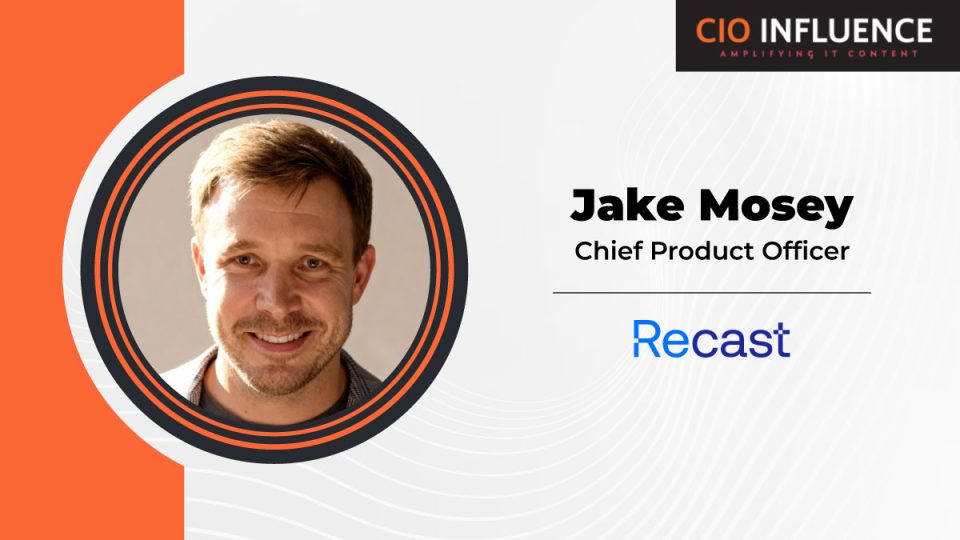
Jake Mosey, Chief Product Officer at Recast busts top myths around endpoint management in this CIO Influence interview:
______________
Hi Jake, tell us about yourself and your journey through the SaaS market?
I have spent my career in SaaS across product leadership, partnerships, and M&A. Those roles gave me a pretty grounded view of what works and what does not. Great products are not the ones with the longest feature lists. They are the ones that reduce friction, fit real workflows, and deliver outcomes you can measure.
Two things have stayed consistent for me. First, center decisions on what is actually good for customers and end users. If the experience is painful, adoption drops and people work around the system. Second, tie the work to business impact so you can scale it. Reduce tickets, shorten time to fix issues, improve compliance, and keep teams productive.
I like markets where the work matters every day and where simplicity is a real advantage.
As Recast’s new Chief Product Officer, what are you most looking forward to?
Two things.
- First, getting close to customers and the community. I get energy from seeing how IT teams actually run day to day, what slows them down, and what they wish they could simplify. The best product decisions come from listening to operators in the real world.
- Second, the timing. IT and security teams are being asked to do more with fewer resources, while the threat landscape keeps moving. That is pushing the market toward fewer tools, better automation, and better end-user experience. I am excited to help build products that make common workflows feel easy and reliable, like onboarding, patching, software delivery, troubleshooting, and privilege controls.
When IT is done well, it is not loud. Everything just works, and the business moves faster.
Also Read: CIO Influence Interview with Gera Dorfman, Chief Product Officer at Orca
What best practices would you share with IT teams around improving security for modern enterprises?
Keep it simple and do not confuse more tooling with better security. It is easy to say yes to another agent, another policy, another console. But complexity creates its own risk, and it drives user friction.
A few practical guidelines I have seen work:
- Start with the end user and the experience. If controls break workflows, people work around them.
- Standardize what you can and automate the repetitive work. Patch, configuration, and software delivery should be consistent and measurable.
- Build for recovery, not just prevention. Assume something will slip through and invest in fast detection and clean remediation.
- Make security and IT operations partners, not separate lanes. When security fits the operational motion, it scales.
The goal is to create a secure environment where people can do their jobs without fighting their tools.
What top myths surrounding endpoint management would you like to bust in this conversation?
One myth is that endpoint management is mostly about control. The real value is consistency and trust. When endpoints are managed well, users get what they need quickly, devices stay healthy, and the business does not slow down.
Another myth is that great IT work is always visible. Some of the best sysadmins are the ones you rarely hear about because the basics are handled. New hires get onboarded smoothly, software is available without a ticket, issues are prevented, and fixes happen fast when something does go wrong.
That kind of environment does not happen by accident. It comes from clear standards, smart automation, and a constant focus on the end-user experience. If people feel supported, they follow the process. If they feel blocked, they bypass it.
A few top trends you feel CIOs and CISOs should stay ahead of in 2026 and beyond?
First, tool sprawl is finally getting real scrutiny. CIOs and CISOs will be expected to consolidate and simplify without losing coverage. Having fewer moving parts often improves both security and reliability.
Second, end-user experience is becoming a security factor. When security adds too much friction, users create workarounds. That is not a people problem, it is a design problem.
Third, posture and access will keep tightening. Identity, device health, and policy will need to work together in a way that is enforceable but still usable.
Fourth, expectations for remediation speed will rise. Detection is table stakes. The hard part is fast, reliable containment and recovery.
AI will help, especially in triage and automation, but it needs guardrails. The teams that win will secure the business without slowing it down.
Catch more CIO Insights: Identity is the New Perimeter: The Rise of ITDR
[To share your insights with us, please write to psen@itechseries.com ]
Recast enhances your existing endpoint management systems — Microsoft SCCM, Intune, and beyond — equipping IT teams and users alike with powerful new capabilities for application delivery, automation, remediation, optimization, and complete end-to-end visibility.
Jake Mosey, is Chief Product Officer at Recast