

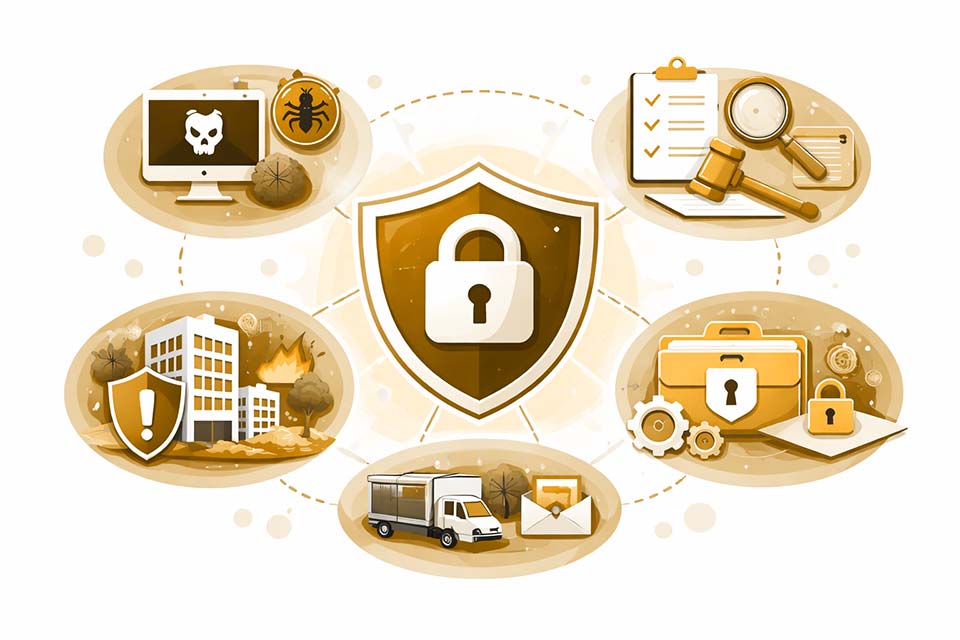
For a long time, businesses thought of enterprise risk as a technical issue. It was in server rooms, security dashboards, and plans for recovering from disasters. Leadership felt safe as long as systems stayed up and breaches were stopped. But that way of thinking doesn’t work anymore. Risk isn’t just about outages, hacks, or infrastructure failures anymore. It now moves through AI systems, data pipelines, partner ecosystems, business models, and customer experiences. What used to be “IT risk” is now “enterprise risk.”
Companies today don’t just use technology; they live in it. Digital platforms are where money comes in. APIs are important for supply chains. Models make decisions automatically. How software works affects how much customers trust it. Digital operations now put businesses at risk across the whole system and ecosystem. If one system fails, it can quickly spread to partners, regulators, markets, and customers. When payments stop, models fail, or data governance breaks, it’s not just a technical problem; it’s a business problem that hurts your reputation and puts you at risk of getting in trouble with the law.
AI, the cloud, data platforms, and vendor ecosystems have all grown a lot, which has made the blast radius of failure much bigger. AI brings with it risks to models, bias, and the ability to explain things, all of which hurt trust and compliance. Centralizing operations in the cloud increases exposure. Data is now both a valuable business tool and a legal risk. Third-party platforms put outside risks deep inside a company’s operations. Companies are no longer stand-alone systems; they are part of large digital networks. Risk spreads across those networks faster than traditional controls were meant to handle.
This is why the CIO’s job is changing. CIOs are the only executives who work at the crossroads of technology, business, and government. They are in charge of the architectures that make money. They make the platforms that shape how customers feel. They take care of the information that helps people make choices. And more and more, they are in charge of the AI and automation that take the place of human judgment on a large scale. That position makes the CIO more than just a tech operator; it makes them a leader in systemic risk.
CIOs know how systems work together, how dependencies build on each other, and how new ideas can create new risks. This is different from traditional risk roles that focus on compliance or control. They don’t just try to avoid risk; they also plan for it. The CIO‘s choices about architecture decide whether risk is manageable or explosive when a company launches a new digital product, goes global, adopts AI, or works with partners.
The real change is in how we think. CIOs are no longer just protecting infrastructure from the back office. They are enterprise risk conductors who make sure that platforms, partners, and processes are all strong. Their job is to not only keep systems running, but also to make sure that the company can innovate safely, grow confidently, and handle disruptions without falling apart.
In a digital-first business, risk isn’t just in IT; it’s all over the place. As technology becomes the organization’s nervous system, the CIO becomes the leader who is in charge of how risk is sensed, managed, and turned into strength instead of failure.
The Evolution of Enterprise Risk: From Operational IT Risk to Strategic Business Risk
Enterprise risk used to be a quiet part of infrastructure teams. The agenda included downtime, patching, backups, and security around the edges. Leadership felt safe as long as servers worked and networks stayed safe. But that way of seeing things is no longer valid. Risk is no longer just a matter of operational hygiene; it’s now a matter of strategic exposure.
Technology is now what makes money, keeps customers interested, coordinates the supply chain, and sets a business apart from its competitors. The business fails when the systems fail. That change makes every CIO think more like a strategic risk architect and less like a systems manager.
In digital businesses, the choices made about technology affect how well the business does. A payments outage has an effect on cash flow. A recommendation model that doesn’t work right hurts brand trust. A data pipeline breaks, making it hard to make decisions based on analytics. Risk has moved from the data center to the boardroom.
The modern CIO must now explain how technical problems can affect the business, since every architectural choice has financial and reputational weight.
-
Technology Built into Revenue and Experience
Digital platforms are no longer just extra layers of support; they are the business. E-commerce, subscription platforms, mobile apps, and AI-driven services all use technology to directly affect how much money they make and how customers feel about them. This means that risk and growth are no longer separate. If the customer’s identity breaks, onboarding falls apart. Engagement drops when personalization models change. If APIs slow down, transactions stop.
The CIO is in charge of the systems that customers use every day. That visibility changes risk management into experience management. Resilience, latency, data quality, and availability are now things that set companies apart in the market. Companies that used to think that IT stability and business performance were two separate things now see that they are the same thing. Risk isn’t just something to avoid; it also affects how quickly the company can compete.
-
Platform Dependency and Third-Party Exposure
Modern businesses rely on large networks of vendors. Cloud providers, SaaS platforms, data brokers, payment processors, identity services, and AI APIs are all now part of core workflows. Every dependency adds shared exposure. Your outage becomes a vendor outage. If a partner breaks the rules, you break the rules too. A model update that you can’t control changes how your customers interact with you overnight.
This is the point at which enterprise risk goes from being controlled internally to being managed in the ecosystem. The CIO is no longer just in charge of the infrastructure inside the company; they are also in charge of chains of dependencies that cross company lines. Third-party exposure makes risk worse because it spreads out visibility, governance, and accountability. The firewall doesn’t stop risk anymore. It goes through APIs, integrations, and contracts.
It is clear what this means: risk governance needs to be built into platforms, not added on after something goes wrong.
-
Speed, Automation, and AI Amplifying Consequences
In the past, speed was an advantage in business. It is now also a risk multiplier. Automation and AI let businesses work on a large scale, but mistakes spread just as quickly. A bad model update can hurt millions of customers in just a few minutes. An automation script that doesn’t work right can spread through financial, operational, and regulatory systems before people step in.
AI brings with it a new type of risk: model drift, bias, hallucination, and gaps in explainability. These risks aren’t just technical; they also affect trust, compliance, and how people see your brand. The CIO is now in charge of more than just systems; they are also in charge of decision engines. When algorithms take over for human judgment, risk becomes part of logic instead of processes.
This means moving from reactive control to proactive design. The CIO needs to make sure that AI and automation are treated like living systems, not just tools that don’t change.
-
Risk Becomes Continuous, Not Episodic
Risk used to come in the form of events like outages, breaches, and audits. Teams fixed the problem and moved on. Risk is always present today. Every hour, cloud environments change. Models are always being retrained. Data flows never stop. Partner APIs change over time. Compliance rules change in real time.
Continuous systems make exposure happen all the time. There is no stable baseline to defend; only moving targets to organize. The CIO needs to be able to see things all the time, not just when they report. Observability, policy-as-code, automated controls, and real-time monitoring are no longer just tools; they are now part of the risk infrastructure.
Risk management changes from being something you do on a project to something that the platform can do. Companies that treat risk as something that happens once in a while fall behind those that make it a part of their daily work.
Technology as the Main Risk Factor- Increasing Attack and Failure Surfaces
Technology is no longer just the place where risk happens; it is also the way that risk moves around. Cloud, SaaS, APIs, microservices, and AI all make big, changing attack and failure surfaces. Every point of integration could be a risk. Every rule for automation can be used to make things louder.
The CIO sees how complicated this is. Architectures look more like ecosystems than stacks now. If one microservice fails, it can cause problems in other systems that depend on it. A spike in latency in one area can make the experience worse for everyone. Risk spreads through software pathways faster than traditional governance can keep up with.
This is why modern risk management begins with architecture. Modular, observable, and governable systems make the blast radius smaller. It gets bigger when systems are tightly linked.
-
Data as a Liability and an Asset
Data is what keeps modern businesses running, but it’s also one of their biggest risks. It powers personalization, AI, analytics, and making things run more smoothly. But it also has risks for rules, ethics, and reputation. Organizations are at risk of legal and trust failures because of bad data lineage, weak consent models, and uncontrolled access.
The CIO decides how the company collects, stores, moves, and uses data. In a data landscape that isn’t very organized, risk isn’t just in databases; it’s also in pipelines. Who got into what? Which dataset did which model use? Where did consent apply? These are no longer questions about technology; they are questions about business accountability.
When data turns into product logic, data governance turns into risk governance.
-
Model Risk and Algorithmic Opacity
AI makes risks that aren’t visible. Models work based on probabilities. Their behavior changes over time. They make choices that people might not fully understand. This makes algorithms opaque, which means that systems can do things without clear paths for holding people accountable.
The CIO is in charge of more than just performance; they must also be in charge of explainability, fairness, and lifecycle control. Which version of the model is running? What information did it learn from? How do you find drift? Who gives the okay for changes? Without these controls, automation turns into uncontrolled risk acceleration.
There is a real risk with models. It has an effect on compliance, customer trust, and the credibility of the strategy. As AI grows, the CIO becomes the person in charge of making sure algorithms are strong.
-
Vendor Ecosystems and Integration Fragility
Businesses today are put together, not built. The digital core is made up of hundreds of APIs, platforms, and vendors. Every integration makes things faster, but also more fragile. Changes in versions, contracts, outages, and geopolitical restrictions can all stop workflows without warning.
The CIO needs to see vendor architecture as risk architecture. Mapping dependencies, having backup plans, and making sure systems can work with each other all become strategic safeguards. Risk is no longer avoided by being alone; instead, it is avoided by smartly coordinating across platforms.
Companies that don’t pay attention to integration problems only find out about them when their operations stop. People who plan for it can move faster with confidence.
Why Risk Goes Through Software First?
In the end, digital risk comes before financial, operational, or reputational risk. Software sends transactions to the right places. Software makes choices. Software links partners. Software makes sure that rules are followed. When something goes wrong, it happens through code paths, not paper processes.
That truth changes what it means to be a leader. The CIO is now in charge of how risk moves, grows, and gets fixed across the whole enterprise nervous system. Risk is no longer just a compliance issue; it is now a part of the architecture.
The future business doesn’t care if it can come up with new ideas safely. It wants to know if its CIO has built systems that make safety, speed, and scale work together instead of against each other.
The CIO’s New Risk Mandate: From Uptime And Cost Control To Trust And Resilience
For years, the CIO was judged on how stable, efficient, and cost-effective they were. Keep the lights on. Take charge of budgets. Make sure the perimeter is safe. That order made sense when technology was behind the business. Technology is the business now. Platforms make money, data builds customer trust, and software gives you a competitive edge. Because of this, the modern CIO doesn’t just protect infrastructure; they also protect the trust of the institution and the resilience of the business.
Being resilient doesn’t just mean being available. It means being able to take shocks, change when things get tough, and keep giving value even when things go wrong. Trust is more than just safety. Across all digital touchpoints, it is dependability, openness, and predictability. Every decision about architecture now affects how customers, regulators, partners, and employees interact with the business. The CIO‘s job now includes more than just keeping things running smoothly; they are also in charge of making sure that digital credibility is protected.
That change in leadership stance. The CIO doesn’t respond to events; instead, he or she plans for them. There will be outages. Models will move. Vendors will fail. The markets will change. The question is no longer if there will be a disruption, but if the organization will bend or break when it does.
-
Balancing Innovation Speed with Systemic Safety
Speed is rewarded in digital competition. Modern growth is all about new features, faster releases, constant testing, and AI-driven automation. But going fast without being safe makes things riskier. Automated pipelines can send bad code around the world in just a few minutes. AI agents can make decisions on a large scale. Cloud elasticity can quickly spread configuration mistakes.
This is the balance the CIO needs to strike: speeding up new ideas while limiting the blast radius. Governance can’t make teams less important, but it also can’t go away. The new mandate is architectural: it is to design platforms where teams can work quickly while staying within safe limits.
That means putting policies into pipelines, making workflows easier to see, and putting controls into code. The CIO doesn’t look at risk after deployment; instead, they build systems that measure and limit risk before it spreads. Innovation becomes a controlled flow instead of an uncontrolled surge.
The CIO‘s job changes from gatekeeping to orchestration, which lets things move quickly while also quietly deciding where that speed can go.
-
Governing AI, Data, Platforms, and Architecture
Risk isn’t just hiding in servers anymore. It exists in APIs, data flows, models, and distributed platforms. AI systems set prices, personalize experiences, find fraud, hire people, and keep customers interested. Data pipelines move private data between vendors and across borders. Platforms bring together hundreds of services into one working system.
The CIO is now in charge of digital logic itself. That includes managing the lifecycle of models, keeping track of where data comes from, controlling who can access it, making sure different systems can work together, and making sure that the architecture is consistent. Risk is hard to see without these foundations. It only shows up when it causes regulatory failure, brand damage, or operational chaos.
It is very hard to govern AI. Models change. Data for training changes. Bias shows up. It matters that things are explainable. The CIO needs to make sure that businesses can answer these simple but important questions: What is this system doing? Why? Whose data? With what kind of oversight? Risk governance is a conversation that happens all the time between engineering, legal, product, and leadership.
Architecture turns into a risk surface. Systems that are tightly linked make failures worse. They are separated by modular systems. The technical choices made by the CIO quietly determine how strong the business really is.
How to Turn Technical Risk into Business Impact?
Translation is one of the most important changes in the CIO role. Boards and executives don’t think about things like packet loss, latency, or model drift. They think about trust, compliance, revenue, and brand. The CIO needs to turn technical weakness into business impact.
A cloud outage isn’t just downtime; it’s lost business and broken promises. A data leak doesn’t mean your security is at risk; it means your reputation and your exposure to regulations are at risk. A model hallucination is not a bug; it’s a lot of wrong information. The CIO talks about risk in a way that leaders can understand.
This translation gives you an edge in strategy. When leaders know how architecture affects results, technology choices become business choices. The CIO stops defending budgets and starts making plans. Risk is no longer hidden in operational reports; it comes out in talks about growth.
The more clearly a CIO shows how technology risk affects the value of the business, the more power they have over how the business changes.
CIOs as Enterprise-Wide Risk Architects
In the end, the CIO is not just a responder to risk; they are also an architect of risk. They plan how risk moves, where it stops, and how it gets better. They make dependency graphs, redundancy strategies, governance frameworks, and escalation models.
This view of architecture includes infrastructure, data, AI, vendors, and workflows. It tells you how quickly systems fail, how far failures spread, and how quickly recovery happens. Risk is no longer removed; it is engineered.
In this model, the CIO acts more like a city planner than an IT operator. How well a city does under stress depends on its roads, bridges, zoning, and utilities. Architecture decides if a business will fail or change when things go wrong.
The CIO‘s new job is clear: make the company’s nervous system so that risk is easier to handle, see, and survive.
Managing Risk Across Ecosystems – Risk Across Partners, Platforms, and Supply Chains
Businesses today don’t work alone. They are part of ecosystems that include cloud providers, SaaS vendors, logistics partners, payment processors, data brokers, and AI platforms. Every relationship gives you more skills and more exposure. Risk moves faster than contracts can keep it in check between organizations.
Your business stops when a vendor goes down. When a partner breaks the rules, your data is at risk. A change in the world of politics makes it harder for you to get to your infrastructure. The CIO needs to see risk not as something that can be controlled from the inside, but as something that can be coordinated across the ecosystem.
This means that you need to map dependencies outside of the firewall. Which vendors do which workflows depend on? What services are available in what areas? Where are the single points of failure in partner networks? Without this visibility, risk is no longer something you can plan for; it’s a surprise.
The CIO becomes an operator of the ecosystem, not just the manager of the business.
Coordinating Security, Compliance, Data, Product, and Operations
Risk is no longer just one function. Security takes care of threats. Regulation is managed by compliance. Pipelines are managed by data teams. Product teams send out new features. Operations keep things running. Each one only sees part of the risk picture.
The CIO‘s job is to bring these different points of view together into a single control model. Security can’t protect what product releases without knowing what it is. Compliance can’t control what data teams don’t write down. What architecture doesn’t separate, operations can’t stabilize.
Coordination takes the place of isolated defense. Functions come together when they use the same frameworks for identity, access, observability, and policy. The CIO becomes the conductor, making sure that each function plays in time and doesn’t just make things up as they go along.
Without orchestration, organizations end up with controls that don’t work together, overlap, or leave dangerous gaps.
Federated Risk Ownership Across Business Units
Centralized control alone doesn’t work as businesses grow. Governance bodies move more slowly than business units. The headquarters will never understand local risk as well as the local teams do. Federated ownership is the answer.
The CIO sets the standards, tools, and visibility layers, and the business units are in charge of carrying them out. Risk responsibility is spread out but still makes sense. Instead of waiting for approval cycles, teams work within architectural guardrails.
Federation makes things go faster without putting safety at risk. It lets new ideas happen close to the market while still keeping the company’s risk level in mind. The CIO’s job isn’t to micromanage risk; it’s to create the setting where others can do it right.
This changes risk from a blocker to an enabler.
Shared Visibility and Control Frameworks
Visibility is important for orchestration. Leaders can’t handle risk if they can’t see it. Modern risk platforms combine observability, identity, data governance, and policy enforcement into a single view.
The CIO makes shared dashboards, automated alerts, dependency maps, and policy engines that show how systems work in real time. Visibility is no longer a thing of the past; it is now a thing of the present. Companies get preemptive insight instead of post-mortems.
Control frameworks are no longer just static documents; they are now dynamic systems. Policies run in pipelines. Checks for compliance happen all the time. Risk signals show up before customers feel pain.
This infrastructure turns risk from a show of compliance into useful operational information.
CIOs Synchronizing Internal and External Ecosystems
The last step in evolution is synchronization. Risk exists concurrently within code, teams, vendors, markets, and regulators. The CIO makes sure that these layers all work together in a way that makes sense.
The internal architecture must work with the partner platforms. Data governance needs to be in line with what the law says. AI deployment must adhere to ethical standards and market expectations. Technology strategy becomes political, legal, operational, and business all at once.
The CIO is the person in charge of making sure that the business not only comes up with new ideas, but also survives them. They put speed, safety, trust, and scale into one system.
In a world where things are always changing and ecosystems are connected, the CIO’s real power is not control but coordination. Companies that do well won’t be the ones with the most technology; they’ll be the ones whose CIO has turned risk into something that can be seen, managed, and used strategically, rather than something that happens by chance and causes damage.
Also Read: CIO Influence Interview With Jake Mosey, Chief Product Officer at Recast
Risk as a Strategic Benefit – From a Cost Center to a Growth Engine
For a long time, people thought of risk management as a tax on new ideas. Controls made delivery take longer. Governance made things harder. Security checks held up launches. In a lot of companies, risk was more about stopping things than moving forward. That way of thinking is starting to change. Risk is no longer just something the CIO lowers in digital businesses; it is also something the CIO can use to speed up growth.
When risk is managed well, it can give you an edge over your competitors. Companies that know what risks they face can move faster than those that are scared or don’t know what to do. Disciplined risk management doesn’t stop innovation; it builds trust. Teams know when they can be flexible and when they need to be exact. That clarity changes the CIO from someone defensive to someone who helps speed, trust, and scale.
The modern CIO does not make the business less uncertain. They make it easier to deal with uncertainty.
-
Trust Enabling Faster Digital Transformation
Most of the time, digital transformation fails not because of technology, but because of a lack of trust. Leaders are not sure about moving core workloads. Customers are hesitant to share information. Regulators are not quick to approve new models. Partners don’t want to get too close to each other. Trust is the hidden currency that makes change happen.
A CIO who sets up strong governance, a flexible architecture, and clear controls makes it possible for change to happen without getting stuck. Leaders approve things faster when they trust the systems. Customers get more involved when they trust how their data is handled. Regulators let people experiment when they trust operational discipline.
Trust makes decisions happen faster. Instead of months of arguing about risk, organizations move with confidence based on facts. Safety is built into the platform, not talked about in meetings, which speeds up change.
This is where risk management turns from insurance to propulsion.
-
Safer Experimentation and Deployment
Feature flags, A/B testing, AI model tuning, automated releases, and quick iterations are all ways that companies can keep trying new things. Experimentation is risky without safety measures. Experimentation dies when there are too many rules.
The CIO’s strategic edge is creating settings where testing is always safe. Sandboxed architectures, controlled rollouts, observability, and rollback mechanisms let teams try out new ideas without putting the whole business at risk. Instead of making things worse, risk is kept to a minimum.
Engineers are more willing to try new things when they know that failures won’t spread. Product teams ship faster when they know releases can be undone. When leaders know that exposure is limited, they give their approval sooner. Risk engineering makes things safe from both a technical and a psychological point of view. And psychological safety makes things go faster.
Companies that are smart about risk take more chances, learn faster, and do better than competitors who are careful but don’t see the big picture.
-
Resilience as Competitive Differentiation
In unstable markets, resilience is no longer just good business practice; it’s also how you position yourself in the market. Customers, partners, and investors are putting more and more weight on how reliable, consistent, and responsive a company is when things get tough.
Outages, breaches, data misuse, and AI failures are not just things that happen. They are moments for the brand. A company’s reputation is based on how it handles problems. A strong business can show that it is stable even when things are unstable.
The CIO makes this difference by using redundancy, modularity, multi-region design, data protection, and automated governance. These are more than just IT features. They are signs of competition. They tell the market that this company can be trusted on a large scale.
When everyone in an industry uses the same tools, resilience is the quiet edge that sets leaders apart from those who fall behind. Handling risk well leads to performance that others can see.
-
Customer Confidence Through Governance and Transparency
Customers are more and more interested in how systems work, not just what they do. They want to know how their data is used. Is AI fair? Are transactions safe? Can I trust decisions made by machines?
When done right, governance becomes a valuable asset for customers. Customers can be sure that digital services aren’t just crazy experiments because of things like transparency dashboards, explainable AI, auditable data flows, and compliance-by-design architectures.
The CIO is a key player in making this experience happen. Governance is no longer hidden in documents that show how to follow the rules. It becomes a part of how the product is made. Risk management is no longer just for internal assurance; it is now part of customer value.
Companies that show they are responsible with new ideas get users faster, keep them longer, and stand out in crowded digital markets.
-
Companies That Manage Risk Better Move Faster
It’s a simple paradox: the companies that know the most about risk are the ones that move the fastest. Fear slows down groups that can’t see their risks clearly. Confidence speeds up groups that can.
The CIO turns risk into visibility, visibility into control, and control into speed. The organization doesn’t wait for things to happen; it plans for them. It doesn’t stop innovation; it directs it. Risk is no longer the opposite of growth in that way. It serves as the basis for long-term acceleration.
Tools and Skills for Managing Risk – From Policy to Platform
Risk orchestration is more than just a way of thinking; it’s also a way of doing things. In a world of continuous deployment, AI automation, and real-time operations, the CIO can’t depend on static policies, quarterly audits, or manual reviews.
Platforms, not paperwork, are what modern risk management needs. It needs systems that can watch, understand, and act as quickly as digital business. The CIO’s toolbox now includes smart, automated, and architectural tools in addition to firewalls and checklists.
Risk orchestration becomes an engineering discipline, not an administrative function.
-
Seeing, keeping an eye on, and getting real-time information
You can’t control what you can’t see. Modern risk strategy is built on observability. Logs, metrics, traces, behavioral analytics, and dependency maps give you a real-time look at how systems work across applications, data, and infrastructure.
Observability is more than just uptime monitoring for the CIO. It is sensing risk. It shows where data goes, where models go off course, where APIs break down, and where performance drops off before customers notice.
Real-time intelligence changes incidents from surprises to signals. Instead of doing postmortems, organizations always know what’s going on. Risk is something you see happen, not something you find out about after the damage is done.
This ability changes risk management from being reactive to being proactive.
-
Policy-as-Code and Automated Controls
Human governance can’t keep up in environments that change quickly. Controls must work at the speed of the machine. Policy-as-code puts rules right into pipelines, architectures, and platforms.
Access rules, compliance checks, encryption standards, data residency constraints, and release approvals turn from static documents into executable logic. Systems automatically enforce policy every time code is deployed, data is moved, or models are changed.
This means that governance will be powerful but not visible to the CIO. The system doesn’t wait for approval; it either approves or blocks based on set rules. Risk control happens all the time instead of just sometimes.
Automation makes things smoother and safer. It is one of the most important tools for scaling risk orchestration.
-
AI Governance and Model Lifecycle Management
As AI gets built into the main parts of a business, new risks come up, like bias, drift, opacity, and behavior that wasn’t planned. To handle AI risk, you need to handle the whole model lifecycle.
This includes keeping track of training data, watching performance, finding drift, checking decisions, and controlling deployment. You can’t treat models like software that doesn’t change. They change, learn, and sometimes act badly.
The CIO must make sure that organizations can answer: What kind of data did this model learn from? How does it change as time goes on? Who can change it? How do you check performance? Without these answers, AI is a problem instead of a tool.
AI governance isn’t about stopping new ideas from coming up. It’s about making AI safe enough to grow.
-
Data Lineage and Vendor Risk Platforms
Hundreds of outside services are necessary for modern businesses. Every integration gives you more value and exposure. If a vendor goes down, breaches, or doesn’t follow the rules, it affects your operations right away.
Vendor risk platforms show how things are connected, check the security of each partner, keep an eye on changes, and make sure that standards are followed. Data lineage tools keep track of how data moves between systems, regions, and vendors.
This visibility is very important for the CIO. Risk is hidden in contracts and APIs when this is not present. It makes risk possible to measure and control.
Data lineage also helps with trust, compliance, and openness. It shows where data came from, how it changed, and where it is now. In places where AI and rules are in charge, lineage is no longer an option; it is a part of the structure.
-
Architecture as a Risk Infrastructure
Architecture is the most powerful risk tool at its most basic level. Monoliths make failure worse. Modular systems keep it separate. Tight coupling makes problems worse. It is in loose coupling.
The CIO controls risk through design by using microservices, redundancy, segmentation, zero-trust models, multi-region strategies, and graceful degradation. These choices decide how far a problem goes and how quickly it gets better.
During incidents, risk infrastructure is not built. It is built years earlier in the choices that architects make. The CIO who sees architecture as risk engineering makes businesses that bend instead of break.
Strategy becomes reality in architecture.
-
Orchestration Over Control
When used together, these tools turn risk from a compliance task into a system for running a business. Senses of observability. Policies are put into action. AI governance makes sense of things. Maps of vendor platforms. Architecture takes in.
The CIO is less of a manager and more of a conductor. They don’t police teams; instead, they make systems that let teams work quickly and safely. Risk is not added to workflows; it is built into them.
In a digital economy characterized by automation, ecosystems, and AI, the organizations that succeed will not be those with minimal risk, but rather those whose CIO has transformed risk into a visible, actionable, and strategically advantageous element, rather than a fortuitous and detrimental one.
A modern CIO no longer sees risk as a brake. It is the system that steers.
Organizational Shifts Supporting the CIO – Why Structure Now Shapes Risk as Much as Technology?
Digital risk is becoming more of a system-wide issue than a technical one, so no one function can handle it on its own. Infrastructure, security, compliance, product, data, and operations now cross paths in ways that make traditional organizational silos useless. In today’s businesses, supporting the CIO is no longer about hiring IT staff. It’s about changing how the company works together on risk, resilience, and new ideas.
The CIO is in charge of technology, business strategy, and governance. However, without structural alignment, even the best CIO will react instead of plan. Businesses need to change how they run their businesses so that risk orchestration is decentralized, coordinated, and built into the culture instead of being centralized and bureaucratic.
Organizational design is now a key part of a digital risk strategy.
-
CIO–CISO–CRO Collaboration Models
In the past, the CIO was in charge of systems, the CISO was in charge of security, and the CRO was in charge of enterprise risk. Different metrics, priorities, and timelines were used by each function. Those lines are getting less clear in today’s world. Cloud architectures have an impact on compliance. AI models have an impact on legal exposure. Vendor platforms have an effect on how well operations run.
More and more businesses are using triad leadership models, in which the CIO, CISO, and CRO work together as a risk council instead of as separate executives. They don’t pass problems on; they share them. Business speed is a factor in security decisions. Risk decisions take into account whether something is technically possible. Architecture choices take into account regulatory exposure.
This partnership changes the way the CIO looks at things. Instead of defending technology choices after the fact, the CIO helps shape the company’s risk appetite in real time. People can see and agree on the same goals when making decisions about platforms, data, and automation.
This alignment changes risk from a control function to a strategic discussion.
-
Alignment of Product, Legal, and Platform
Infrastructure is not the only place where digital risk comes from. It comes from things like product features, customer experiences, pricing logic, data handling, and automation. When the product, legal, and platform teams work on their own, they put each other at risk.
More and more, businesses that support the CIO are putting legal and compliance advisors directly into the development cycles of products and platforms. Instead of looking over releases after they’ve been designed, governance is built into the design process. Product teams know what the rules mean. Engineers know what contractual exposure is. Attorneys know how the system works.
This alignment makes it possible to go fast while staying safe. The CIO is no longer the one who stops launches late in the process. Instead, governance moves through the whole process of innovation.
The company goes from “approve after building” to “build with approval built in.”
-
Embedded Risk in Engineering and Data Teams
People in charge of risk can’t just be at the top. It has to be there with the teams that write code, deploy models, and handle data pipelines. Modern businesses push risk management directly into engineering and analytics jobs.
This includes security champions on development teams, data governance leads on analytics teams, and AI ethics owners on model operations teams. These roles don’t take the place of central oversight; instead, they make responsibility more local.
This distribution is very useful for the CIO. The CIO doesn’t just handle all the risk escalation; they also coordinate many smart risk nodes across the company. Issues come up sooner. Controls change more quickly. Teams feel like they are responsible instead of being checked.
Embedded risk makes governance more like muscle memory and less like red tape.
-
Decision Rights and Escalation Paths
In environments that change quickly, unclear decision rights are riskier than making bad choices. When no one knows who can stop a deployment, override a model, or cut off a vendor, problems get worse for no reason.
Companies need to be clear about who is in charge of making risk decisions, when they need to be escalated, and how to balance speed and safety. These frameworks make things clear when there is a lot of stress.
For the CIO, it is important to be clear about who is in charge. The CIO can’t manage risk if the paths of decision-making are broken up. Changes to architecture, access to data, vendor integrations, and AI deployments all need to have clear ownership.
Strong escalation design makes sure that when systems fail, organizations act in a way that makes sense instead of politically.
-
Culture of Proactive Risk Ownership
In the end, structure doesn’t work without culture. Risk orchestration only works when teams see risk as part of quality, not as something that gets in the way of delivery. That needs more support for leaders, rewards, and stories.
Companies that support the CIO spend money on training, communication, and leadership behavior that make risk a shared responsibility. Engineers g******* for coming up with new ideas that are safe. Product leaders get rewards for running things in a clear way. Not only do operations leaders g******* for being efficient, but they also g******* for being tough.
When risk becomes a part of the culture instead of just the way things are done, the organization stops responding to incidents and starts preventing them on purpose. The CIO has a big effect on this, but it’s not obvious: they shape norms, not just systems.
The Future CIO: From Operator to Conductor – The CIO Role Is Changing in a Big Way
The traditional view of the CIO was that they were in charge of running systems, keeping costs down, and finishing projects. That picture doesn’t match what really happened anymore. Digital businesses need platforms, data, AI, and ecosystems to stay alive and stay ahead of the competition.
Uptime alone does not define the future CIO. The CIO is someone who can manage technology, risk, trust, and innovation in environments that are getting more and more complicated. This change makes the CIO not just in charge of assets, but also of making the company strong.
Not administration, but leadership becomes the most important skill.
-
CIOs Owning Resilience Alongside Innovation
Without resilience, innovation makes things weak. Without innovation, resilience leads to stagnation. The future belongs to businesses that can do both, and the CIO is the one who is in charge of making sure that happens.
The CIO doesn’t have to choose between speed and safety; they make systems that are safe and fast. Architecture helps with recovery. Governance helps people try new things. Platforms take in volatility.
This dual ownership makes the CIO a key person in the business. The CIO is no longer just making change happen; they are also making sure that change doesn’t hurt trust, continuity, or reputation. Resilience is just as important as making money.
-
Continuous Risk Intelligence
Risk is no longer regular. It goes on and on. Every day, AI models change. Vendors change every week. Rules change every three months. Infrastructure is always changing.
The future CIO will have access to real-time information about system behavior, data flows, model performance, vendor posture, and customer impact at all times. Dashboards take the place of audits. Reports are replaced by signals.
Organizations no longer ask, “Are we compliant?” Instead, they ask, “What is going on right now?” Instead of just looking at compliance documents, the CIO looks at and uses living risk data
This change turns risk from being something that is written down into something that is known about in the workplace.
-
Ecosystem-Wide Governance
Businesses don’t work alone anymore. They work in ecosystems of APIs, platforms, partners, cloud providers, data brokers, and AI services. Governance limited to internal systems is inadequate.
The future CIO is in charge of things that cross borders. Contracts, integrations, and architectures include expectations about ethics, security, data handling, and reliability. Visibility goes beyond partners. Controls go beyond platforms.
The CIO doesn’t control everything; they coordinate everything. Governance serves as a connective framework among organizations rather than as barriers enclosing a singular entity. In markets that are always changing, ecosystem governance is just as important as managing your own business.
Risk as a Skill for Leaders, Not a Job for Departments
The most important change coming up is a philosophical one. Risk is no longer a part of the company. It is a behavior of a leader. It affects how executives think, make decisions, and talk to each other.
The CIO tells stories about risk by turning technical exposure into business consequences, chances, and trade-offs. The CIO helps boards understand how uncertain AI is. The CIO helps executives understand how dependent the platform is. The CIO helps teams understand how architecture affects things.
Organizations grow faster when leaders talk about risk instead of just treating it like compliance noise.
Orchestration is not just about tools; it’s also about leadership.
CIOs Shaping Enterprise Stability in Volatile Markets
Markets are getting less stable because of geopolitical pressure, changes in regulations, AI disruption, cyber threats, weak supply chains, and digital competition. There is no longer a guarantee of stability. It needs to be designed.
The future CIO is what makes that stability happen. The CIO helps businesses deal with shocks without losing momentum by designing their architecture, governance, culture, and ecosystem. Systems break down in a way that is graceful. Decisions change quickly. Trust is still there.
In this future, the CIO is in charge of more than just technology. The CIO is in charge of the company’s confidence, which is the ability of the business to run, come up with new ideas, and grow even when things are uncertain.
-
From Operator to Orchestrator
The change is clear. The CIO is changing from managing systems to running them. From fixing problems to building resilience. From making projects possible to changing how businesses act.
Companies that see this change will put money into more than just infrastructure; they will also put money into structure, culture, intelligence, and leadership.
The best CIO in the next ten years won’t be the one who gets technology to you the fastest. Instead, it will be the one who puts together risk, trust, and innovation into an enterprise system that is flexible, adaptable, and strong.
Conclusion: From Risk Manager to Risk Orchestrator
For decades, enterprise risk was limited to narrow lanes. IT took care of outages, security took care of breaches, legal took care of compliance, and operations took care of continuity. Those limits don’t work anymore. Digital business models have brought together technology, money, the customer experience, data, and ecosystems.
So, risk is no longer something that needs to be “managed” after choices are made. It needs to be planned out as choices are made. This is where the CIO becomes a new kind of leader. They are not just a back-office defender; they are in charge of managing risk across the entire business, including platforms, partners, data, and people.
The modern CIO does more than just keep the infrastructure safe. They make sure that everyone in the company understands, designs, and absorbs risk in the same way. They build resilience into systems before failures happen instead of reacting to them.
Risk orchestration takes the place of reactive control. It links security to products, compliance to engineering, vendors to operations, and AI to governance. When risk is managed, companies can move faster because safety is built in instead of being added on later. The CIO makes it possible for businesses to try new things without breaking things, which keeps trust, continuity, and accountability.
This change also puts leadership ahead of following the rules. Policies, checklists, and audits can’t keep up with AI automation, cloud platforms, and ecosystems around the world. What matters more is how leaders deal with uncertainty and help the group get through it.
The CIO acts as a bridge between technical exposure and business impact, helping executives understand not only what could go wrong but also what that failure would mean for customers, revenue, reputation, and growth. When the CIO sees risk as a strategic context instead of operational noise, governance becomes a competitive advantage instead of a bureaucratic brake.
The next CIO will be responsible for both resilience and innovation. Growth now depends on how well a company can handle stress, whether that stress comes from cyber threats, changes in regulations, AI model risk, platform dependency, or ecosystem disruption. Trust breaks down when innovation isn’t strong enough. Resilience without new ideas makes things less useful. The CIO is in charge of that balance. They make sure that businesses can handle shocks and keep going by using architecture, culture, and constant risk intelligence.
Technology choices are important for the survival and growth of digital businesses. The CIO doesn’t just take care of systems, vendors, or budgets anymore. They plan how the company sees risk, deals with change, and grows safely. The change from risk manager to risk orchestrator is not just a change in appearance; it is a change in the way things work. In a world where every business is a digital one, the CIO does more than just keep the lights on. They are running the business through uncertainty, turning risk into strength and strength into an advantage.
Catch more CIO Insights: CIOs as Ecosystem Architects: Designing Partnerships, APIs, And Digital Platforms
[To share your insights with us, please write to psen@itechseries.com ]
