

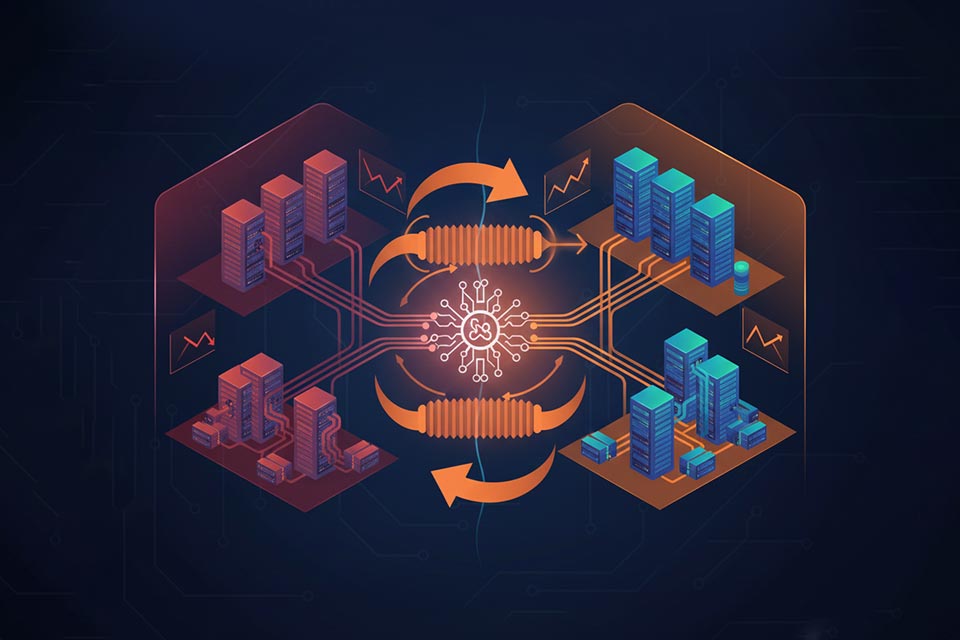
For many years, technology environments were built on the idea that things were relatively predictable. Workloads peaked at known times, capacity planning followed the annual budget cycle, and infrastructure grew through big, slow-moving projects. That world is no longer there. The speed of change in all industries has gone beyond what traditional computing models can handle.
Markets go up and down in a matter of weeks, customer needs change overnight, and new threats from competitors come out of nowhere. In this new era, IT environments that are built on fixed capacity and rigid architectures are not only inefficient; they are also dangerous to their very existence.
The reason traditional IT doesn’t work anymore isn’t because the technology is old; it’s because the assumptions that were made about it aren’t true anymore. Fixed-capacity systems were made for a time when demand curves were stable, supply chains were straight, and businesses could plan for a long time.
But, the business world today is not linear. Companies have to deal with sudden changes in global supply chains, unpredictable spikes in digital traffic, and a lot of economic and geopolitical pressures that make even the most stable industries unstable. Static IT can’t keep up with the speed of change because it’s stuck with fixed hardware, fixed capacity, and fixed assumptions.
Also Read: CIO Influence Interview with Ken Brownfield, Head of Engineering at Stackpack
The global marketplace is now always changing. Real-time changes in consumer behavior, AI-driven competition, quick changes in prices, a lack of skilled workers, changes in rules, and market disruptions all happen at the same time now. Instead of dealing with shocks that happen every so often, businesses have to deal with constant turbulence.
Now, every part of the business—operations, customer experience, finance, and product development—has to deal with an environment where things are always changing and there is always pressure. When business conditions can change quickly, IT needs to change from a back-office tool to a flexible, adaptable system.
This change puts CIOs at the heart of a company’s ability to survive and compete. Technology leaders are no longer just in charge of infrastructure; they are now in charge of making things adaptable. It’s clear what needs to be done: IT systems need to be able to change as quickly as market conditions do. CIOs need to support a new way of doing things that lets infrastructure, applications, workflows, and data platforms grow, shrink, change, and rearrange on demand. In this case, elasticity is no longer just a feature of the cloud; it is a strategic ability.
Thinking ahead, CIOs know that being flexible isn’t enough. Agile processes still need people to get involved, plan cycles, and work together across departments. Elasticity, on the other hand, is a systemic property. It means that technology environments can automatically sense, respond to, and change. An elastic IT environment can handle sudden spikes in customer transactions, changes in the supply chain, or new regulatory requirements without any problems.
Ending static IT isn’t a trend in technology; it’s a strategic need. As businesses deal with constant change, the ones that build technology ecosystems that can adapt to the market in real time will come out on top. The CIO’s new job is not only to keep the system running, but also to make sure that the business can change as quickly as the world around it.
What “Elasticity” Means in a Digital-First Organization?
In a world where market conditions change all the time, businesses can’t depend on fixed-capacity systems or rigid operational structures. The “elastic enterprise” is a big change in how a digital-first business works. Instead of being a collection of static systems, it is a living, adaptable organism that can respond right away. Elasticity is the ability to change the size and shape of business and technology capacity based on real-time signals. It is the structural foundation of businesses that do well in uncertain times.
For a digital-first company, elasticity means more than just being able to grow. Scalability means being able to grow, while elasticity means being able to change resources in any direction—up, down, sideways, or even completely change them depending on the situation. Not only does this include infrastructure and computing resources, but it also includes workflows, data pipelines, operating models, governance frameworks, and human decision loops. In the elastic business, everything is meant to be flexible.
1. Real-Time Scaling of Compute, Storage, Platforms, and Workflows
Elasticity starts with the technical stack, but it doesn’t stop there. At the infrastructure layer, it means that compute, storage, and networking can automatically grow or shrink based on how much demand there is. This ability is built on cloud-native architectures, serverless models, AI-driven orchestration, and containerized workloads. Instead of waiting for someone to manually change things, systems can sense patterns like traffic spikes, processing delays, and user spikes and change their capacity right away.
But real elasticity goes beyond just platforms and workflows. ERP systems, supply chain networks, AI/ML platforms, CRMs, data lakes, security tools, and automation systems are just some of the complicated things that modern businesses have to deal with. These must not only be able to grow, but they must also be able to work together in real time. For example:
- A rise in e-commerce orders means more computing power, more inventory checks, automated financial reconciliation, and real-time updates on logistics.
- A change in the rules causes automatic updates to compliance workflows and policy enforcement in all systems.
- An unexpected drop in demand changes production planning, cuts down on cloud use, and changes where workers are assigned without any human oversight.
To be this responsive, you need smart automation, the ability to see things in real time, and platforms that can make small changes all the time. The goal is simple: get rid of operational friction and make sure that every system can respond to change right away.
2. Processes, Architectures, and Capabilities That Continuously Adjust to Demand
The elastic enterprise is based on architectures that are modular, event-driven, API-first, and run on their own. This lets processes change on the fly instead of using old assumptions or pre-set cycles.
- Elastic processes change based on workloads and signals from outside. When there are delays, supply chain workflows fix themselves. Depending on the number of requests, customer service processes change their priorities. Finance processes go from batch cycles to accounting that happens all the time, in real time.
- Elastic architectures break up services so that different parts of the organization can grow at their own pace. Monolithic systems slow down businesses, but microservices and composable platforms make sure that each capability grows or shrinks as needed.
- Elastic capabilities help teams work more accurately and quickly. AI-powered insights change how resources are used on the fly, and adaptive security frameworks always react to new threats.
This model makes businesses act like responsive systems instead of static machines. The business can handle changes without causing chaos, meet demand without going too far, and come up with new ideas without any problems.
3. Elasticity: A Way of Running a Business and a Way of Thinking as a Leader
The cultural and leadership effects of elasticity are probably the most important but least talked about. Elasticity is not just a technical term; it’s also a way of thinking for leaders. CIOs and executive teams need to stop planning based on control and forecasts and start making decisions in real time based on ongoing signals.
Elastic leadership includes:
- Instead of strict rules, adaptive governance
- Instead of yearly cycles of innovation, there is constant experimentation.
- Resource allocation based on results instead of fixed budgets.
- Planning based on assumptions instead of data-driven agility.
Leaders need to make organizations where flexibility is planned, not just something that happens. They need to give teams tools that respond automatically and create a culture where change is not resisted but put into action.
The elastic enterprise is basically the next step for the digital-first organization. It was made for a world where demand can suddenly rise, threats can show up out of nowhere, and chances can disappear just as quickly as they come. Elasticity is the way that businesses stay ahead—not by guessing what will happen next, but by being ready for anything.
The New Normal: Constant Volatility and the Reasons for Constant Change
Today, markets work in an environment where volatility is not just a one-time thing; it’s a part of the system. Customer expectations change at an unprecedented rate, requiring hyper-personalized, instant experiences. Geopolitical problems change trade patterns overnight, which affects many industries.
Supply chain shocks, which used to happen only now and then, now happen all the time, forcing companies to constantly change how they get their goods, move them, and make them. At the same time, AI-driven competition is moving so quickly that it changes the rules of business every few months.
In this environment, businesses need to not only respond to change, but also expect it and deal with it. The idea of T—technology-enabled adaptability—has become a key part of business strategy because of the changing landscape.
The forces that are changing markets are always changing, depend on each other, and are often hard to predict. Old-fashioned ways to protect yourself, like having too much inventory, fixed-capacity infrastructure, or long-term forecasting models, don’t work anymore. Instead, businesses need to build operational shock absorbers into their systems. These systems should be based on flexibility, automation, and real-time intelligence. If you don’t make IT a core value, you could fall behind competitors who can quickly change their minds.
Why Linear Planning Models Don’t Work Anymore?
Linear planning used to be the most important part of a company’s strategy. It included yearly roadmaps, strict budget cycles, and fixed operational plans. But linearity assumes that things will stay the same, that tomorrow will look like today. That world is no longer there.
Today’s world needs nonlinear thinking and nonlinear structures. Changes in the market happen faster than planning cycles can keep up with. A single viral trend, lack of supply, change in regulations, or launch of a competitor can change demand by a lot in just a few hours. Static models can’t keep up with this much change.
This is exactly why IT, used as a tool for responsive planning, is becoming a strategic need. Businesses need systems that can constantly read signals and make changes on their own. Linear models fail when change happens quickly; adaptive models use T to handle thousands of variables at once, which lets resources, budgets, and workflows be recalibrated in real time.
Businesses need to build skills that let them work well in many different futures instead of just planning for one. Flexibility is the only long-term plan that works.
The Rise of Adaptive Businesses and Decision Loops in Real Time
Adaptive businesses are becoming the new competition model. These businesses use real-time sensing, automated decision-making, and ongoing optimization as part of their main operations. They don’t work with fixed assumptions; instead, they use live data streams to change their structure, processes, and resource allocation as needed.
AI, automation, and advanced analytics power real-time decision loops that let businesses see changes as they happen and act right away. T drives these loops, which act as the link between signals and actions.
In businesses that can change:
- Demand fluctuations automatically trigger supply chain recalibration.
- Risk signals automatically activate contingency protocols.
- Workforce capacity dynamically rebalances based on project loads.
- Customer behavior feeds directly into product adjustments and personalization engines.
The result is an organization that acts like a living system, always sensing, responding, learning, and getting better. This change is not a trend; it is how things work now. Companies that use T as an operating principle instead of a tool are the ones that do well in a market that is always changing.
Adaptability is what sets people apart as volatility becomes the norm. And the groups that make real-time intelligence and flexibility a part of who they are will be the ones that shape the future.
Anatomy of an Elastic Enterprise
You don’t build an elastic enterprise by making one technology decision. Instead, you build it with a multilayered architectural model that lets each part grow, shrink, and change based on real-time demand. Organizations need to rethink how IT works as volatility becomes the main business environment.
They need to move from rigid systems to adaptive ecosystems. Understanding the structure of an elastic business shows how each layer helps the whole business be more flexible, resilient, and fast.
Elastic Infrastructure: The Key to Flexibility in Real Time
Infrastructure is the first step toward elasticity. Today’s market changes are too fast for traditional data centers, which have fixed capacity and long provisioning cycles. Elastic businesses use cloud-native foundations that let IT resources automatically scale up when there is a lot of activity and down when there isn’t, without any help from people.
This infrastructure is built on autoscaling, serverless architectures, container orchestration, and distributed compute. These features let businesses only pay for what they use, make their systems almost infinitely scalable, and get rid of bottlenecks that happen when provisioning is done by hand.
Elastic infrastructure makes sure that things keep working and running smoothly even when demand suddenly rises, like when a viral marketing moment happens, the supply chain gets rerouted, or rules change.
This basic layer turns IT from a cost center into a smart, self-adjusting utility.
1. Elastic Data Architecture: Always-On, Real-Time Insight
Businesses today get a lot of data from customers, devices, partners, and their own systems. Data needs to move as easily as infrastructure does to work elastically. That means that teams need to be able to evolve components separately, which requires real-time ingestion, event-driven pipelines, and decoupled architectures.
Instead of relying on batch updates, elastic data architectures stream data all the time. This lets businesses react to changes as soon as they happen. Event-driven models make sure that every interaction, like a purchase, a sensor reading, a change in inventory, or a risk alert, can start actions right away.
Businesses make sure that their IT systems can handle real-time decision loops, predictive operations, and dynamic risk management by designing for constant motion. This layer lets the organization accurately sense and understand market conditions.
2. Elastic Applications: Modular, Composable, and Agile
Applications are where infrastructure and data capabilities become useful to businesses. Elastic businesses use microservices, API-first design principles, and composability to build systems that are modular and easy to change.
Microservices let each capability grow on its own, unlike monolithic applications that force organizations to use rigid workflows. APIs are like connective tissue that let different teams, partners, and platforms work together without any problems. IT teams can put together, change, and use digital tools in new ways as business needs change with composable architectures.
This method cuts down on development cycles by a lot, speeds up innovation, and lets you try things out quickly. When a new chance or problem comes up, elastic applications let businesses quickly change their digital services without having to tear down whole systems.
3. Elastic Operating Model: Dynamic Teams and Continuous Planning
Technology by itself does not make things flexible. The way teams work, plan, and carry out their tasks is just as important as the operating model. Instead of sticking to strict annual planning cycles, elastic businesses use continuous planning, dynamic resource allocation, and on-demand capabilities.
As priorities change, cross-functional teams come together and break up. Instead of fixed job descriptions, talent is used in different projects based on real-time needs. Automation helps with everyday tasks, freeing up teams to work on more important ones.
This layer turns IT into a responsive force multiplier that directly connects how technology is used with how unstable the business is. The company can change as quickly as things change, not as slowly as bureaucracy.
4. Elastic Governance: Policies that are flexible but have clear limits
In an elastic business, governance isn’t about giving up control; it’s about giving control that can change. Policies need to be able to change with the needs of the business while still being safe, compliant, and accountable.
With automation, elastic governance frameworks enforce controls in real time. Access management, compliance checks, threat detection, and data protection all grow with IT operations. Governance doesn’t slow down innovation; instead, it becomes a built-in guardrail that lets teams move quickly without losing trust.
This last layer makes sure that elasticity works in a safe, long-lasting, and smart way.
An elastic business is a living system where infrastructure, data, applications, operating models, and governance all work together to make a business that can grow and shrink with the market. In a world where things change quickly, this is the design that will shape the next era of IT excellence.
Designing for Flexibility
To make a business that can change, adapt, and grow in real time, you need more than cloud investments or better tools. You need to completely redesign how IT systems are built, installed, and managed.
In a world where markets change overnight, customer expectations change every hour, and competition never stops, flexibility is no longer just a “nice to have” technical trait; it’s a strategic advantage. To make an organization more flexible, you need to start by seeing technology as an adaptable ecosystem instead of a fixed stack.
1. From Monoliths to Modular, Composable Ecosystems
Monolithic applications are rigid because they require a lot of work, long release cycles, and complicated dependencies for every change. This model stops new ideas from coming up and makes businesses less responsive in unstable markets.
Elastic businesses move from monolithic systems to modular, composable ecosystems. These are systems where each part can be changed, added to, or replaced without causing problems.
Composability lets business and IT teams “snap together” or “snap apart” digital capabilities based on what people want at the moment. This change makes sure that innovation keeps happening, happens in small steps, and is in line with changing business needs.
It is also faster and cheaper to try things out with modular architectures. Companies can try out new products, channels, and workflows on their own before rolling them out to the whole company. This flexibility makes sure that IT can keep up with what’s going on in the market instead of slowing it down.
2. Architectural Principles for Elasticity
To design for flexibility, you need a set of basic architectural rules that let systems change how they work. These rules make sure that every part of the business can grow and shrink without any problems, just like the world outside.
- Decoupling
Decoupling removes the links between system parts, allowing them to change on their own. Decoupled architectures stop “system lock” and give both business and IT teams digital freedom. They do this through microservices, APIs, or service mesh patterns.
- Statelessness
Stateless components make it easy to scale up because you don’t have to keep track of session data on your own. When demand goes up, stateless services can quickly spread across nodes or clouds without putting data at risk of being inconsistent.
- Event-Driven Workflows
Instead of following set schedules, elastic businesses work based on real-time signals. With event-driven architectures, the business can quickly respond to triggers like customer actions, changes in the supply chain, risk alerts, or unusual operations. This model makes sure that decisions are made in milliseconds, not every three months.
- Automation Everywhere
Automation is what makes elasticity possible. When people have to step in, it slows down response time and adds risk. To keep IT systems flexible and able to fix themselves, businesses need to automate provisioning, scaling, testing, monitoring, and governance. Automation lets teams stop putting out fires and start coming up with new ideas.
Together, these principles make a technical environment where flexibility is built in, not added on.
Building Digital Capabilities That Expand and Contract Automatically
True elasticity means that digital capabilities work like living systems, changing right away when demand changes without people having to make decisions. This means making workflows, apps, and platforms that can read signals and change themselves.
For instance:
- Customer traffic spikes should trigger instant capacity expansion.
- Market or supply chain changes should reconfigure operational workflows.
- New data patterns should automatically recalibrate analytics models.
- Security threats should activate adaptive defense mechanisms.
This kind of flexibility changes IT from a support role to an intelligent orchestrator that always makes the business run better.
To make this work, you need to build systems with parameterized logic, cloud foundations that can grow, integrations that are not tied to each other, and automated control loops. When done right, elasticity becomes seamless, allowing operations to continue even when things are very unstable.
What do AI and AIOps do to help with real-time adaptability?
AI and AIOps are now necessary for the future of adaptable business structures. They take automation beyond rule-based workflows to include operations that are smart, predictive, and self-optimizing.
AI makes elasticity better by:
- Predicting changes in demand before they happen
- Finding problems that need immediate scaling
- Making the best use of resources in hybrid and multi-cloud settings
- Powering adaptive cybersecurity
By looking at logs, telemetry, metrics, and events on a huge scale, AIOps makes IT operations smarter. It lets you fix things on your own, optimize things in real time, and tune performance to a high level—things that no human team can do by hand.
By adding AI to every level, businesses turn their technology landscape into a system that can respond to and predict changes in the market right away.
In the end, designing for flexibility means designing for strength, responsiveness, and constant change. In a world that is always changing, being agile is no longer optional; it’s what makes modern IT leadership stand out.
Financial & Operational Benefits
Building an elastic business isn’t just a technical upgrade; it’s a big change in strategy that will have big effects on finances and operations. When companies design systems that can grow and shrink based on real-time demand, they open up a new economic model in which IT resources are flexible, adaptable, and closely aligned with business value.
Elasticity gives businesses the tools they need to cut costs, increase resilience, lower risk, and get rid of the hidden inefficiencies that waste money and time.
Cost Elasticity: Only Paying for What You Use
Cost alignment is one of the most important financial benefits of elasticity. Businesses have to plan for peak capacity with traditional IT systems, even if that peak only happens a few times a year. This causes infrastructure budgets to go up, too much hardware to be bought, and waste in operations.
Elastic IT changes the game. Using autoscaling, serverless models, dynamic storage allocation, and consumption-based pricing, businesses only pay for the space they actually use. This changes the economics of IT from fixed to variable, which lets businesses move money from assets that aren’t being used to new ideas, product development, and customer experience.
Cost elasticity also makes it easier to make accurate predictions. When capacity scales automatically, budgeting is based on real business activity instead of rough estimates. Finance teams can see more clearly how spending on technology affects revenue cycles, seasonal demand, or changes in the market.
How Elasticity Improves Resilience, Speed & Risk Mitigation?
Elastic businesses don’t just save money; they also become much stronger. Elastic systems can instantly scale up when demand suddenly rises, which keeps outages, performance drops, and downtime from happening. This makes sure that things keep going even when there is unexpected stress, like when there is a lot of customer traffic, problems in the supply chain, or changes in the world.
Resilience is more than just being up; it’s the ability to keep giving value no matter how things change. Elastic IT architectures find problems, change the way workloads are handled, rebalance resources, and fix themselves in real time. This lowers the risk of problems at work that can happen when there are sudden spikes, market shocks, or software failures.
Another benefit is speed. Elastic businesses can move faster because their systems are made to handle change all the time. Teams can start new services without having to wait a long time for them to be set up, run experiments without having to worry about infrastructure problems, and add features with little trouble. Elasticity makes sure that performance never gets in the way of new ideas.
Risk reduction is built into the architecture. The organization is better able to deal with new threats thanks to dynamic compliance checks, automatic failover, and event-driven security responses. Elastic IT makes the whole ecosystem more flexible and responsive, which lowers both technical and business risk in the end.
Eliminating Overprovisioning & Technical Debt
Static systems build up technical debt over time by using old hardware, too much storage, rigid architectures, and complicated interdependencies. Overprovisioning makes this even worse by forcing businesses to stick with expensive legacy footprints that don’t meet their current needs.
Elasticity goes against this trend.
Organizations can lower their long-term maintenance costs, shrink their physical and cloud footprints, and reduce the lifecycle costs of unused assets by avoiding overprovisioning. Elastic IT architectures also support modern engineering methods like microservices, decoupling, automation, and event-driven workflows, which cut down on the buildup of technical debt by a lot.
This creates a self-reinforcing cycle: the more elastic the architecture becomes, the easier it is to evolve, scale, and modernize without major overhauls.
Turning IT from a Cost Center into a Value Accelerator
The biggest change in how elastic businesses work is how they think about IT. Instead of seeing it as a cost in the back office, they see it as a strategic engine of growth. When technology can quickly change to meet market needs, it directly helps with revenue, new ideas, and standing out from the competition.
Elastic IT makes experimentation more accessible to everyone. Business teams can quickly test ideas, change course based on real-time data, and grow successful projects at the right speed. Instead of slowing things down, technology speeds them up.
Elasticity lets you:
- Faster time to market
- More responsive to customers
- Operations and strategy are better aligned with each other.
- A culture of flexibility and always getting better
The result is a huge change: IT goes from being a fixed cost to a tool for creating value.
In a world where being able to change is the key to success, elastic businesses get the financial discipline, operational excellence, and strategic flexibility they need to do well.
The CIO as the Architect of Adaptability
Elasticity is no longer just a technical goal; it is now a requirement for the whole business that needs strategic leadership. As volatility becomes the norm, the CIO becomes the main architect of adaptability. They are in charge of not only updating systems but also changing the way the whole organization thinks, acts, and works. In this new age, IT is more than just a service provider; it is the key to business flexibility. The CIO is the leader who needs to make sure that IT can change, grow, and adjust on its own as quickly as the market does.
Elasticity Is a Strategic—Not Technical—Agenda
People often think of elasticity as a choice about cloud capabilities or infrastructure. In reality, it is a change in the way the organization does business that is strategic. Markets change in ways that are hard to predict, customer needs change quickly, and competition gets tougher with little notice. The business needs to act like a living thing, growing, shrinking, and changing all the time.
The CIO is the first person to start this change. They need to make sure that every investment in automation, the cloud, data, and architecture supports responsiveness and resilience by aligning elasticity with business goals. Elastic IT is the basis for flexible planning, making decisions in real time, and constantly coming up with new products.
Elasticity also changes how technology works in the economy. CIOs need to change fixed spending models into flexible ones so that the company only pays for the features it needs, when it needs them. This change strengthens the CIO’s role as both a strategist and a financial steward, making sure that IT helps growth instead of getting in the way of it.
Skills and Leadership Behaviors for Adaptive IT
CIOs need to learn new skills and ways of leading that go beyond traditional technology management in order to run an elastic business. This time calls for leaders who can think in systems, expect change, and make it happen quickly.
Critical capabilities include:
- Systems thinking: It means looking at the company as a set of interconnected layers—business models, data flows, applications, and infrastructure—and making them all work better together.
- Change orchestration: It is about helping teams deal with constant change instead of just one-time modernization projects.
- Data-Driven Leadership: Making quick decisions, predicting problems, and changing priorities based on real-time analytics and signals.
- Cultural stewardship: It means encouraging people to try new things, lowering their fear of failure, and making quick changes normal.
- Strategic Communication: Putting complicated architectural ideas into simple business language.
To be an elastic leader, you have to be able to trust that things will always change. CIOs who are flexible build companies where teams are ready to come up with new ideas, change course, and respond right away.
Cross-Functional Operating Rhythms Based on Sensing and Response
Elastic businesses use real-time sensing systems and quick response loops to get things done. One of the CIO’s most important jobs is to build these rhythms.
This includes:
- Constantly keeping an eye on customer signals, operational performance, and risk indicators
- Cross-functional decision hubs that bring together IT, operations, finance, and product
- Planning cycles that are shorter and change based on new data
- Integrated workflows that let teams work together on event-driven triggers
In this model, IT becomes a real-time intelligence engine that makes businesses more responsive. CIOs make the frameworks that let business units work quickly and accurately. These include data streams, automation pipelines, service meshes, and governance patterns.
Elasticity isn’t just about adding more resources; it’s also about adding more decision-making power.
Championing Elasticity Across Culture, Technology, Budgets & Governance
To be truly elastic, a business needs to change in many ways, and the CIO is the best person to bring these changes together.
- Culture
CIOs need to encourage a flexible way of thinking in the whole company—one that welcomes learning, trying new things, and always getting better. Elasticity works best when teams are responsible for each other and come up with new ideas together.
- Tech
The CIO sets the basic rules for elasticity, which include cloud-native platforms, decoupled systems, microservices, automation, and operations that are powered by AI. This makes sure that IT can easily adapt to changes in demand.
- Budgets
Elastic budgeting models, funding based on consumption, and quick investment cycles make it possible for technology spending to match how businesses work. CIOs need to push for financial frameworks that allow for change.
- Governance
Adaptive governance makes sure that security, compliance, and risk management change along with technology. Policies go from being static to being dynamic, which means that controls can keep up with new ideas.
Leadership, not just technology, shapes elastic businesses. The CIO becomes the architect of adaptability, shaping strategy, culture, and architecture so that IT works with the business and allows for constant resilience and reinvention.
Final Thoughts
Elasticity is not just a trend in modernization; it is a fundamental change in how businesses must think, work, and grow in a world that is always changing. Technology gives us the tools, but the real change starts with a change in how we think: being willing to see the organization as a living, learning system instead of a machine that doesn’t change. This view is different from the old one that saw IT as a rigid structure. Instead, it sees IT as the living connective tissue that lets businesses grow, shrink, and change with market forces.
Companies that are flexible have a big edge over their competitors. Markets are becoming more fluid because of things like unpredictable customer behavior, geopolitical uncertainty, complicated supply chains, and the growing power of AI. This level of volatility is too much for static models, whether they are in strategy, operations, or IT. Companies that “breathe with the market” are better able to notice changes early, act quickly, and take advantage of new chances before anyone else does. This level of responsiveness is no longer optional; it is what makes modern businesses what they are.
A living enterprise is more than just real-time scaling or automated workflows. It envisions a system in which all layers—data, applications, infrastructure, teams, and governance—work together smoothly and smartly. An adaptive organization is always learning, taking in new signals, correcting itself, and moving resources around quickly as needs change. In this world, IT is not just a support function; it is a strategic engine of adaptability that makes constant change possible through automation, composability, and real-time insights.
Businesses need to rethink how they make money as they move toward this future. Those companies that make elasticity a key part of their design, leadership, and culture will be the most successful. This means giving teams the freedom to try new things, creating architectures that are easy to change, using operating rhythms based on sensing and responding, and spending money on technologies that reduce friction and speed up processes. More importantly, it means encouraging a mindset of constant reinvention, where the company is always learning.
In the end, a living business is one that acts like a living thing that can change, not a static structure. It grows when there are a lot of opportunities, shrinks when it needs to be more efficient, and changes all the time to fit new situations. When IT is the backbone of a business, it becomes stronger, more creative, and better able to handle whatever the future throws at it.
Catch more CIO Insights: Stop Monitoring Your Systems. It’s Time for True Observability
[To share your insights with us as part of editorial or sponsored content, please write to psen@itechseries.com]
