

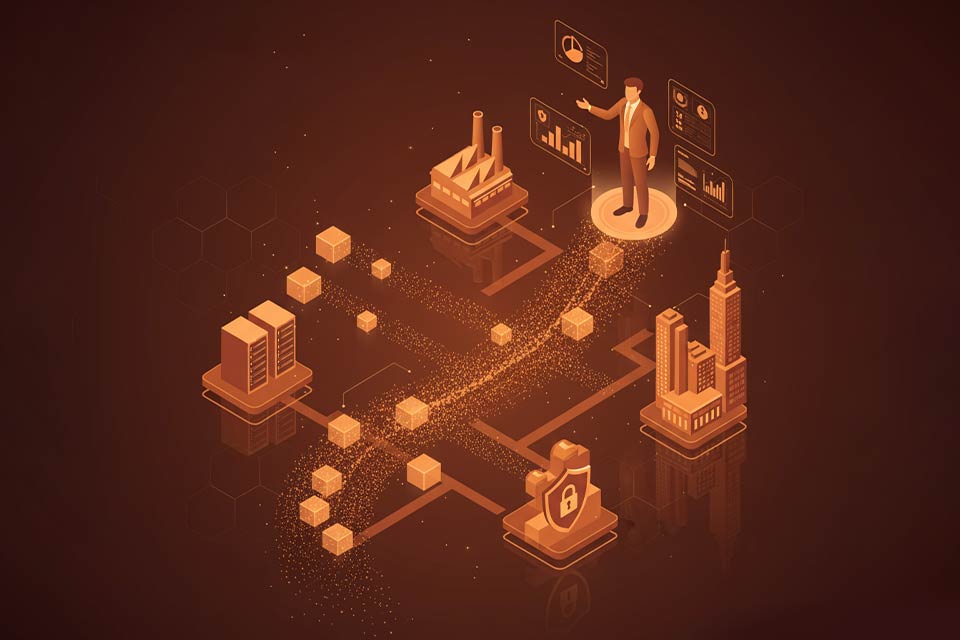
Stop acting like data is just an “asset.” That narrative is not only outdated—it’s dangerous. In today’s enterprise, data isn’t a passive resource to be stored, cataloged, and accessed when needed. It’s not a static good that CIOs can “manage” with old playbooks or infrastructure.
No—data has become a structural force, an invisible mass that pulls on everything around it, including computers, apps, services, and even people and teams. Welcome to the age of data gravity. If CIOs aren’t planning for it, they’re already behind.
Data gravity isn’t just a metaphor for the future; it’s the way things are right now.
What is data gravity, and why should CIOs be afraid of it?
Dave McCrory, a technologist, came up with the term “data gravity” more than ten years ago. It describes a simple but important phenomenon: as data builds up, it starts to pull applications and services toward its center, just like a planet pulls satellites into orbit. The more data there is, the stronger its gravitational pull is, making it harder to move or ignore.
But here’s the problem: most businesses still treat data like it’s weightless and move it between clouds, regions, and tools as if it were frictionless. No, it’s not. Every transfer adds some delay. Every time you copy something, it costs more. There is always a risk when moving. CIOs who stick to the old model of data mobility are building against gravity itself.
And in this battle, gravity always wins.
The Data Boom No One Is Ready For
The business data landscape has gone from hard to very unstable. AI pipelines, edge devices, connected factories, IoT telemetry, and multi-channel customer journeys all send out a constant stream of data, which is often in real time, often unstructured, and always spread out. This isn’t growth that happens in small steps. It is entropy that grows quickly.
CIOs are no longer in charge of “big data.” They are in charge of gravitational fields.
And this explosion is happening all over:
- At the edge, where machines make terabytes of sensor data every day.
- In AI models that need petabytes just to train once.
- Across thousands of apps and APIs that are always making logs, metrics, and insights.
This scale makes things different. The location of data now dictates the placement of all other elements. Compute. Storage. Networking. Even teams within an organization. The data should be at the center of everything, not the other way around.
Yet incredibly, many CIOs are still building systems that try to centralize everything. It’s like trying to pull Jupiter into your garage. The costs are crazy, there is no speed, and the result is failure.
Data Is Now Making Your Architecture
The most shocking truth is that data isn’t just shaping your architecture; it’s designing it.
- You don’t get to choose where computing happens anymore. Your data does.
- You don’t get to choose where your teams work. Your latency limits do.
- You can’t change the shape of your stack. Your data gravity does.
That means CIOs need to stop thinking like integrators and start acting like scientists. They need to make things that work in a world where data is the center of everything else. Data must be able to pull on everything, from infrastructure to workflows to AI models to org charts.
That’s what the new CIO has to do.
The Big Question: Are CIOs Building With Gravity or Against It?
So, here’s the awkward question that no one wants to ask: Are CIOs building systems that respect data gravity, or do they just ignore it because they don’t want to?
Ignoring this change won’t make it go away. Data gravity is already having an effect on how businesses are set up, whether CIOs want to admit it or not. The difference is whether they are proactively designing with this force or waiting for systems to fail, costs to go up, or innovation to stop.
This is not a trend in technology. It is a change in structure. CIOs who don’t change their plans—who keep putting money into centralization, who ignore edge processing, and who see AI as an add-on instead of a core principle—will be outpaced, outspent, and outmaneuvered.
The center of mass has shifted. The question is: will your business move with it or be crushed by it?
Data Gravity: From Idea to Strategic Reality
If your IT leaders still think “data gravity” is a buzzword, you’re already behind.
This isn’t a crazy idea or a marketing gimmick. It’s a structural fact that is changing the way businesses are set up. CIOs who still treat data like a static resource that can be moved, shuffled, or stored on command are fighting against something they don’t fully understand. And by doing this, they’re making systems that break easily, wasting millions of dollars, and making their businesses slower than they should be.
What does “data gravity” mean? (And why should you be worried?)
Technologist Dave McCrory came up with the term “data gravity” in 2010. It was a smart metaphor at the time. It’s a harsh truth today. As data grows, it pulls in applications, services, computers, and even people toward where it is stored.
This isn’t a cute comparison. It’s physics that can be seen in the digital world.
Think about it: Why do your analytics platforms and data lakes usually end up in the same cloud region? Why do your AI workloads tend to group together near your object storage buckets? Why does your latency budget go out the window as soon as you start moving petabytes between zones?
Because the data isn’t moving. Everything else is.
The bigger the data set, the more expensive, complicated, and dangerous it is to move it to another place. That’s not just a problem; it’s a problem with the building itself. And most IT departments in businesses are still acting like it doesn’t exist.
Data Isn’t Still? That’s the lie that CIOs are still telling themselves
It’s not easy to hear, but the truth is that treating data as “stationary” is an outdated idea from when CIOs had full control over where and how big the infrastructure was. Data doesn’t stay in one place anymore. It is:
- Made all the time at the edge.
- Looked at in the cloud in real time.
- Shared all over the world in hybrid settings.
- Logged, mirrored, backed up, and saved in different versions.
Data doesn’t travel well, though, unlike compute or storage. It’s heavy. It sticks. It has to do with compliance, location, and latency issues. Still, CIOs are putting money into architectures that think you can just move data around like it’s a Docker container.
That’s not true.
You can’t design buildings like it’s 2015 and expect to do well in a world where data location affects performance, cost, and compliance exposure.
Cloud Sprawl Is a Sign, Not a Solution
Let’s be controversial: Most of the time, multi-cloud strategies aren’t strategies. They are signs of denial. Businesses move their work to different clouds without asking the most important question: “Where does the data want to be?”
Cloud providers know more about data gravity than most CIOs do. That’s why they’re in a race to get your data first: once they have it, everything else will happen. Storage, computing, services, and spending.
Data gravity keeps you locked in much better than APIs ever will. And CIOs who don’t face that fact are letting vendors tell them how to build their systems.
So no, building another analytics stack in another cloud region isn’t being flexible; it’s being blind to gravity.
The New Holy Trinity: Proximity, Latency, and Cost
In a world where data has weight, the three most important things for a business’s performance are proximity, latency, and cost. These are all based on where your data is.
- Proximity: How close are your datasets to your applications? For AI, real-time analytics, and high-frequency systems, every millisecond of distance is important.
- Latency: How fast can data be processed, moved, and acted on? Your latency and your users will suffer if your architecture needs to constantly hop between regions.
- Cost: It costs a lot to move data. Access, exit, copying, duplication, and storage. Every byte costs something, and gravity makes it go up quickly.
If your CIO dashboard isn’t keeping track of those three dimensions concerning where the data is, you’re driving blindfolded in a hurricane.
The Strategic Reality That CIOs Need to Accept
CIOs need to stop asking, “Where do we want to run our workloads?” and start asking, “Where does our data already live, and what do we need to build around it?”
This is no longer an option. It’s real.
You can’t afford to treat AI and ML as separate projects that don’t connect to your main data sources.
Because your network is still centralized, you can’t afford to ignore edge computing.
You can’t afford to keep moving data around for convenience because it doesn’t move quickly, cheaply, or cleanly.
You don’t control data gravity. You give in to it. You make plans around it. You make a plan with it.
Infrastructure Change: Putting Systems Around the Data Core
We’re seeing a huge change in how businesses think about their infrastructure: instead of moving data to compute, they’re now moving compute to data. For a long time, traditional IT architecture has worked on the wrong idea that data can move around, but computing can’t. But in the age of AI, edge computing, and huge amounts of data, that idea is falling apart on its own.
And rightly so. Moving huge amounts of data is like dragging a mountain to a well. The smart ones put the well at the bottom of the mountain.
Let’s look at what this change really means and why CIOs who don’t adapt are making themselves less important.
1. The Old Model Is Dead: Data Doesn’t Move Well Anymore
In the past, when data centers were centralized and systems were neatly separated, the “bring your data to the compute” model made sense. You could copy data from transactional systems into BI tools, do your analytics in the cloud, and call it transformation.
That model stops working as soon as your business data starts to grow across:
- Sensors on the edge of the IoT.
- Clickstreams and behavioral logs from billions of interactions.
- AI inference systems that need decisions in milliseconds.
- Regulatory rules that require data to stay in the same region.
You waste time, increase latency, raise cloud costs, and miss the moment when you try to force that data back into a central warehouse. You make your system less stable, which is worse: every time you move data, you risk failure.
The new infrastructure rule says that systems should be built around the data core, not the other way around.
2. Edge Computing: Where Intelligence Meets Proximity
Let’s talk about the edge as a design principle, not as a buzzword.
Edge computing isn’t about having cool hardware in stores or tough servers on oil rigs. It’s about realizing that not all data needs to go to the cloud. The cloud is too far away in a lot of cases.
Think about making decisions in real time in manufacturing. Think about how to find fraud in payments. Think of how predictive maintenance works on wind turbines. Latency is money in these situations. If your system has to wait for a round-trip to centralized compute nodes, you’ve already lost money, uptime, or reputation.
Edge computing changes the model by putting the smart stuff—computing, analytics, and inferring—close to the data source. Analyze first, send later. Do something.
CIOs need to plan for both cloud scalability and edge immediacy. That means putting money into distributed compute frameworks, federated AI models, and local processing power that lets you use data as soon as it is created.
3. Hybrid and Multi-Cloud:
The Trap of Data Movement. Businesses used to flock to multi-cloud strategies to get more freedom and reliability. A lot of people are waking up to a hard truth today: multi-cloud without data locality is a nightmare for cost and performance.
Moving data between cloud environments is not only expensive, but it is also not always necessary and not very efficient. If you don’t think about where the data is when you design workloads, you’ll end up paying for every byte that moves and every millisecond it takes to get there.
CIOs need to change their approach and stop asking, “Which cloud should we run this on?” Ask, “Which cloud already has the data this app needs?” Then put the workload together there.
This change calls for a new hybrid strategy that focuses on the weight of workloads around data centers of mass instead of trying to make all providers the same. Interoperability is good, but smart placement is even better.
AI/ML Workloads:
Data is the anchor, and proximity is what powers it. This is where the change becomes even more important. AI and ML workloads need a lot of data. To train a big model, you need more than just computing power. You also need computing power that is close to terabytes or petabytes of structured and unstructured data.
CIOs who let distance separate their data and models will have to deal with:
- Training costs that are too high.
- Longer cycles for changing the model.
- Bureaucratic red tape, especially when it comes to moving data across borders.
The best thing to do is to put AI pipelines where the data already is. That means:
- Putting AI inference at the edge.
- Building MLOps pipelines that go around data lakes, not the other way around.
- Choosing hyperscaler regions based on more than just price, but also on data gravity.
It’s not just about having GPUs or being able to scale up automatically. Data proximity is the real currency in AI.
CIOs: From Building Systems to Designing Gravity
This is the turning point in strategy. The CIO is no longer just in charge of building things; they are now the astrophysicist of digital gravity.
You don’t have to choose which servers to buy or which cloud to use anymore. Your job is to figure out where data is being created, where it is growing, and where it needs to be acted on, and then to get the systems, intelligence, and people to that point.
The future enterprise architecture won’t be a stack with neat layers. It will be a mesh that is dynamic, responsive, and centered on data, with services orbiting around data instead of the other way around.
To be in charge of that change, CIOs must:
- Make it possible to see how data moves through your architecture.
- Buy tools that show how data gravity and latency affect things.
- Support platforms that let you use portable computers, not just portable apps.
The question isn’t if you’ll change your infrastructure to fit data gravity. The question is whether you will do it ahead of time or with pain.
Organizational Gravity: When Data Shapes Teams
We often think of data as bits and bytes flowing through machines, servers, and clouds. But here’s the uncomfortable truth: data doesn’t just shape infrastructure—it reshapes people, power, and organizational design. Ignore that, and you’re not just out of step with the tech—you’re out of step with reality.
● The Enterprise Is Starting to Orbit Around Data
As data grows in volume and value, it becomes more than just an input. It becomes a center of gravity. Just like planetary mass bends space-time and pulls objects into orbit, core datasets—like customer behavior, product telemetry, or financial analytics—are warping the very structure of how teams are formed, how decisions are made, and how strategies are executed.
And CIOs? They’re caught in the gravitational pull, whether they like it or not.
Let’s be clear: traditional org charts—siloed IT, isolated data teams, and rigid functional hierarchies—are dead weight. They cannot survive in an enterprise defined by real-time signals, cross-functional action, and AI-infused intelligence. Data doesn’t respect lines on a chart. It flows where it’s needed. And the smartest companies are redesigning themselves accordingly.
● Embedded Data Teams: From Centralized Labs to Frontline Operators
Not long ago, “data” lived in a separate function—typically under IT, analytics, or finance. Analysts churned out reports, and decision-makers occasionally glanced at dashboards. That’s no longer enough. Data teams are being embedded directly into business units—sales, product, operations, and customer experience. Why? Because the distance between insight and action is the difference between agility and irrelevance.
CIOs need to recognize this shift and support it. That means creating architectures and platforms that allow embedded teams to access, interpret, and act on data, without begging for permission or navigating ten layers of bureaucracy.
● New Roles, New Gravity: The Rise of the CDO and DataOps
Let’s talk about the rise of the Chief Data Officer (CDO). For years, CIOs ruled the tech stack—but increasingly, it’s the CDO who defines how value is extracted from data. It’s a political reality that many CIOs resist at their peril. The smart ones are collaborating, even ceding ground, because they know that governance, ethics, lineage, and usability are no longer just technical concerns—they’re boardroom-level strategic issues
Then there’s DataOps—the operational backbone for a world where data is no longer a static resource but a living, breathing organism. DataOps is DevOps meets data engineering, with a focus on agile delivery, quality, versioning, and automation. It’s the foundation for treating data pipelines with the same rigor as software pipelines. CIOs who fail to invest here will find their AI and analytics dreams quickly turning into brittle, expensive nightmares.
● The CIO’s New People Mandate: Aligning Teams to the Data Core
Here’s where the real disruption happens: CIOs must begin to treat people as part of the data architecture.
That sounds controversial, even uncomfortable—but it’s true. Teams must be organized not just by function but by the data they depend on. Consider this: if customer data is your most valuable gravitational center, then why are your product, marketing, and support teams using different platforms, models, and definitions? It’s madness. And it’s costing you.
Cross-functional teams—aligned around core datasets—are becoming the norm. These are not theoretical pods or agile theater. They are durable units that orbit key data domains, with embedded engineers, analysts, designers, and decision-makers. They iterate fast, build smart, and learn continuously. The CIO’s job is to empower them with common tooling, clear governance, and frictionless access.
● Letting Go of Control, Gaining Strategic Influence
Here’s the paradox CIOs must face: to lead in a data-driven enterprise, you have to give up control. You cannot centralize every decision, every dataset, or every model. You must create decentralized, self-service ecosystems—where governance is embedded, not enforced. Where people orbit data because it fuels their work, not because IT mandates it.
In other words, CIOs must shift from command-and-control to curate-and-enable.
That’s not easy. It requires new skills, new mindsets, and often, new allies. But it’s the only way to stay relevant in a world where organizational gravity is no longer defined by hierarchy—it’s defined by data.
Structure Follows Data, Not the Other Way Around
This is the uncomfortable truth of organizational gravity: your teams will ultimately follow the data, whether your org design supports it or not. CIOs who cling to outdated structures will find themselves outpaced by faster, smarter, more agile competitors.
But those who embrace the gravitational pull of data—who architect around it, build teams that orbit it, and empower every function to act on it—will redefine not just IT, but the enterprise itself.
Architecting for Gravitational Flexibility
In a world where data gravity is a big deal, CIOs have a tough problem: the more data they have, the harder it is to move, manage, and come up with new ideas around it. But not all data has the same pull. Some things are only there for a short time, like at the edge. Some types make up the stable core of business intelligence. Some people live in the messy middle, which is semi-structured, unpredictable, and always changing.
The brave truth? CIOs need to stop acting like a single approach to data architecture can work for everyone. The real challenge is designing for gravitational flexibility, which means being able to change the way data moves and changes mass.
All Data Is Not Equal—So Stop Treating It That Way
Many businesses still think that data is the same everywhere. They think that moving it to the cloud, dumping it in a lake, and adding some dashboards will give them insight. That way of thinking is very out of date. Data exists on a spectrum of gravity.
- Data that moves quickly, like IoT sensors, customer interactions, or digital twins, has low gravity. It doesn’t last long and needs to be processed close to where it came from.
- Core business data, such as customer history, product lifecycle information, or regulatory records, has a lot of weight. It doesn’t change much, moves slowly, and is the basis for business intelligence and AI.
- Data that is contextual and collaborative, like that from partners, social signals, or semi-structured feeds, can move between these two extremes and sometimes create new centers of gravity.
- The CIO’s job isn’t just to keep data safe and store it anymore; they also have to figure out how to map, predict, and design around the different gravitational fields of data.
Tiered Gravity Needs Tiered Architecture
This isn’t just a change in ideas; it’s a design requirement. When you architect for gravitational flexibility, you make systems that understand how data is used in different parts of the business. That means we need to take a tiered approach:
- At the edge: Build lightweight, fast systems that can process and respond to data where it is created. Think of self-driving cars, smart factories, or catching fraud in real time. Latency is the enemy here, and centralization is death.
- At the core: Make systems that are strong and can grow to hold stable data assets. These are your historical records, the datasets you use to train AI models, and the analytics engines that work across your whole business. They want access that is trustworthy, well-governed, and honest.
- In the cloud and mesh: Enable dynamic, API-driven, service-based architectures that can pivot as data moves, grows, or fragments. Microservices, serverless computing, and federated data management are all useful here.
Being flexible doesn’t mean being chaotic. It means making things that can be changed, fit different situations, and work with other things.
Data Fabric and Mesh: Not Just Words
“Data fabric” and “data mesh” are popular topics of conversation among CIOs right now because they really do offer ways to make things more flexible.
Data fabric connects and gives access to data from different sources, locations, and formats in one place. It doesn’t move data around for no reason; it makes it easy to find and use no matter where it is.
Data mesh, on the other hand, treats data domains like products and gives ownership to the teams that are closest to the data. It goes against the old idea of centralized platforms and instead gives domain teams responsibility, freedom, and context.
Both models are made for a world where data gravity changes, not stays the same. CIOs who cling to monoliths and static platforms are making themselves irrelevant.
Detach, Attach, And Repeat With Composable Architecture
Composability, or the ability to mix, match, reconfigure, and deploy services on demand, is one of the most powerful tools a CIO has today. In terms of gravity, this means making microservices and APIs that can move toward core datasets when they need to and move away from them just as easily when those centers move.
Systems that can be put together:
- Make it easier to respond quickly to business needs.
- Cut down on reliance on heavy legacy stacks.
- Let people try things out without causing problems.
Think of a microservice that can find fraud by following financial transaction data as it moves from the edge to the cloud. Or a product recommendation engine that “orbits” different types of customer data based on where they live, the time of year, or how they act. That’s not a story from science fiction; it’s the new way that enterprise architecture works.
The CIO’s New Rule: Plan for Movement, Not Control
Most old IT systems were made to keep things under control by locking down data, limiting change, and making things less complicated. But in a world where data is heavy, those instincts are bad. The CIO’s job now is to plan for movement, not of data, but of services, teams, and decisions about the growing amount of data.
That means:
- Giving up the idea of centralization.
- Building with purpose and modularity.
- Putting money into orchestration instead of micromanagement.
Gravitational flexibility is not something you can live without. It’s a trait that helps you stay alive. CIOs who embrace it will help their businesses move faster, grow smarter, and make the most of AI, edge, and real-time intelligence.
The CIO’s Strategic Role in a Business Driven by Gravity
Let’s get this straight: the CIO is no longer just in charge of the infrastructure. In a business that runs on gravity, where data is the unseen force that bends everything around it—compute, applications, and even teams—the CIO needs to become something much more important: the architect of speed, adaptability, and understanding.
It used to be that the CIO’s success was based on how well systems were kept up or how cheaply IT ran. Today, the CIO’s real worth is in how well they prepare the business to work with data, not against it.
1. From System Custodian to Architect Focused on Data
In the past, people thought of the CIO as the person in charge of all of the company’s IT. They were in charge of keeping the lights on, protecting the perimeter, and providing services quickly. But that model doesn’t work anymore in today’s world full of data.
Why? Data, not systems, now defines the business.
In a world where data gravity rules, the CIO’s new job is to become a data-centric architect. This means they don’t just manage platforms; they also plan how the flow and accumulation of data shape the whole digital business.
This means:
- Designing systems that take into account where data is stored, not just where there is enough computing power.
- Designing services that are aware of latency and proximity.
- Making pipelines for AI, ML, and real-time analytics that can handle changes in data shape or location without breaking.
Now, it’s the CIO’s job to figure out where the enterprise’s gravitational zones are and design systems that work well in those areas.
2. From Efficiency Enforcer to Strategic Decision-Making Speed Up
Let’s be honest: a lot of CIOs have had to focus on costs too much. Metrics like uptime, ticket resolution time, and cloud spend optimization fill up their KPI dashboards. And even though operational efficiency is important, it’s not enough anymore.
In a world where data is king, the key to success is decision speed, or how quickly the business can sense, analyze, and act. And making that speed possible is now a strategic need.
That’s why the CIO needs to:
- Put data flow ahead of system availability.
- Get rid of the walls between the IT, business, and data teams.
- Put money into platforms that let people who aren’t tech-savvy interact with data in a meaningful way, like low-code tools, AI copilots, or real-time dashboards.
The CIO is the person who connects business intelligence and data infrastructure. When that link is strong, decisions come easily. When it’s weak, even the best plans get stuck in the fog of latency, fragmentation, and misalignment.
3. Predicting Gravity: The CIO as a Strategic Planner
Here’s the hard truth: data gravity doesn’t stay the same. It changes. New data centers of mass will pop up as new products come out, customers change their habits, or rules change. Some will be inside the business, and others will be outside of it.
The CIO needs to be able to predict the future by always looking for where gravitational pull is forming and putting infrastructure, tools, and people in the right places ahead of time.
For example:
- Expecting a lot of unstructured edge data to come in and putting money into edge-native architectures early on.
- Recognizing how important customer behavior data is and making sure that marketing, product, and engineering all have access to it in a controlled way.
- Understanding that AI models and training data will become more and more like black holes, and designing systems to reflect this.
- You can’t wait any longer. It’s too late to catch up by the time you can see the gravity.
Shaping Talent Around Gravity, Too
This isn’t just about tech. It’s about people.
A modern CIO needs to think about how to redesign the organization. Cross-functional collaboration must follow as data gravity pulls different teams toward certain datasets, such as customer, operational, or financial data.
This means:
- Putting data engineers on product teams.
- Giving analysts access to live pipelines instead of old warehouses.
- Working with Chief Data Officers and DataOps to make innovation possible without central control.
Talent must follow the data wherever it goes. The CIO is in charge of making sure that mobility is part of the organization’s DNA.
Hence, in the gravity-driven business world, CIOs have two options. They can lead by predicting the mass, making things flexible, and using data to drive growth. Or they can passively orbit, being pulled along by forces they didn’t see coming.
People will see the leaders not as tech enablers, but as the architects of the future of business, shaping how decisions are made, how products are made, and how businesses change in real time.
This new world doesn’t see data as just information. It’s the infrastructure. It has power. It is the force of gravity. The CIO is the one who has to make the business work well within its own pull.
Final Thoughts
There was a time when data was just fuel: it went into analytics engines, left a trail behind in business processes, or was stored in huge warehouses for later use. But that time has passed. In today’s world, data is the backbone of the modern business. It is an immovable mass that pulls everything around it toward it. It pulls people, processes, applications, and infrastructure into its orbit. It affects choices not only through content but also through presence, proximity, and size. Data gravity is no longer just a theory; it’s a real thing that happens in this new world. And it’s getting faster.
Businesses are now creating and using data on a scale that was never thought possible, from edge devices at the operational edge to AI models running in real time across multiple cloud infrastructures. But a lot of businesses still don’t understand this: data isn’t just getting bigger; it’s also getting more concentrated. And as it does, it pulls systems toward it. Every extra byte adds weight, not just in storage, but also in power. Services are grouped around datasets. Change the location of the computer.
Network topologies change shape. Teams even change their structure. Data gravity is already pulling on their organizations, whether CIOs plan for it or not. The only thing we don’t know is if they are acting with purpose or just reacting to things they don’t fully understand.
The CIO’s job has changed a lot in this setting. The CIO is no longer just in charge of infrastructure or helping with digital transformation. Now, they need to be the “gravitational architect,” someone who designs the business not just for uptime and efficiency, but also for gravitational alignment. This means making systems that can automatically adjust to the changing amount of data. It means not seeing data as something that helps the business, but as the thing that shapes the way the business works.
The CIO needs to be able to predict where gravitational centers will form, such as around customer data, AI pipelines, edge intelligence, or decentralized platforms. They also need to make sure that the right compute, talent, and governance models are in place.
People who don’t do this will end up in a slow, fragile business that is always fighting latency, inefficiency, and misalignment. Teams will still have a hard time getting to the right data. Because they are far away from their data sources, applications will not work as well. Costs will go up because of moving data that isn’t needed. Worst of all, decisions will take longer because insights will take too long to come to light or be too far removed from operational systems to act on.
But CIOs who use gravitational design will get a lot of benefits. Flexibility, because systems can change to fit new data. Intelligence, because insights are drawn directly from the source, not routed through layers of delay. Competitiveness, because products and services change more quickly and businesses have a better understanding of their customers, markets, and operations. And speed, because the whole company can think and act as quickly as the data.
Don’t get me wrong: this is not a small change in architecture. It’s a new way of thinking about business strategy. Data gravity will set apart CIOs who only digitize from those who create the next generation of business infrastructure. It will set apart people who see data as fixed from those who see it as a moving, guiding force. The first will handle the decline. The second will make things go faster.
So here is the last call to action – Don’t think of data as just another IT issue. Treat it like the structural force it is. The CIO’s job is no longer just to make change happen. It is to make gravitational alignment possible. That means redesigning everything, from infrastructure to org charts, to be based on the pull of data.
The smartest CIOs in this new era won’t be those who fight gravity; they’ll be those who ride it. And they will be the ones who build businesses that not only move faster, but also smarter, thanks to the people who now really run the business.
Catch more CIO Insights: The CIO as AI Ethics Architect: Building Trust In The Algorithmic Enterprise
[To share your insights with us, please write to psen@itechseries.com ]
