

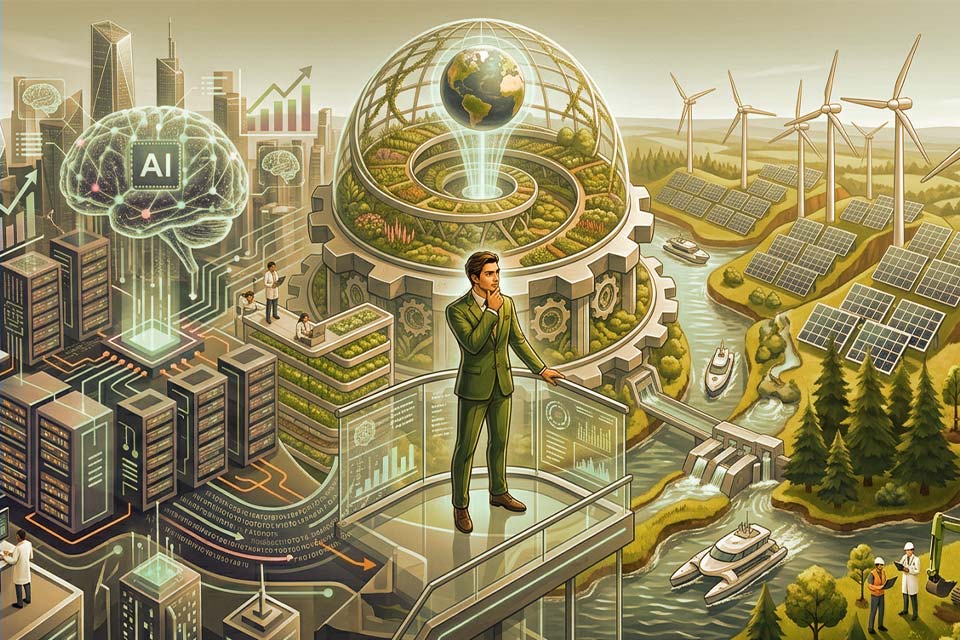
Artificial intelligence is quickly becoming the basis of modern digital transformation. Across all industries, companies are deploying sophisticated AI systems to improve productivity, automate processes, improve the customer experience and accelerate innovation. The emergence of large language models, generative AI applications, machine learning platforms and intelligent automation tools has triggered an unprecedented surge in compute demand. As companies rush to incorporate AI into their operations, the infrastructure to support these technologies continues to expand at a remarkable clip.
AI workloads are growing at a rapid pace, putting enormous pressure on data centers, cloud platforms and enterprise technology environments. Creating and operating sophisticated AI models requires an enormous amount of computing power, often involving thousands of high-powered processors running 24/7. Hence, the energy consumption of digital infrastructure is growing exponentially. As organizations try to meet the growing demand for AI-driven services, data centers are getting bigger, more powerful and more resource-intensive.
This growth has put sustainability at the top of the agenda in conversations among tech leadership. These AI systems consume a lot of electricity and often require large cooling systems to keep them running. As well as energy use, there are increasing concerns about carbon emissions, water use, electronic waste, and the environmental costs of expanding the digital infrastructure. AI promises transformative business value, but it also creates new environmental challenges enterprises can no longer ignore.
Meanwhile, regulators, investors, customers, and employees are increasingly asking organisations to prove they’re taking responsible actions on the environment. Sustainability reporting requirements are tightening, and Environmental, Social, and Governance (ESG) initiatives are shaping business strategy across sectors. Now, organizations are expected to pursue innovation with the least environmental impact. This balancing act is generating new responsibilities for technology leaders across the enterprise.
With AI adoption accelerating, the CIO’s role is changing dramatically. Traditionally, the CIO has focused on the technology operations, infrastructure management and digital transformation initiatives. Today’s CIO must also think about the environmental impact of technology investments. Sustainability impacts are now directly tied to decisions around AI deployment, cloud migration, data center operations, and infrastructure expansion. As a result, technology leadership is increasingly tied to environmental stewardship.
The modern CIO has a duty of care not just for enabling innovation and operational efficiency. They also align technology strategies with corporate sustainability objectives. This transition means that, beyond business performance objectives, energy efficiency, carbon reduction, resource optimization, and responsible technology governance must be taken into account.
Rather than being a stand-alone environmental initiative, sustainability is increasingly being seen as a strategic technology priority within organizations. The CIO plays a critical role in guiding organizations through this transition, ensuring that AI innovation is implemented responsibly and efficiently. The choice of technology has to increasingly consider growth, profit, and environmental impact.
With the growth of high-compute AI economies, the emergence of the sustainable CIO is one of the most important leadership developments in enterprise technology. In the AI age, an organization’s capacity to innovate and innovate sustainably will determine success. The future of digital transformation will increasingly be shaped by technology leaders who can balance the need for AI-driven growth with the need for long-term environmental responsibility.
Understanding the Sustainable CIO
AI, cloud computing, and data-intensive technologies are rapidly transforming enterprise technology leaders. “Organizations are investing more in AI infrastructure and digital transformation initiatives, and sustainability is becoming a more important consideration in technology strategy. Today, the modern CIOis expected to do much more than manage IT operations. They have to juggle innovation, operational efficiency, environmental responsibility, and business longevity.
The rise of high-compute AI economies has heightened the importance of sustainable technology leadership. Now organizations are under increasing pressure to reduce environmental impact while maintaining innovation and competitiveness. The reward is the rise of the Sustainable CIO – a technology executive who weaves sustainability into all aspects of digital transformation and enterprise technology management.
The Changing Role of the CIO
The CIO role has changed significantly in the past 20 years. Traditionally, the CIO has been viewed as an operational technology manager, but has transformed into a strategic business leader responsible for driving enterprise-wide transformation.
a) Traditional Focus on IT Infrastructure and Digital Transformation
Historically, technology leaders have been concerned with maintaining stable and secure IT environments.
Key responsibilities:
- Managing enterprise infrastructure
- Maintaining business applications
- Supporting cybersecurity initiatives
- Ensuring system availability and performance
- Driving digital transformation projects
Technology leadership was largely measured by operational efficiency, system reliability and cost management.
b) Growing to Business Strategy and Innovation Leadership
As technology became a key differentiator in business, the CIObegan to play a more strategic role in organizations.
This evolution had:
- Oversee digital innovation programs
- Support for revenue growth activities
- Customer experience transformation leadership
- Powering enterprise modernization efforts
- Aligning technology spending with business goals
The modern CIOis increasingly involved in strategic decision-making and long-range business planning these days.
c) Growing Responsibility for Environmental and Sustainability Outcomes
Tech leadership now has an important sustainability component.
Now, technology leaders are supposed to:
- Minimize the environmental footprint of IT operations
- Increase energy efficiency across infrastructure
- Support corporate ESG efforts
- Drive sustainable digital change
- Support the organization’s climate goals
This change is indicative of the increasing recognition that technology choices have substantial environmental impacts.
What Does Sustainable CIO Mean?
The concept of a Sustainable CIOis a recognition of the growing importance of technology leaders to balance business growth and environmental responsibility.
a) Definition and Core Responsibilities
A Sustainable CIOis a technology leader who brings environmental sustainability into the realm of technology strategy, infrastructure planning, and digital innovation initiatives.
Major responsibilities will include:
- Creating sustainable technology roadmaps
- Reducing carbon emissions from technology
- Energy consumption optimization
- Supporting ESG reporting efforts
- Helping to bring responsible AI to market
Unlike traditional models of technology leadership, sustainability is a strategic concern, not an operational one.
b) Sustainability as a Core Consideration in Technology Decisions
Every big tech investment today has an impact on the environment.
A Sustainable CIO Measures :
- Energy efficiency of technological platforms
- Infrastructure deployments carbon footprint
- Environmental impact of AI training
- The sustainability performance of technology vendors
- Resource consumption requirements long-term
Such an approach guarantees that environmental considerations are integrated within technology governance frameworks.
c) Balancing AI Innovation, Operational Efficiency, and Environmental Impact
Finding a balance between competing priorities is one of the most important responsibilities of the Sustainable CIO.
Organizations must do the following simultaneously:
- Speed up AI adoption
- Enhance operational performance
- Minimize environmental impact
- Control technology expenses
- Deliver stakeholder value
To reach these goals, a holistic approach is required that integrates innovation with sustainability goals.
Why Sustainability is the CIO’s Top Priority?
Various market and technological forces are pushing sustainability to the top of the technology leadership agenda.
a) Growth of Enterprise AI Deployments
Almost Every Industry Is Increasing AI Adoption
Organizations are pouring money into:
- Large language models
- Generative AI platforms
- Predictive analytics systems
- Intelligent automation solutions
- Machine learning infrastructure
These technologies require significant computing power, which raises operational costs and environmental impact.
b) Rising Energy and Infrastructure Costs
Energy consumption has become a big business issue.
Some of the factors are:
- Scaling cloud workloads
- Additional data center capacity
- Growing compute-hungry AI applications
- Increasing electricity rates
- Requirements for infrastructure modernization
As costs continue to increase, the CIO must find ways to improve efficiency without compromising performance.
c) Expectations of Stakeholders and ESG Reporting Requirements
Environmental, Social, and Governance (ESG) initiatives are becoming more and more important to investors, customers, and regulators.
Organizations are increasingly expected to:
- Carbon reduction targets
- Sustainability disclosures
- Environmental accountability
- Responsible technology practices
- Ethical AI deployment
Technology leaders are essential in helping organizations deliver on these commitments.
d) Corporate Commitments to Net-Zero and Sustainability Goals
Many of these companies have established bold sustainability targets.
Such commitments typically include:
- Carbon neutrality goals
- Renewable energy adoption goals
- Emissions reduction initiatives
- Sustainable procurement programs
- Environmental performance reporting
Technology operations are a significant part of these sustainability efforts, making the CIO a critical driver of organizational success.
The Sustainable CIO as a Business Strategist
Sustainability is no longer just an environmental issue; it’s a business strategy issue.
a) Technology investments and sustainability objectives
Technology investments are increasingly important for environmental performance.
The Sustainable CIO ensures that investments deliver:
- Increased energy efficiency
- Carbon reduction projects
- Investments in sustainable infrastructure
- Ethical AI Practices
- Long-term environmental objectives
This alignment enables organizations to realize the benefits of simultaneously attaining business and sustainability objectives.
b) Driving Long-Term Value Creation
Sustainable technology practices can create considerable long-term value.
Benefits include:
- Reduced operating costs
- Reduced energy costs
- Improved regulatory compliance
- Higher confidence from investors
- Improved brand reputation
Organizations are increasingly seeing sustainability as a competitive advantage rather than a compliance mandate.
c) Building a Resilient and Responsible Digital Ecosystem
Future technology environments must be innovative and sustainable.
The Sustainable CIO wants to build ecosystems that are:
- Scalable
- Energy efficiency
- Safe
- Environmentally friendly
- Able to cope with future challenges
This wider view of the role of technology provides a vital lever for sustainable business growth.
The Sustainability Problem in AI Economies
As organizations increasingly adopt AI, they are faced with an expanding set of sustainability challenges. AI provides important business benefits, but also creates new environmental pressures that technology leaders must address. “The growing use of high-performance computing infrastructure is making sustainability a strategic technology issue.
Today’s CIO must balance these challenges to ensure innovation is both cost-effective and environmentally sustainable.
Also Read: CIO Influence Interview With Jake Mosey, Chief Product Officer at Recast
The Growing Energy Demand of AI
Artificial intelligence is one of the most resource-intensive technologies ever deployed at scale.
a) Computational Demands of Current AI Systems
Advanced AI systems need a lot of computing power.
Factors that influence energy demand include:
- Large-scale model training
- Continuous inference processing
- Massive data requirements
- High-performance GPU utilization
- Real-time AI workloads
As AI models become larger and more sophisticated, their energy requirements continue to grow.
b) Training and Inference Energy Requirements
The energy consumed by AI extends beyond model development.
Organizations need to support:
- Training for activities modeling
- Ongoing inference activities
- Updates the model on the fly
- Live user engagements
- Enterprise AI apps
Such workloads may lead to significant energy consumption over time.
c) Rapid Growth of Hyperscale AI Infrastructure
AI growth is fueling unprecedented infrastructure growth.
This comprises:
- Bigger data centers
- Increased cloud storage
- AI dedicated compute clusters
- Leading industry networking systems
- High-density processing environments
Such growth further strains energy resources worldwide.
d) Data Center Sustainability Challenges
Data centers are the backbone of today’s AI economies, but they also present significant sustainability issues.
Growing Power Consumption
Today’s data centers use huge amounts of electricity.
Contributors are:
- IT Infrastructure
- Storage systems
- Networking gear
- Technologies for cooling
- Processing AI workloads
With the rise of AI usage, electricity demand is expected to grow substantially.
Water and cooling requirements
A lot of heat is generated by AI infrastructure and needs to be managed efficiently.
Issues are:
- High cooling demand
- Drink more water
- Infrastructure cooling expenses
- Pressure on environmental resources
- Regional water availability issues
Technology leaders are prioritizing sustainable cooling solutions.
Carbon Footprint of Large-Scale Computing Facilities
Many computing facilities still use energy sources that contribute to carbon emissions.
Environmental problems are:
- GHG emissions
- Processes with high energy demand
- Power generation with high carbon content
- Environmental impacts related to infrastructure
- Climate impacts over the long term
Reducing these emissions is becoming a pressing problem for enterprise technology teams.
Environmental Impact of AI Expansion
The environmental impact of AI goes beyond data center operations.
a) Resource Consumption Across AI Supply Chains
AI systems depend on complex global supply chains.
Resource requirements are:
- Raw materials
- Manufacturing processes
- Hardware production
- Transportation networks
- Infrastructure construction
Each phase has its own environmental impact on the overall footprint of AI.
b) Electronic Waste and Hardware Lifecycle Concerns
Fast-moving technology tends to shorten hardware life cycles.
This causes problems around:
- Hardware disposal
- Equipment replacement cycles
- Resource recovery
- Recycling processes
- E-waste management
The importance of sustainable technology procurement and lifecycle management is increasing.
c) Growing Demand For Advanced Semiconductors
AI’s surge is creating demand for specialized chips and processing hardware.
This expansion yields:
- Consumption of production resource
- Complexity in the supply chain
- Environmental impact of production
- Global competition for resources
- Reliance on infrastructure
d) Innovation vs Sustainability
The greatest challenge for the modern CIO is probably to balance rapid innovation with environmental responsibility.
Pressure to Accelerate AI Adoption
There is a great competitive pressure on organisations to quickly adopt AI technologies.
a) Balancing Environmental Costs Without Stifling Innovation
Tech leaders need to understand how to optimize sustainability without stifling innovation.
b) Conflicting Business Priorities
The Sustainable CIO often has to juggle:
- Growth objectives
- Cost management
- Innovation initiatives
- Sustainability goals
- Regulatory compliance
The skill to manage these competing priorities is emerging as a defining trait of good technology leadership.
Regulatory and ESG Pressures
External stakeholders are raising expectations for sustainable technology operations.
a) Sustainability Reporting Requirements
Increasingly, organizations are required to report environmental performance indicators.
b) Environmental Regulations and Technology Operations
Governments are introducing regulations on emissions, energy use, and environmental accountability.
What investors are seeking in responsible AI growth. An increasing number of investors are looking at how organizations are managing the environmental footprint of AI growth. As AI economies continue to grow, the CIO’s ability to govern innovation, sustainability, and business performance will be a key to enterprise success over the long haul.
CIO Strategies for Sustainable AI Operations
As artificial intelligence becomes increasingly embedded in enterprise operations, companies face growing pressure to balance innovation and sustainability. The emergence of AI workloads, cloud environments, and data-heavy computing is driving up energy consumption across digital infrastructure. Consequently, today’s CIOs need to develop strategies that enable AI to evolve with the smallest environmental footprint and that align with broader business sustainability goals.
a) Building Sustainable AI Governance Frameworks
Good governance is the foundation of sustainable AI operations. Organizations can no longer evaluate AI initiatives based on performance and business results alone. Governance structures should be built with sustainability in mind from the outset.
b) Defining Sustainability Metrics for AI Projects
CIOs must ensure that AI initiatives are evaluated on sustainability metrics along with traditional business metrics. Measuring energy consumption, carbon emissions, infrastructure utilization, and environmental impact can help organizations better understand the long-term impact of deploying AI. These measures encourage accountability while promoting more responsible decision-making.
c) Incorporating Environmental Considerations into Technology Planning
Environmental assessments are becoming more important for technology planning. The sustainability implications of infrastructure expansion, AI model creation, cloud migration and digital transformation efforts. The CIO must incorporate environmental considerations into technology roadmaps to ensure growth objectives are aligned with sustainability commitments.
d) AI Governance for Enabling ESG Goals
Environmental, Social and Governance initiatives are increasingly central to corporate strategy. Therefore, AI governance frameworks need to encourage responsible practices of technology, environmental transparency, and long-term sustainability to enable the ESG goals. AI governance that is aligned with ESG priorities improves compliance, reporting, and stakeholder confidence for organizations.
e) Optimizing AI Workloads for Efficiency
AI workloads are some of the most compute-intensive processes in the enterprise today. Improved workload efficiency leads to a considerable reduction in energy consumption without affecting the operational performance.
f) Reducing Unnecessary Compute Usage
Many organizations run AI environments that consume more computing resources than needed. The CIO can help to reduce operational costs and minimize the environmental impact by identifying inefficiencies, minimizing idle infrastructure, and eliminating redundant processing activities.
Efficient Model Training and Deployment Practices
The development of AI models requires a lot of computing power. Organizations are increasingly moving to more efficient training techniques, streamlined architectures, and deployment practices that use fewer resources without sacrificing performance. The CIO plays a critical role in enabling efficiency across the AI lifecycle for development teams.
Workload Prioritization and Resource Optimization
Not all AI tasks deliver equal worth to the business. Strategic prioritization allows organizations to allocate resources more effectively and enhance sustainability outcomes. Resource allocation is a balancing act between being innovative and environmentally responsible.
Data Center Operations Sustainability
Data centers continue to be the heart of AI operations and are among the largest contributors to enterprise energy use. Thus, managing infrastructure sustainably is a key concern for the CIO of today.
Sustainable Infrastructure Strategies
Organizations are investing more in energy-efficient servers, networking systems, storage technologies, and power management solutions. Both of these investments help reduce electricity consumption and meet the increasing demands of AI workloads.
Adoption of Renewable Energy
Increasingly, companies are bringing renewable energy sources into their digital infrastructure strategies. Renewable energy purchase agreements, renewable-powered cloud services, and carbon-neutral initiatives help reduce emissions and support corporate sustainability commitments. Often, the CIO is at the forefront of these efforts, aligning infrastructure decisions with environmental goals.
Advanced Cooling Technologies Inc.
The increasing amount of heat generated by AI workloads has made cooling systems a major sustainability issue. Modern approaches like liquid cooling, intelligent airflow management, and AI-powered cooling optimization improve efficiency and reduce the consumption of resources.
Green Procurement and Technology Acquisition
Sustainability is not just about our own operations but the wider technology supply chain.” Procurement decisions can have a major impact on an organization’s environmental footprint.
Responsible procurement of hardware
The CIO must take into account the energy efficiency, sustainability of product lifecycle, recyclability, and impact on the environment when choosing hardware. Sustainable procurement strategies that reduce resource consumption can support responsible technology adoption.
a) Vendor Selection – Responsible
Technology vendors are playing an increasingly important role in enterprise sustainability efforts. Companies are now looking at suppliers not just for product performance but also for carbon reduction commitments, environmental transparency, and ESG performance.
b) Sustainability Considerations in Supply Chain:
The rise of AI infrastructure has made sustainable supply chains more critical. Broader sustainability goals are advanced through responsible sourcing practices, resource conservation efforts, and supplier accountability programs, which also enhance long-term resilience.
c) Measuring and Reporting Sustainability Results
Good sustainability strategies rely on ongoing measurement, monitoring and reporting. The CIO must ensure that environmental performance is measured with the same rigour as operational and financial performance.
d) AI Operations – Carbon Accounting
Organizations are increasingly accounting for emissions from AI training, cloud environments, data centers, and infrastructure operations. Carbon accounting provides visibility into environmental impact and enables informed decision-making.
e) Sustainability KPIs & Performance Tracking
Clear sustainability KPIs enable organizations to monitor progress towards environmental goals. These indicators can give technology leaders insight into areas for improvement, as well as accountability across the enterprise.
f) Transparency and accountability
Stakeholders should expect greater transparency of environmental performance. Investors, regulators, customers, and employees are increasingly seeking proof of responsible technology management. Transparent reporting builds trust and demonstrates commitment to sustainability goals.
Technologies That Facilitate Sustainable CIO Strategies
Technology is also emerging as a key enabler of sustainability. AI is part of the growing demand for compute, but it also provides tools that can help organizations optimize resource utilization, improve operational efficiency, and reduce environmental impact. To support sustainable growth, modern CIOs are increasingly adopting innovative technologies.
a) Energy Saving AI Models
The key to making AI more efficient starts with the design of the models themselves. Organizations increasingly opt for smaller, more efficient architectures that require fewer computing resources but still provide high performance.
b) Compact and Optimized AI Architectures
Optimized models reduce energy consumption, improve scalability and lower infrastructure cost. These architectures enable organizations to meet sustainability goals while maintaining innovation.
c) Methods for Model Compression
Quantization, pruning, and knowledge distillation can reduce model complexity without performance loss. These approaches enable more resource-efficient deployment of AI and environmental impact.
d) Efficient Inference Technologies
A big chunk of the energy consumption related to AI can be explained by inference. Organizations are adopting streamlined deployment frameworks, specialized processing units, and edge AI solutions to improve efficiency and reduce resource consumption.
AI for Sustainability Optimization
Businesses are increasingly turning to artificial intelligence to improve sustainability outcomes across their operations.
a) AI-Powered Energy Management Systems
Energy management platforms powered by AI help organizations track consumption patterns, pinpoint inefficiencies, and maximize resource utilization in real-time.
b) Infrastructure Optimization (Predictive)
Predictive analytics also allows enterprises to forecast their infrastructure needs and better utilize their resources. These capabilities help reduce waste and improve operational efficiency.
c) Intelligent Resource Management
Sophisticated AI systems continuously optimize resource allocation to workload demand, allowing organizations to increase their utilization rates while reducing their energy consumption.
Sustainability Solutions in the Cloud
Cloud providers are offering sustainability-oriented services to support environmental goals, while providing flexibility and scalability.
a) Green Initiatives in Cloud Computing
Major cloud vendors are investing heavily in renewable energy, carbon reduction programs, and energy-efficient infrastructure to improve sustainability performance.
b) Carbon-Aware Workload Scheduling
Carbon-aware computing technologies dynamically place workloads in regions where energy sources are cleaner, enabling organizations to reduce emissions without sacrificing performance.
c) Eco-Friendly Cloud Infrastructure Management
Cloud sustainability tools give you transparency into your environmental impact and allow you to make smarter choices for infrastructure management.
Advanced Data Center Technologies
Data center innovation continues to be critical to sustainable AI operations.
a) Liquid Cooling Systems
Liquid cooling technologies also offer an improved thermal management efficiency and a significantly reduced energy consumption compared to traditional cooling methods.
b) Smart Power Management Platforms
Smart grids are constantly optimizing the distribution and consumption of energy in infrastructure environments.
c) Real Time Environmental Monitoring
Advanced monitoring platforms provide visibility into energy usage, cooling performance, emissions, and overall sustainability metrics for continuous optimization.
d) Sustainability Analytics and Digital Twins
Digital twin technologies allow organizations to simulate infrastructure performance and assess sustainability scenarios prior to making significant investments.
e) Simulation of Energy Consumption Scenarios
This enables organizations to model future energy requirements and potential optimizations before changing infrastructure.
Predictive Sustainability Planning
Predictive analytics can help in planning for long-term sustainability through prediction of environmental impacts and potential risks.
a) Environmental Performance Optimization
Environmental performance can be improved through continuous monitoring and simulation without compromising operational efficiency.
b) Renewable Energy Integration
Renewable energy is still among the most important elements of sustainable AI operations.
c) Renewable Energy Sourcing for Data Centers
More and more organizations are fueling data centers with renewable energy deals and sustainable energy programs.
d) Technologies for Grid Optimization
Next-generation solutions for grid management improve the efficiency of energy use and allow for a more optimal use of renewable resources.
e) Energy Storage Systems
Organizations leverage modern storage technologies to improve reliability and sustainability performance while maximizing renewable energy utilization.
The CIO will be increasingly dependent on these technologies and strategies as AI economies grow to strike a balance between innovation, operational excellence, and environmental responsibility. Sustainability technology leadership is becoming a key driver of success for enterprises.
Business Impact
Sustainability is no longer a niche concern for business; thanks to artificial intelligence, it has become a strategic imperative. As organizations deploy AI at scale, the environmental and operational toll of high-compute infrastructures can no longer be ignored. Sustainable AI operations are no longer just seen as green initiatives but are increasingly viewed as drivers of business performance, financial resilience, and long-term competitiveness. The **CIO** of today is critical to ensuring that AI innovation delivers measurable business value and supports the organization’s sustainability objectives.
a) Financial Benefits of Sustainable AI Operations
One of the most immediate impacts of sustainable AI strategies is the financial performance. Cost management is important and AI workloads demand a lot of computing power so energy efficiency and resource optimization are critical.
b) Reduced Energy Costs
Energy use is a rapidly rising cost of AI infrastructure. Large language models, machine learning environments, and advanced analytics platforms all consume a lot of electricity, both during training and inference. Sustainable technology practices assist organizations in reducing energy consumption with optimized workloads, efficient infrastructure, and intelligent resource allocation.
The **CIO** is increasingly concerned with energy-efficient architectures that cut operating costs without compromising performance. Organizations that take proactive steps to manage energy consumption often see meaningful savings and improved sustainability results.
c) Improved Operational Efficiency
Sustainable AI practices help organizations reduce waste, optimize resource usage, and simplify infrastructure management. AI-based monitoring solutions can locate inefficiencies, automate workload distribution, and improve system performance across enterprise environments.
CIOs can use sustainability technologies to drive operational efficiencies and reduce environmental footprint. These improvements directly impact profitability and speed of business.
Reduced Infrastructure Costs
Sustainability initiatives often lead to more effective infrastructure investments. Optimized computing environments require fewer resources, reduce hardware replacement cycles and minimize cooling requirements.
This means organizations can:
* Prolong hardware life cycles
* Lower costs of infrastructure expansion
* Lower maintenance costs
* Increase the value of technology investments
The business case for responsible AI operations is further supported by the financial upside of sustainability.
Improving ESG Performance
Environmental, Social and Governance initiatives are now central to corporate strategy and investor decision-making. Sustainable AI operations can help boost ESG performance and build confidence among stakeholders.
a) Enhanced Sustainability Reporting
To report sustainability accurately you need to be able to see how your digital operations are doing environmentally. Sustainable AI strategies can help organizations access the data needed to track emissions, energy use and resource consumption.
The **CIO** will frequently collaborate with sustainability teams to make sure that technology operations comply with ESG reporting requirements. Increased transparency allows organizations to demonstrate accountability and meet regulatory expectations.
b) Improved Corporate Reputation
Customers, investors and business partners will increasingly judge organizations by their environmental commitments. Implementing sustainable technology practices can improve brand reputation and position companies as responsible innovators.
Organizations that prioritize sustainability are seen as:
* Better reliability
* More progressive *
* More prepared for future challenges
More in line with stakeholder values
The **CIO** plays a direct role in this reputation by promoting environmentally responsible technology strategies.
c) Boosting Investor Confidence
Investors are taking a harder look at sustainability performance in evaluating business opportunities. Responsible AI development and strong environmental governance could lead to increased interest in investing in organizations.
Good ESG performance can contribute to:
* Greater access to capital
* Boost in investor confidence
* Lower reputational risks
* Greater long-term valuation upside
Technology leaders play a critical role in enabling these outcomes with sustainable infrastructure and governance practices.
Strategic Positioning in the Long Run
Companies that invest in sustainability today are often more successful in the future. Regulatory expectations, energy costs and stakeholder demands are likely to continue increasing.
It’s the **CIO**’s job to make sure technology strategies are aligned with these trends to support long-term competitiveness. Sustainable AI operations enable organizations to be resilient in a rapidly changing business environment.
Risk Mitigation and Regulatory Readiness
The arrival of AI has created new regulatory and environmental risks. Sustainable technology practices prepare organizations for future requirements and reduce exposure to potential liabilities.
Compliance with New Regulations
Governments around the world are introducing new regulations around sustainability, emissions reporting, energy consumption and responsible AI development.
Organizations that take a proactive approach to sustainability are often better positioned to meet:
* Environmental legislation
* Disclosure requirements of ESG
AI governance standards
* Carbon reporting requirements
Future Outlook
Artificial intelligence, sustainability, and intelligent infrastructure will drive the future of enterprise technology. As AI economies grow, sustainability will be embedded in technology operations, governance frameworks, and business strategy. The **CIO** role will continue to change as organizations attempt to balance innovation and environmental stewardship.
a) AI-Native Enterprises for Sustainability
Future enterprises will embed sustainability into all aspects of AI development and deployment.
Instead of launching sustainability as a standalone initiative, organizations will weave environmental considerations into technology planning, infrastructure management and AI governance. Automated optimization systems continuously monitor environmental performance and opportunities for efficiency improvements.
The **CIO** will manage AI-powered resource management systems that dynamically balance performance, cost and sustainability goals.
b) Ecosystems for Carbon-Aware Computing
Carbon-aware computing will be a hallmark of future technology environments.
Advanced infrastructure platforms will dynamically allocate workloads based on renewable energy availability, regional carbon intensity and energy efficiency considerations. Carbon-aware cloud environments will optimize resource usage and reduce emissions.
These systems will help organizations meet their sustainability goals while still maintaining their operational performance.
c) Green AI Governance Platforms
We can expect sustainability metrics and environmental monitoring capabilities to be added to AI governance platforms.
Supporting future governance systems:
* Automated ESG disclosures
* Sustainability tracking in real time
* Continuous compliance assurance
* Improvement of environmental performance
The **CIO** will use these platforms to improve accountability and transparency in the functioning of the enterprise.
d) Green Data Center Transformation
Data centers will keep evolving into highly efficient and environmentally responsible facilities.
Future work may involve:
* Infrastructure powered by renewables
* Environmental management systems, self-sufficient
* Technologies for high-performance cooling
* AI-powered energy optimisation
The shift to green infrastructure will become a strategic priority for organizations seeking long-term sustainability.
The CIO as Chief Innovation Officer for Sustainable Development
The role of the **CIO** will continue to evolve beyond technology management. The next generation of tech leaders will be strategic sustainability innovators who blend digital transformation with environmental objectives.
The modern **CIO** will increasingly be focused on:
* Strategies for sustainable innovation
* Optimizing environmental performance
* AI governance leadership *
* Responsible adoption of tech
This evolution will place technology leaders at the core of enterprise sustainability initiatives.
Conclusion
Responsible AI economies will force organizations to balance innovation, profitability and environmental stewardship. Sustainability will be a competitive necessity, not a voluntary activity.
Future business success will be increasingly dependent on an organization’s ability to integrate environmental performance into technology strategy. “Ensuring the AI growth is sustainable, ethical, and economically viable is a critical role for the **CIO**.”
At a fundamental level, the rise of AI is turning sustainability into a core responsibility of the modern **CIO**. As organizations ramp up their use of artificial intelligence, the environmental impact of technology operations is growing. Energy consumption, infrastructure needs and resource utilization are moving into the realm of critical business issues that can no longer be divorced from technology strategy. Effective technology leadership is increasingly inseparable from sustainability.
Sustainable **CIO** leadership will define the next era of enterprise innovation. Technology executives must balance innovation, operational efficiency, environmental stewardship and business growth all at once. The decisions that organisations make today around AI infrastructure, cloud adoption, governance structures and sustainability will determine their long-term success. In the future, technology investments will be judged not just on business outcomes, but also on their environmental impact.
Responsible AI operations deliver substantial business and environmental value. Organizations that optimize their AI infrastructure can reduce operating costs, improve efficiency, improve ESG performance, and reduce carbon emissions. Companies can use sustainable technology practices to comply with regulations, build trust with stakeholders, and increase resilience in a business environment that is becoming more complex. The **CIO** is uniquely positioned to deliver these results by integrating sustainability into digital transformation strategies.
The future is for sustainable digital companies. Responsible growth will also leave organizations powered by AI well positioned to respond to evolving regulatory demands, changing customer expectations and increasing environmental pressures. Sustainability is rapidly becoming a part of digital transformation, not just a nice to have. In the future high-compute economy, responsible AI optimization could provide economic and environmental benefits for enterprises.
Sustainability is becoming a defining element of enterprise strategy and **the CIO** will be one of the most influential leaders in shaping the future of responsible innovation. Organizations that successfully marry AI growth with environmental stewardship will be well positioned for long-term success and to help build a more sustainable digital economy.
Catch more CIO Insights: CIOs as Ecosystem Architects: Designing Partnerships, APIs, And Digital Platforms
[To share your insights with us, please write to psen@itechseries.com ]
