

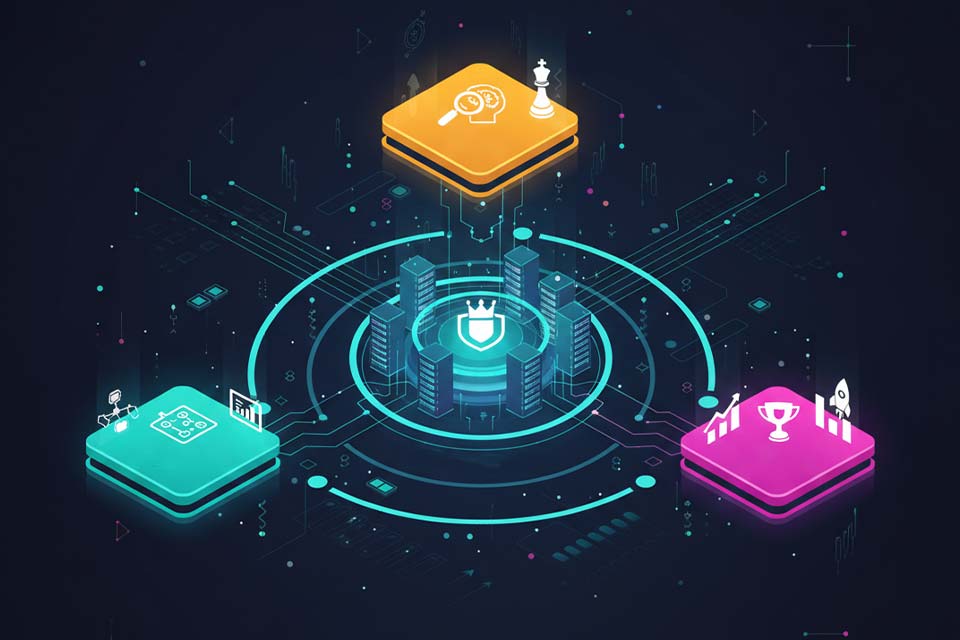
Infrastructure has been quietly in the background of the business for decades. People thought of IT as a utility function that was needed, costly, and mostly invisible when it worked. There were servers, networks, storage, and applications to “keep the lights on.” People often judged the CIO on how much time they spent on uptime, cost control, and ticket resolution, not on growth, innovation, or a competitive edge. Technology helped the business, but it didn’t define it.
That way of thinking is no longer true.
Digital business has made the line between strategy and technology blurry. Every business today is a technology-enabled business, whether it sells financial services, makes things, delivers healthcare, or manages logistics. Software is used to send products. Platforms are what make the customer experience happen. Data drives decisions. For revenue to come in, systems need to work not only reliably, but also smartly and quickly. In this setting, infrastructure is no longer just plumbing. It is the base on which strategic differentiation is built.
Speed, innovation, and resilience are the traits that set high-performing businesses apart. These are all architectural outcomes. Modular systems and integrated data make it possible to quickly launch new products. Real-time pipelines and built-in intelligence make it possible to customize customer experiences. Resilient cloud strategies and secure design principles are what make it possible to handle disruption. None of these are mistakes. They are the results of planned architectural decisions. The CIO is becoming more and more responsible not only for running the technology but also for setting up the structural capabilities that decide how quickly the business can move.
The change is very big. The CIO now builds platforms that let businesses grow instead of just keeping systems running. Technology leaders don’t just respond to business requests; they also help design the business model itself. Infrastructure choices affect how quickly a company can enter a market, how quickly it can integrate an acquisition, how easily it can adapt to new rules, and how much it costs. In other words, the organization’s architecture determines what it can and cannot do.
This change makes the way leaders talk different. Talks that used to be about system upgrades and hardware refresh cycles are now about scalability, interoperability, data liquidity, and automation. Architecture decides if innovation is smooth or bureaucratic. It decides if teams can try things out quickly or if integration problems slow them down. It decides if intelligence moves in real time or stays stuck in separate silos.
The modern CIOs works at the crossroads of business design and technology. Infrastructure is no longer just something that happens in the background; it is now something that executives can use to their advantage. Every choice about architecture sends a message about strategy, such as how fast you want to go, how much risk you’re willing to take, how close you want to be to your customers, and how efficient your operations should be. The systems that a business builds will ultimately determine how well it competes.
The main point is clear: architecture is no longer just plumbing for buildings. It is executive leverage. When infrastructure becomes strategy, the CIO goes from keeping things stable to making things better. How businesses compete in the digital economy depends on how systems are built.
The End of IT as Support: From Service Provider to Capability Enabler
IT worked as an internal service for many years. It set up laptops, took care of servers, kept ERP systems up to date, and made sure they were always available. Cost control, system availability, and ticket resolution times were all used to measure success. In that model, technology was like plumbing for infrastructure—necessary but not seen. That framing doesn’t work anymore. Software, data, and digital workflows are what keep the modern business running. Technology is not helping the business; it is the business.
This change has completely changed what CIOs are supposed to do. They are now capability architects instead of service managers. Every decision about the system affects how quickly the business can launch new products, adapt to changes in the market, customize customer experiences, or move into new areas. IT is no longer there to “support operations.” It says what operations can be done.
Why Everything Is Now a Digital Product?
Software is used to improve the customer experience in industries that are usually thought of as physical, like manufacturing, healthcare, logistics, and retail. Software defines cars. Mobile banking comes first. Retail is everywhere. IoT makes industrial machines work. Customers are starting to see more value in digital interfaces, embedded intelligence, and connected ecosystems.
Because of this, CIOs are in charge of product strategy. It’s not just business when a store changes its supply chain, a bank starts a new lending platform, or a healthcare provider adds telemedicine. They are projects related to architecture. The technology stack decides if innovation is gradual or rapid.
The notion that business strategy can be formulated separately from technology architecture has disintegrated. Now, every move to compete needs to be enabled at the system level.
The End of the Distinction Between Business Model and Technology Stack
In a digital economy, platforms and revenue models go hand in hand. Billing systems are necessary for subscription models. APIs and identity layers are important for marketplace strategies. Data infrastructure and real-time processing are what make personalization possible.
This convergence means that CIOs are no longer just people who carry out executive decisions; they are also people who help make them. If architecture can’t handle dynamic pricing, partner integrations, or data monetization, those ideas are still just ideas. Infrastructure decides if something is possible.
More and more boardrooms are aware of this. The architecture of technology now affects how much something is worth, how scalable it is, and how much risk it poses. The way you plan for the cloud affects how much it costs. The way data is structured affects how much money it can make. Cyber resilience has an effect on brand trust. The choices you make about architecture affect your balance sheet.
CIOs Are Changing From Cost Center Leaders to Strategic Operators
In the past, IT budgets were mostly seen as cost lines that needed to be optimized. The talk has turned to investment leverage today. High-performing businesses see spending on technology as a way to strategically allocate capital.
This change has turned CIOs into strategic leaders. Now, their job includes:
- Enabling new revenue streams
- Reducing friction in customer journeys
- Increasing operational velocity
- Embedding intelligence into workflows
- Designing resilience into core systems
People are no longer asking, “How much does IT cost?” but “How much growth can architecture unlock?”
In this setting, CIOs need to think like system designers and portfolio managers. They see technical debt as a drain on the economy. They look at how hard it is to integrate as a barrier to innovation. They see latency, scalability, and modularity as things that can give them an edge.
Architecture Decisions as Board-Level Decisions
Architecture decisions that used to be made deep within engineering teams now have effects at the board level. Cloud-native vs. old infrastructure. Monolithic systems vs. modular systems. Data platforms that are centralized vs. federated. These aren’t just technical arguments anymore; they’re also strategic risk assessments.
Bad architecture makes things stiff. Being rigid makes it take longer to respond. Slow response time hurts market share. On the other hand, well-designed systems give you options, or the ability to change direction quickly without having to do a lot of work.
Because of this, CIOs are taking part in more board meetings about things like growth strategy, M&A integration, cybersecurity posture, and digital expansion. Architecture is what makes a business agile, and agility is what keeps a business alive.
Architecture as Executive Leverage – How Infrastructure Increases Strategic Choices?
In markets that are always changing, being able to change direction is more important than being able to make accurate long-term predictions. Architecture decides if pivots are small changes or big problems.
When systems are modular, API-driven, and cloud-native, you can add new products or move to a new area by changing the settings on existing components instead of building new platforms. Infrastructure becomes more flexible.
This is where CIOs get the upper hand with executives. By planning for flexibility from the start, they give the business more strategic options. Optionality isn’t a mistake; it’s planned.
Companies with rigid systems have to pay a lot to switch, wait a long time for new releases, and deal with complicated integrations. Companies with flexible architecture can quickly test, change, and grow. That difference gets bigger over time.
Reusability and Modularity as Ways to Speed Up Growth
Reusing parts speeds up new ideas. Teams can add new features without having to start from scratch thanks to shared identity services, data pipelines, API gateways, and orchestration layers.
For CIOs, modularity is not just a design choice; it’s a way to grow. When product teams can use services that are already available, they can get their products to market faster. When integration standards are the same, bringing on new partners goes faster. When infrastructure scales elastically, growth doesn’t have to mean higher costs in a straight line.
Architecture is a multiplier. The same basic systems power many projects at once.
How Architecture Affects Time-to-Market?
Speed is a strategy. In digital markets, being the first to move often leads to long-lasting market share. But ideas don’t usually slow down time-to-market; systems do.
Legacy integration problems, data pipelines that break easily, and manual workflows all make things harder. Every new project is a chance to practice patchwork engineering.
CIOs who think ahead create platforms that make these problems less of a problem. Faster release cycles are possible with automated deployment pipelines, standardized APIs, streaming data architectures, and composable applications.
In this way, architecture sets the pace for new ideas. Businesses can’t go faster than their systems let them.
Architectural Debt as a Strategic Burden
People often think of technical debt as a problem with maintenance. In reality, it’s a strategic drag. Every workaround, duplicate system, and old dependency makes things more complicated.
When architectural debt builds up, trying new things costs a lot. It takes longer to integrate. More security holes appear. The risk of operations goes up. As strategic stewards, CIOs are increasingly responsible for managing this drag. Paying off architectural debt isn’t about keeping your code clean; it’s about making your code more flexible. Companies with weak systems can’t respond to problems with confidence.
Architectural debt also makes it harder to attract talent. Engineers who do well like to work in places with modern tools and infrastructure that can grow. Old systems make it hard for new ideas to come from within.
Better Systems Design Leads To Competitive Asymmetry
In the digital economy, the best long-term competitive advantages often come from better system design instead of better features. Companies that design for scale, resilience, and intelligence have structural advantages that are hard for competitors to copy.
Look into platforms that can easily connect data from different touchpoints, make decisions automatically in real time, and change prices on the fly. These features are not just on the surface. They are the results of architecture.
This is where CIOs make the playing field uneven. By making core systems smarter, more automated, and more modular, they make sure that every business initiative starts from a strong structural base.
Competitors might copy your marketing campaigns or the features of your products. It is much harder to copy architecture that is deeply integrated and well-orchestrated. Infrastructure turns into a moat.
Strategic Line
The change that is happening is not small; it is big. The job of IT has changed from providing operational support to enabling strategy. Architecture is no longer just a technical detail; it is a tool for executives.
Today, CIOs work at the crossroads of business design and systems design. They know that the choices they make about infrastructure affect speed, cost, resilience, and the ability to innovate. They know that rigid architecture limits ambition, while modular platforms open up new growth opportunities.
As businesses try to integrate AI, grow their digital presence, and deal with constant change, the difference between market leaders and laggards will become more and more clear through architectural foresight. CIOs are no longer just tech leaders; they are also the architects of what businesses can do.
CIOs Must Own These Core Architecture Layers
If architecture is strategy, then CIOs need to plan like master planners instead of running systems. It is no longer possible to gain a competitive edge by improving just one layer of technology. It comes from making a stack that makes sense and works together, with data, apps, infrastructure, security, and intelligence all helping each other. It’s clear what CIOs need to do these days: design across layers instead of managing them separately.
Here is a structural blueprint that shows the main architecture areas that determine how well a business performs.
1. Data Architecture
Data is the most important part of a digital strategy. No application or AI project can get reliable results without data that is unified and trusted. For CIOs, owning data architecture means making sure that information moves smoothly and correctly throughout the company.
-
Unified Data Models
Data models that are broken up cause problems with reporting and operations. Sales, finance, and operations all have different ideas about what a “customer” is. This lack of consistency makes it harder to be clear about strategy.
CIOs who think ahead make unified data models that give departments a common language. The business can work from a single version of the truth thanks to standardized definitions, centralized metadata, and semantic consistency.
-
Quality and Governance
Data that isn’t managed can become a liability. Bad data quality causes analytics to be wrong, automation to fail, and compliance to be at risk. Governance frameworks need to spell out who owns what, how to control access, and how to manage the lifecycle.
Governance is not red tape for CIOs; it is a way to ensure reliability. Good data lets you make decisions with confidence and automate things that can grow.
-
Streaming vs. Warehouse Design
Data warehouses that are traditional allow for historical reporting. Streaming architectures that give real-time insights are needed by modern businesses. The choice between batch-oriented storage and streaming pipelines has a direct effect on speed and flexibility.
Strategic CIOs find a balance between the two: they use warehouses for deep analysis and streaming systems for quick response. The right mix lets the organization look at the past and respond to the present.
2. Application Architecture
Applications turn data into useful business information. Their structure affects how flexible, fast, and easy to integrate they are. CIOs need to make sure that the design of applications is flexible enough to fit with long-term strategic goals.
-
Monoliths vs. Microservices
It’s hard to change monolithic systems because they are tightly coupled. If something changes in one part of the application, it can break the whole thing. Microservices, on the other hand, break functionality into smaller parts that can change on their own.
Modern CIOs are more and more likely to use microservices architectures when they make sense. This lets them make small changes and come up with new ideas quickly. But they also know that they need to be careful with complexity so that it doesn’t get out of hand.
-
APIs and interoperability
APIs are what hold digital businesses together. They let systems talk to each other, partners work together, and internal teams come up with new ideas quickly. Interoperability makes things easier and speeds up teamwork.
Strategic CIOs use API-first design principles to make sure that applications can be expanded. This method lowers the costs of integration and helps the ecosystem grow.
-
Composability
With composable architecture, businesses can put together new features from parts they already have. Teams don’t build things from scratch; they set up and combine services.
Composability gives CIOs more strategic options. It makes it easier to enter new markets, launch new products quickly, and try new things without upsetting the core.
3. Infrastructure Architecture
Infrastructure affects how well something works, how strong it is, and how big it can grow. It is the base that all applications and data systems run on. CIOs need to build infrastructure that is not only cost-effective but also flexible.
-
Cloud Strategy (Hybrid, Multi-Cloud)
Cloud computing has changed infrastructure from fixed assets to services that can change. Multi-cloud and hybrid strategies give you more options, make it harder to get locked into a single vendor, and make your system more resilient.
Strategic CIOs make cloud architectures that fit with the company’s risk tolerance and the rules that apply to it. They find a balance between speed of innovation and cost and governance.
-
Edge Computing
Edge computing cuts down on latency by processing data closer to where it comes from. This is important as real-time processing becomes more important. Localized intelligence is helpful in places like factories, stores, and the Internet of Things (IoT).
CIOs who think ahead include edge capabilities in their infrastructure strategy so they can respond right away and improve the customer experience.
-
Resilience and Scalability
Downtime isn’t just a problem anymore; it’s a strategic failure. Infrastructure needs to be able to grow and handle problems without breaking.
The blueprint that CIOs must own must include resilient design, which includes things like redundancy, disaster recovery planning, and automated failover. Scalability makes sure that growth doesn’t hurt performance.
4. Security Architecture
Security isn’t just on the outside anymore; it’s built into all systems. Trust is the most important thing for growth in digital businesses. Security architecture is an important part of business design for CIOs.
-
Zero Trust Models
Zero trust means that no user or system is automatically trusted. Verification happens all the time. In distributed environments, this model lowers risk.
Modern CIOs use zero trust principles to keep ecosystems of users, devices, and apps that are getting more and more complicated safe.
-
Identity as a Building Block
Identity management is becoming a necessary part of the infrastructure. Authentication, authorization, and access control must all work together without any problems.
CIOs make sure that users have safe but smooth experiences by treating identity as a basic need. Identity becomes a way to protect and grow.
-
Security Embedded by Design
Reactive security isn’t enough. Security needs to be built in during the design of the system, not added later. Vulnerabilities are less likely to happen when you use secure coding practices, automated testing, and constant monitoring.
Strategic CIOs make sure that resilience and compliance are built in from the start, which lowers risk later on.
5. AI-Native Layer
Intelligence itself is the newest layer in enterprise architecture. Adding AI to workflows changes static systems into ones that can adapt. CIOs need to make sure that intelligence works well across the stack.
-
Embedding Intelligence into Workflows
AI shouldn’t be used as a separate experiment. It needs to be a part of how things work, like predicting demand, finding fraud, making customer interactions more personal, and making supply chains work better.
Visionary CIOs create workflows that let intelligence help people make decisions in real time not just on dashboards.
-
Model Lifecycle Management
AI models need to be watched over, managed, and improved all the time. There are risks of model drift, bias, and performance loss.
Strategic CIOs use lifecycle management frameworks to keep an eye on performance, make sure rules are followed, and keep things running smoothly.
-
Automation Orchestration
Automation links thinking to doing. Orchestration layers start workflows, send tasks to the right place, and make decisions across systems.
For CIOs, automation orchestration turns knowledge into action. It closes the gap between what you think will happen and what actually happens.
-
Core Framing: Designing Across Layers
Every layer—data, applications, infrastructure, security, and AI—affects the others. Choices made in one area affect the whole stack. When oversight is split up, it causes problems and makes things less efficient.
Modern CIOs can’t afford to run their businesses in silos. They need to design across layers to make sure everything is consistent and fits with the overall plan. AI needs data architecture to work. Infrastructure needs to be able to support application agility. Security needs to work with identity and automation.
It’s not about getting the blueprint perfect. It has to do with integrating systems. Companies that do well will be those where CIOs carefully plan the whole stack, taking into account speed, cost, risk, and innovation.
Architecture isn’t just background plumbing anymore. It is the company’s operating system. CIOs are fully responsible for designing it in a way that is cohesive, strategic, and across layers.
Also Read: CIO Influence Interview With Jake Mosey, Chief Product Officer at Recast
Speed, Cost, and Risk as Results of Architecture
People often talk about enterprise architecture in technical terms, but for modern CIOs, its real importance is in how it affects the business in a measurable way. Architecture decides how quickly a company moves, how well it spends its money, and how well it handles uncertainty. Cost, speed, and risk are not operational side effects; they are architectural outcomes.
When CIOs decide how to set up systems, platforms, and data flows, they are affecting how well the company does financially and how well it competes. Architecture is no longer just an idea; it is the secret engine that drives the creation of business value.
1. Speed: Time-to-Launch, Time-to-Decision, Time-to-Scale
One of the best signs of architectural strength is speed. Companies with well-organized systems can launch new products faster, react to changes in the market faster, and develop new ideas without any problems. On the other hand, fragmented architectures make everything take longer.
Modularity affects how long it takes to launch. When systems are composable and use APIs, teams can add new features without having to rebuild the infrastructure. Top CIOs know that reusable services and standardized data models cut development time by a huge amount.
Time to make a decision is just as important. Architecture decides how quickly data can be turned into useful information. Real-time pipelines, event-driven systems, and integrated dashboards all help to cut down on the time it takes for a signal to get a response. To speed up decision-making, CIOs need to create systems that get rid of unnecessary layers between data and action.
Time-to-scale shows how flexible infrastructure is. Cloud-native platforms let businesses grow without having to rebuild their core systems. Companies that grow easily often have CIOs who put flexible architecture first long before growth made it necessary.
So, speed is not an accident of culture. It was made.
2. Cost: Technical Debt, Integration Overhead, Redundancy
People often confuse cost efficiency with vendor negotiation or procurement discipline. In reality, the cost structure is more affected by architectural coherence than by purchasing strategies.
When short-term fixes take precedence over long-term design, technical debt builds up. Custom integrations are needed for systems that are not connected. Having too many tools increases licensing costs. As time goes on, things get more complicated and cost more.
CIOs who look to the future see technical debt as a financial burden. They measure its effects in terms of delayed launches, higher maintenance costs, and less ability to innovate. They find hidden ways to save money by simplifying architectures and combining platforms.
Integration costs are another hidden cost. Companies use manual processes or weak connectors when systems can’t talk to each other natively. CIOs who put interoperability and API-first design first lower integration costs and make it easier for different parts of the business to work together.
Redundancy also makes budgets bigger. Using more than one tool for the same job breaks up workflows and slows down productivity. Strategic architecture rationalization lets CIOs get rid of duplicate systems and make them work better.
So, cost optimization isn’t about spending less; it’s about making things better.
3. Risk: Cybersecurity exposure, following the rules, and system fragility
Architecture gives you proactive control over risk, while most people manage it reactively. Every design choice has an effect on the risk of cyberattacks, fines from regulators, and operational failures.
In environments that are complicated and not well-regulated, the risk of cyber attacks goes up. Weaknesses come from broken identity systems and access controls that don’t work the same way all the time. Good CIOs build security into the design of the architecture instead of adding it later.
Regulatory compliance has also become a part of architecture. Data residency rules, privacy laws, and rules that are specific to certain industries all need to be enforced through structure. When compliance logic is added to systems, they become more reliable and can handle more users.
Tightly coupled architectures often lead to systemic fragility, which is the risk of cascading failures. Weak resilience means that if one part fails, it will affect the whole ecosystem. CIOs reduce this risk by using modular design, redundancy, and automated recovery processes.
Architecture turns into a way to manage risk that plans for problems instead of just reacting to them.
Architecture as Proactive Risk Management
The design phase is when proactive risk management starts. CIOs can model possible points of failure and build protections ahead of time instead of waiting for audits or breaches.
Leaders can find weak spots before they become problems by using resilience testing, scenario simulations, and dependency mapping. Architecture turns things that are uncertain into things that can be controlled. By looking at risk from an architectural point of view, CIOs build systems that are both safe and flexible. Flexibility protects you from change.
Quantifying Architectural ROI
You can measure the return on architecture. Faster time to market means faster revenue growth. Lower operational costs come from less integration overhead. Better resilience keeps outages and regulatory fines from happening, which saves money.
More and more, today’s CIOs use business metrics like customer acquisition speed, innovation speed, uptime percentages, and compliance performance to measure the return on investment (ROI) of architecture.
When architecture is seen as an investment instead of maintenance, its strategic value becomes clear to the board. The story goes from “IT spend” to “enterprise capability.”
The AI-Native Business Structure
As businesses use intelligence in every step, architecture needs to change. The AI-native business doesn’t see AI as an extra tool. It creates systems where intelligence is the most important part. This change means that CIOs need to rethink every part of the stack.
Putting AI into Core Systems
In the past, AI was seen as an extra tool for analytics. Reports were made, insights were reviewed, and decisions were made later. AI-native architecture adds intelligence directly to the way things work.
Today, CIOs put predictive models into CRM systems, supply chain platforms, finance apps, and security frameworks. Intelligence is no longer a separate advisory layer; it is now part of daily execution.
This integration makes sure that AI affects actions in real time.
-
Transitioning from Analytics Layer to Decision Layer
Going from analytics to decisioning is a big change in structure. Data tells people what to do in systems that use analytics. Models in AI-native systems automatically start actions.
CIOs who are ahead of the curve build decision layers that let inference engines connect directly to workflows. Automated approvals, fraud prevention triggers, and demand forecasts become built-in features.
The goal is not to replace human oversight, but to speed up how quickly operations respond.
-
Data Pipelines as Intelligence Infrastructure
The structure of the data has a big impact on how well AI works. Intelligent systems are built on clean, well-managed, real-time pipelines. For CIOs, making data pipelines isn’t just about reporting anymore; it’s also about keeping models running all the time. Streaming architectures lower latency, and unified governance makes sure that everything works.
Data turns into smart infrastructure.
-
Inference and Automation in Real Time
Real-time inference changes AI from looking back at things to doing things in the present. Event-driven architectures pick up signals and start workflows right away. To make sure models work at the speed of business, modern CIOs put low-latency processing at the top of their list. Automation orchestration links predictions to actions in different departments.
The enterprise becomes responsive rather than reactive.
-
Designing Systems That Learn Continuously
AI-native architecture must enable ongoing learning. Without feedback loops, models get worse. Systems that record results and retrain algorithms keep working well.
Strategic CIOs use lifecycle management frameworks to keep an eye on model drift, measure how well they work, and improve their results. Learning becomes a part of how things work.
It is not just a one-time thing; continuous improvement is a system. The main point is that the architecture of an AI system matters more than the size of the model. Even the most advanced model can’t make up for broken systems. Intelligence is hurt by latency, bad data quality, and workflows that don’t connect.
The lasting lesson for CIOs is that AI works better when it is built into the architecture first. Infrastructure decides if intelligence moves quickly or stops. Companies that create coherent, integrated, AI-native architectures will do better than those that only care about how advanced their models are. Organizations that have CIOs who put together technology layers into flexible, unified systems will be the ones that succeed in the future.
In that future, architecture isn’t just support; it’s a plan in action.
How Architecture Thinking Affects Organizations?
Enterprise architecture is often thought of as a technical field, but its biggest effect is on organizations. When architecture becomes a priority for leaders, it changes how teams work together, how decisions are made, and how plans are carried out. For modern CIOs, architectural thinking is not just about infrastructure; it’s also about changing the way people think.
Technology systems have an effect on how people act. Silos are made stronger by broken systems. Gatekeeping is more likely to happen in manual workflows. Data that isn’t connected makes people suspicious. On the other hand, unified platforms encourage openness, shared responsibility, and coordinated action. Architecture decides how work gets done in the business.
When CIOs think about systems, they go from managing applications to designing the way the business works.
-
From Siloed Teams to Cross-Functional Systems Thinking
Sales, finance, operations, marketing, and HR are all separate departments in a traditional business. Each function usually makes or buys its own tools, optimizes for its own key performance indicators (KPIs), and protects its own data. The result is fragmentation.
Thinking about architecture breaks that pattern. It doesn’t optimize each function on its own; it optimizes the flow of value between functions. Data is shared. APIs link different systems. Platforms make it possible for things to work together.
This change needs strong leadership. CIOs need to support design principles that put integration ahead of separation across all functions. When systems are designed as a whole, working together becomes the norm instead of the exception.
As time goes on, this systemic integration changes how teams see their roles. Employees start to see their work as part of a larger system instead of just a department.
Architecture makes culture visible.
-
Reducing Approval Bottlenecks Through Automation
A lot of organizational problems are caused by the way things are built, not the way they are done. Systems don’t have built-in intelligence or automated workflows, so manual approvals, email chains, and spreadsheet reconciliations are still necessary.
CIOs who think ahead make things easier by creating automated pathways. Rules for policies are built into systems. Checks for compliance start automatically. Escalations follow a set of rules.
When businesses add governance to their platforms, they speed up decisions and increase throughput. Automated validation can solve approvals that used to need several levels of oversight in just a few seconds.
This change does more than speed up operations. It changes how people trust each other. Leaders trust systems, which makes it possible to delegate and decentralize. Teams get more freedom when they have guardrails instead of being held back by red tape.
This is how CIOs help move companies from cultures that are based on getting permission to cultures that are based on performance.
-
Governance Models for Businesses on Platforms
Governance must change as businesses move toward platform-centric architectures. Command-and-control structures that have been around for a long time don’t work well in modular, API-driven ecosystems.
Good governance in a platform business strikes a balance between flexibility and standardization. Shared services make things more consistent, and decentralized teams build on those foundations to come up with new ideas.
Modern CIOs make governance frameworks that set clear rules for data models, security protocols, and how to connect systems. They also let people try new things within those limits.
This dual mandate—control and agility—demands architectural lucidity. Governance either becomes too strict or too chaotic when there are no clear interfaces and components that can work together.
CIOs create governance systems that help innovation grow instead of stopping it by carefully designing them.
-
Product-Centric Operating Models
Thinking about architecture often leads to a way of doing things that focuses on the product. Organizations manage digital products with ongoing lifecycles instead of projects with set start and end dates.
This change makes technology teams work toward business goals. Cross-functional teams are responsible for platforms or capabilities from start to finish, and they are always looking for ways to improve performance.
To make products the focus, CIOs need to build stable core platforms that allow for iterative development. One-time implementations are replaced by DevOps pipelines, reusable services, and clear ownership structures.
Product thinking makes people more responsible. Metrics change from finishing a project to getting users to use it, how well it works, and how much value it adds.
When architecture supports products instead of projects, innovation happens all the time instead of just sometimes.
CIO as Enterprise Systems Designer
The role of CIOs is growing in this changing world. They are no longer just in charge of technology. They turn into designers of enterprise systems. This means deciding how information moves, how decisions are made, and how teams work together. It means making sure that the architecture fits with the strategic goals.
CIOs set the structural logic of the organization by putting together platforms, data layers, and governance models. They have an effect on both the performance of IT and the performance of the business.
Architecture has a subtle but deep effect on culture. It clears up confusion, brings things together that were broken, and gives things a push when they were stuck.
How to Measure Architectural Advantage?
To be strategic, architecture must be able to be measured. It remains a concept without metrics. When you add metrics, it becomes a source of competitive information.
The hard part for CIOs is turning structural design into results that can be seen.
-
Time-to-Integrate Metrics
The speed of integration is a strong sign of how healthy an architecture is. How fast can a new tool hook up to the main systems? How long does it take to bring on a partner or combine an acquisition?
Companies with modular, API-first architectures can integrate in days instead of months. CIOs can see how flexible a system is by keeping track of how long it takes to integrate.
This metric shows how optional something is. The more quickly integration happens, the more flexible the business becomes.
-
Deployment Frequency
Deployment frequency shows how flexible an operation is. Organizations that do well release updates often without causing problems with stability.
Deployment frequency is a way for CIOs to see how well DevOps pipelines, automated testing, and infrastructure resilience are working. Frequent deployments show that you trust the design of the systems.
Architecture that supports continuous delivery makes it easier to come up with new ideas and speeds up the process of realizing value.
-
System Resilience Indicators
Metrics for resilience, like uptime percentages, mean time to recovery (MTTR), and incident response speed, show how strong the structure is.
Strong architecture keeps failures from spreading, stops cascading problems, and makes it easy to get back on track quickly. CIOs use resilience indicators to check how stable a system is.
Resilience becomes a key differentiator in unstable environments. Businesses that can handle shocks keep their customers’ trust and keep things running smoothly.
-
Cost-to-Change Ratios
Cost-to-change tells you how much it costs to change systems. High costs show that the architecture is inflexible and there is technical debt. Low costs mean that something can be broken down into smaller parts and put back together.
For CIOs, lowering the cost of change opens up new ways to innovate. Experimentation thrives when changes are c**** and safe.
This metric changes the way people talk about budgets. Leaders look at adaptability as a financial asset instead of just capital spending.
Data Accessibility and Decision Latency
Data accessibility metrics look at how easy it is for teams to get to and use information. Decision latency is the time it takes to go from having an idea to taking action.
In organizations with mature architecture, standardized interfaces make it easy to get to data. Real-time analytics and automated workflows speed up decision-making cycles.
CIOs who keep an eye on these signs can see how fast things are getting done.
Core KPI: Architectural Agility
The most important KPI, in the end, is architectural agility, which is the ability of the business to quickly change its capabilities in response to new opportunities or problems.
Architectural agility is a combination of speed of integration, frequency of deployment, resilience, cost of change, and speed of decision-making.
This combined measure becomes a guide for CIOs. It shows whether systems help or hurt the strategy.
Conclusion: CIOs as Designers of Strategic Systems
Infrastructure sets the limits of what you can do. Capability determines competitive standing. These relationships are no longer just ideas; they are real things that happen in the real world.
Architecture affects everything from new products to customer service to following the rules in the digital economy. Systems decide what a business can do and how fast it can do it. This makes CIOs‘ jobs even more important. They don’t take care of the back-office infrastructure. They are the architects of the future of business.
When CIOs create coherent data layers, modular apps, strong infrastructure, and built-in intelligence, they set the stage for strategic possibilities. They let you go fast without losing stability. They lower costs without lowering performance. They handle risk by planning with structure.
Changing from managing technology to designing possibilities is a big change. It changes the way we think about technology leadership to enterprise leadership. In this new way of thinking, CIOs don’t just think about tools; they think about systems. They put platforms ahead of projects. Instead of just uptime, they look at agility. They make sure that architecture matches ambition.
They have an impact on boardrooms, product roadmaps, and how the business runs. They determine how quickly businesses can respond to changes in the market, how safely they can run, and how smartly they can compete.
The most successful businesses in the next ten years won’t just use cutting-edge technologies. They will build structures that make those technologies work better. CIOs are the leaders who know that infrastructure is not static and are at the heart of that design. It has the potential to change.
In the digital economy, architecture is strategy, and CIOs write it.
Catch more CIO Insights: CIOs as Ecosystem Architects: Designing Partnerships, APIs, And Digital Platforms
[To share your insights with us, please write to psen@itechseries.com ]
