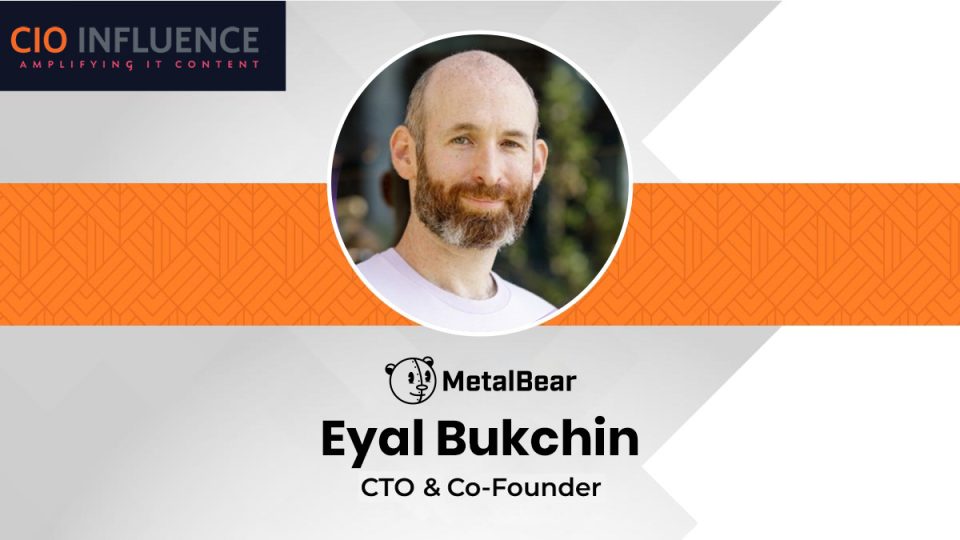
Eyal Bukchin, CTO and co-founder of MetalBear chats about the trends impacting software development workflows and how AI will influence the future of DevOps in this chat with CIO Influence.
____________
Hi Eyal, tell us about your SaaS journey so far?
My career in tech started as one of the first engineers at Simplee, a US healthcare startup in the pre-Docker, pre-Kubernetes era. Since then, I’ve worked across several startups, moved into leadership roles, and most recently before starting MetalBear I led the platform group at BioCatch, a fraud prevention company running large-scale Python microservices on Kubernetes. So I’ve had the opportunity to experience cloud development across industries, architectures, technologies, and organizational roles.
What inspired MetalBear?
At all companies I worked at, the cloud SDLC was a major source of frustration for developers, but especially so at my last role. Because the company serves many different customers, in different countries and with different patterns of fraud, production configuration is incredibly complex and impossible to replicate locally. This chasm between the cloud and local environment always translates into a slow, fragile development process riddled with downtime, and after living with it for so long, MetalBear (and mirrord, our main product) was my opportunity to finally fix it – by bridging the gap between local and remote.
Also Read: CIO Influence Interview with Gera Dorfman, Chief Product Officer at Orca
What should modern CIOs and CISO’s do to improve engineering velocity with the aim of maintaining speed and quality output?
Examine the speed and quality of your developers’ feedback loop. It’s important not to optimize for one over the other. It’s easy to fall into the trap of a fast, low quality feedback loop (for example by letting developers test on personal, shallow cloud environments [which also happens to be prohibitively expensive]), but what you’re really doing is adding production into the feedback loop.
What’s changing in typical development lifecycles today given the increased use of AI in this field?
The bottleneck has always been integration – how do I run my code in the context of the larger architecture – but with AI it’s becoming more pronounced. It’s incredibly easy to generate untested code now, and the more of it you have the more tempted you are to cut corners on testing. Additionally, this effect is hard to measure because we don’t have benchmarks. The way developers work is changing so drastically that historical values for e.g. DORA metrics don’t mean anything anymore, or even the metrics themselves.
How can modern CIOs ensure a healthy balance between AI powered code and the human developer connection?
No one really knows how to define or quantify the benefits of AI for engineering organizations, but everyone’s gut feeling is that it is beneficial. So in my opinion go nuts with AI – if your organization doesn’t adopt it across the board, you’ll be left behind. But – make sure you have a reliable way to measure high level KPIs, track them vigilantly, and iterate on the process.
A few thoughts on the future of software development and engineering before we wrap up?
This question has never been harder to answer. My feeling is that in the short-term AI will eliminate mostly busywork, making the role of a software engineer much more pure and creative. I don’t think we’ll see a long-term reduction in the workforce – instead we’ll have a huge increase in throughput, letting us solve harder and more important problems.
Five quick takeaways you’d share with every CIO and CISO?
- Embrace remote work, don’t miss out on the global talent pool
- Do you really need a SaaS? On-prem does wonders for the enterprise sales cycle
- Be very deliberate about removing barriers – let your engineering org connect as directly as possible with the customer. It improves ownership and motivation.
- Audit internal processes for workarounds, and fix the process so a workaround isn’t necessary
- Fast, high-quality feedback loops are the core of dev productivity.
Catch more CIO Insights: Identity is the New Perimeter: The Rise of ITDR
[To share your insights with us, please write to psen@itechseries.com ]
MetalBear is a cloud-native tech company known for its open-source developer tool, mirrord, which helps developers debug local code in remote Kubernetes environments, improving productivity.
Eyal Bukchin, is CTO and co-founder of MetalBear