

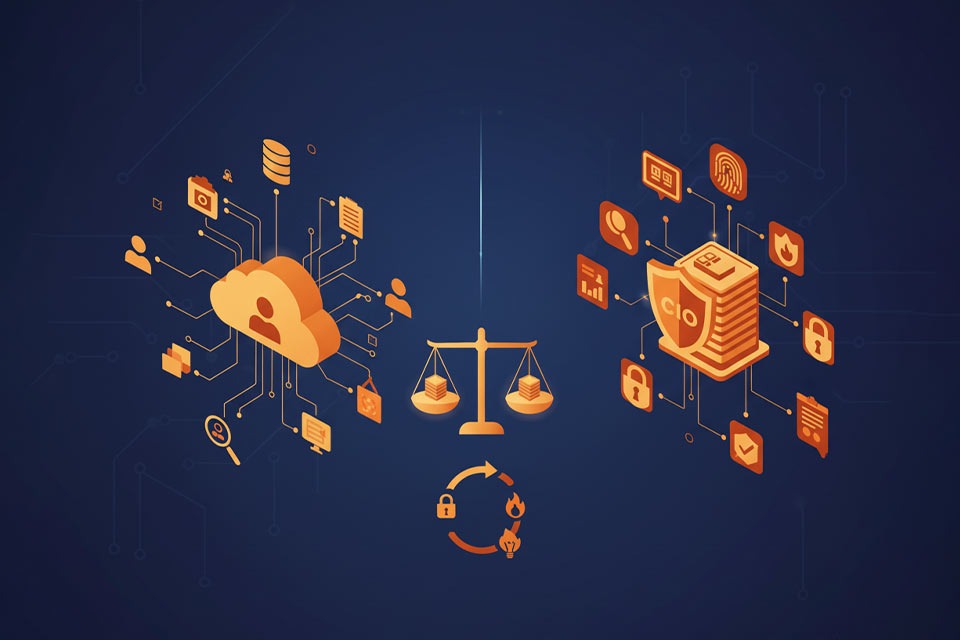
Data is no longer just for IT in today’s highly connected business. Every department, from marketing and finance to operations and HR, needs quick access to insights based on data. Thanks to cloud platforms, self-service analytics, and democratized data tools, the age of “data for all” has begun. These solutions promise flexibility and empowerment for everyone in a company. But this new independence also brings with it problems. The problem is making sure that making data available to everyone doesn’t harm its integrity, accuracy, or compliance.
Self-service analytics has changed the way firms work by letting employees at all levels ask questions about data, see patterns, and make choices more quickly. But this ease of access also brings new dangers. Without sufficient supervision, teams can misread datasets, do the same work twice, or develop models that break rules without meaning to. Data silos can come back in decentralized systems, when multiple departments use datasets that aren’t always full or consistent. This is when leadership becomes very important, and the CIO takes on a new role: not as a gatekeeper but as a strategic enabler.
The modern CIO is at a point where they can choose between innovation and control. In the past, IT departments were thought of as people who took care of infrastructure and enforced strict regulations about who could access data. The CIO needs to reassess this way of doing things today.
They shouldn’t prohibit access; instead, they should make it safe by building frameworks. The job has changed from saying “no” to making sure that when the company says “yes,” it does it smartly. The CIO is now both an architect and a guardian. They create systems that make data easy to get to, understand, and act on, all while keeping security and compliance in mind.
Giving everyone free access to every dataset is not what true data democracy is about. It means making freedom organized, which is a compromise between giving people authority and keeping order. This strategy lets employees use data with confidence because they know it’s correct and where it came from. They know what they’re looking at, where it comes from, and how to use it. This structure doesn’t stop creativity; it guides it. The CIO makes sure that discipline keeps innovation in check and that curiosity doesn’t get ahead of compliance.
In the end, data democracy is not a free-for-all; it is a planned evolution. The modern CIO is that guiding force. They make sure that data stays a source of truth instead of confusion as it moves around the company. In this new way of doing things, governance and flexibility can work together. Freedom is not the lack of control; it is the existence of intelligent design.
In short, data for everyone still needs to be controlled by a few people. These people, led by a visionary CIO, will decide how well businesses use information in the next ten years.
Also Read: CIO Influence Interview with Jim Dolce, CEO of Lookout
Governance Without Gatekeeping – Rethinking Traditional Control Models
In today’s fast-paced digital world, data drives every choice, from long-term planning to everyday tasks. But traditional ways of managing data, which rely on strict hierarchies and human approvals, can’t keep up anymore. These systems are meant to be stable and easy to use, but they often cause problems and slow things down. Teams have to wait too long to get access, data is stuck in silos, and new ideas come to a halt.
The modern CIO knows that flexibility and following the rules must go hand in hand. It is no longer possible for governance to mean constraint. Instead, it has to become a framework that silently protects security and integrity while giving people the freedom to utilize data.
-
The CIO’s Role: Architect of Trust and Freedom
The CIO is no longer a gatekeeper; they are instead a designer of trust. The goal is to make governance a part of systems such that it is seamless, automatic, and easy to use. This change lets companies keep an eye on things and stay in control without making decisions take longer.
Unified data taxonomies are the first step in building this framework. This means that all departments use the same naming standards and definitions. When everyone uses the same “data language,” there is less confusion and more cooperation. This, along with good metadata management, makes sure that every piece of data can be traced back to where it came from and how it changed, which protects integrity and transparency.
-
Automation: The Engine of Invisible Governance
Automation is the foundation of governance without gatekeeping. Rather than manually enforcing policies or granting access, the CIO deploys intelligent systems that manage permissions and data flows dynamically.
Automated data catalogs and access control systems can evaluate who needs what — and grant access accordingly, based on sensitivity, role, or context. AI-driven monitoring tools flag anomalies in real time, providing proactive oversight. This approach turns governance from a reactive, manual task into an ongoing, invisible process that scales effortlessly across teams and geographies.
For example, a CIO in a multinational corporation might use policy-based automation to ensure that sensitive financial data remains accessible only to authorized analysts — while allowing marketing teams to work freely with aggregated insights. The process is seamless, but the guardrails remain firm.
-
Collaboration Across the Enterprise
Effective governance demands collaboration between IT, compliance, and business leaders. The CIO must champion cross-functional alignment where all parties share responsibility for data integrity and use.
Governance councils, regular audits, and stewardship programs help bridge gaps between departments. Compliance ensures adherence to regulations like GDPR or HIPAA, while business units focus on practical outcomes. Together, these groups co-create policies that make sense both technically and operationally.
For instance, an insurance company’s CIO might coordinate with risk, legal, and operations teams to create automated rules for customer data handling — ensuring regulatory compliance without manual intervention.
-
Invisible Governance: Control Without Friction
The ultimate ambition for the CIO is “invisible governance” — a system so well-designed that it protects users without interrupting them. Teams access the data they need when they need it, unaware of the complex compliance machinery operating underneath.
In a retail context, marketing teams can analyze customer trends without ever touching personally identifiable data. In banking, predictive models can run safely within sandboxes that prevent exposure of sensitive information. These safeguards are built into the infrastructure itself, not layered on afterward.
Key Takeaway: Freedom Within Structure
The CIO’s challenge is to balance empowerment and protection — creating a system where innovation thrives safely. Governance must be proactive, intelligent, and embedded — not enforced from the top down.
By adopting invisible governance, organizations gain the best of both worlds: agility and accountability. The CIO ensures that while data flows freely across teams, it always does so within a framework of integrity, compliance, and trust.
In this new paradigm, governance doesn’t restrain; it accelerates. It’s not about control for control’s sake — it’s about designing freedom responsibly.
In this age of digital speed, the job of the CIO has changed a lot from just managing infrastructure and making sure it stays up. The modern CIO is now in charge of finding the right balance between freedom and responsibility across data systems, technological platforms, and organizational decision-making. This change in thinking isn’t about having control just for the sake of having control; it’s about making sure that new ideas can grow in a safe environment.
Designing Freedom Responsibly
Businesses today work in an environment that is always changing, from what regulators demand to the threats of cyberattacks to how quickly they can make decisions. In this environment, the CIO must support governance that gives people more power instead of less.
Responsible design begins with recognizing that each additional layer of freedom—be it data access, app integration, or automation—presents potential vulnerabilities. The CIO’s job is to build technologies that let people be flexible while still keeping the guardrails in place.
The solution is deliberate architecture, which means building privacy, compliance, and ethical AI concerns right into the design of data and workflows. The CIO turns governance from a problem into a way to help the business by accomplishing this. It’s about giving frameworks some wiggle room so that new ideas can grow within clearly defined limits.
A Fortune 500 CIO says, “Designing freedom responsibly means finding the right balance between autonomy and oversight.” “We’re not limiting creativity; we’re organizing it so that it can grow safely.”
Organizations may confidently pursue digital transformation with this mentality, knowing that speed, compliance, and accountability can all work together.
-
From Control to Collaboration
For a long time, IT departments were considered as gatekeepers who controlled who could get to data, who could approve things, and who could follow standards. But the modern CIO knows that control and collaboration must now go hand in hand. People that build bridges instead of bottlenecks will lead the way in the future.
The CIO doesn’t limit access; instead, they set rules that make it safe to participate. Data catalogs, controlled sandboxes, and permission-based sharing models are some of the ways that keep things in order without getting in the way of new ideas.
In this type of collaboration, the CIO goes from being an enforcer to an enabler, a strategic partner who makes sure that technology governance is in line with business goals. This change is very important for businesses that need to be quick and flexible to stay ahead of the competition.
Another global CIO who spearheaded her company’s analytics modernization says, “Control should no longer mean saying no; it should mean saying yes, but safely.” “Our governance model gives teams the freedom to act on their own within limits that keep the business safe.”
When you look at it this way, accountable control provides the basis for trusted collaboration, which is when IT and business teams work together to produce value.
-
Empowering Teams Through Self-Service Analytics
One of the CIO’s most important jobs in this transition is to make self-service analytics possible. Data democracy hinges on making data easy to get to, so that business teams can get insights without having to wait for IT to step in.
When done right, self-service analytics helps people make decisions faster and with more information, all while keeping data accuracy, compliance, and governance. In this concept, the CIO’s job is to build the environment where democracy and discipline can live together.
How the CIO Becomes the Enabler?
Put money on BI and visualization technologies that are easy to use: Modern analytics tools let people who aren’t tech-savvy easily access data while keeping it safe and consistent. The CIO ensures that these tools work together smoothly across departments and data sources.
Make programs to teach people how to read and write data and give them new skills: A self-service ecosystem only works well when teams know how to use and understand information in a responsible way. The CIO is in charge of this change in culture by making sure that everyone is comfortable with data.
Encourage a culture of experimentation based on reliable datasets. Freedom without a solid base leads to chaos. The CIO makes safe experimentation possible by collecting validated, high-quality data that leads to new ideas and insights.
When these things are in place, teams work faster and smarter, which makes them more flexible without losing their sense of responsibility. The CIO makes sure that all analyses support the organization’s larger strategic goals by keeping an eye on and aligning the whole data environment.
Real-World Impact: What Self-Service Looks Like
Across industries, top companies are changing the rules around who owns data. In retail, frontline managers employ controlled self-service dashboards to make sure that inventory is always at its best. Relationship managers in banks can get all the information they need about a client without having to go via IT. In healthcare, professionals get operational intelligence while still following data privacy rules.
These instances show that the CIO’s new measure of success is not how tightly systems are managed, but how freely they may be given. Each effort emphasizes the notion that government and empowerment are not antagonistic but collaborative forces in advancement.
The Future of the CIO Office
The CIO will be seen as a driver of corporate empowerment in the next ten years. The balance between control and creativity will become ever more important as AI, automation, and hybrid cloud models grow. The CIO who plans freedom in a responsible way will be the one who lets new ideas happen without making any sacrifices.
The CIO’s job is no longer only about technology; it’s also about trust. Believe in people, systems, and data. And when freedom is framed responsibly, trust grows.
By following this mindset, the CIO changes the business from a hierarchy of permissions into an ecosystem of empowered, accountable creativity, where every team can work quickly, confidently, and safely.
The Modern CIO’s Moral Compass: Finding Their Way Through the Gray Areas of Data Democracy
As companies move toward data democratization, the CIO is no longer just in charge of technology; they are also in charge of making sure that digital integrity is maintained. In a time when information is easy to get and analytics guide every choice, the problem isn’t just getting to it; it’s being responsible for it. The CIO has to find a balance between encouraging new ideas and making sure that freedom doesn’t hurt justice, privacy, or trust.
Data is now the most valuable thing a business has, but it is also one of the most sensitive. Wider access leads to more efficiency and innovation, but it also increases hazards like algorithmic bias, data misuse, security breaches, and decision-making systems that aren’t clear. This is where the CIO comes in, not as a gatekeeper, but as a protector of ethics and compliance in the era of intelligence.
The Growing Ethical Landscape of Data
Data democratization has made analytics available to everyone, from marketers and product teams to HR leaders and even front-line workers. But with more access comes more accountability. Every question, dashboard, or AI-generated insight has moral consequences. Who has the rights to the data? How did you get it? Does it support bias or exclusion?
The CIO is the only person who can answer these questions. They are in charge of the systems, rules, and people that decide how data is used. But their influence needs to go beyond just technology now. It needs to include ethics, governance, and the effects on people.
In today’s business world, ethical leadership is no longer a choice; it’s a must-have for success. The CIO needs to make sure that the company’s data operations are both legal and ethical.
The CIO as Ethical Steward
As digital ecosystems change, the CIO has become the company’s moral and operational compass, making sure that giving people authority doesn’t mean losing integrity. This job goes much beyond just keeping systems safe. It means making rules about how to use AI ethically, reduce bias, and use data responsibly.
-
Leading the way in ethical AI and reducing bias
The data that powers AI-driven analytics and machine learning models is the only thing that makes them fair. A dataset that is biased can cause recruiting practices that are unfair, credit scoring that is wrong, or customer experiences that are not equal. The CIO must lead the way in finding and reducing bias at all stages of the data lifecycle, from gathering the data to training and deploying the model.
This means making rules for how different types of data can be used, using tools to find bias, and setting up ethical review committees to look at new algorithms. The CIO makes sure that automation is fair, open, and responsible by building fairness checks into the technical fabric.
-
Making sure that everyone follows the rules
The rules are always changing, from the GDPR in Europe to the CCPA in California and new rules in Asia and the Middle East. The CIO needs to make sure that compliance is the same in all areas while also making sure that operations are flexible.
This entails building compliance automation into workflows, keeping data trails that can be checked, and making systems that respect user consent and the idea of just collecting the data that is necessary. The CIO turns compliance from a problem into a competitive edge by showing that they can be trusted in a digital marketplace that is becoming more and more skeptical.
-
Making Explainability and Transparency a Part of Everything
Because of their complexity, algorithms frequently act like black boxes, making it hard for consumers to comprehend why decisions are made. The CIO needs to lead efforts to make data models clear to both executives and customers.
Explainability makes people trust both the results and the method. The CIO makes sure that technology supports people, not the other way around, by requiring clear documentation, easy-to-understand reporting, and model interpretability.
Finding a balance between power and honesty
Data democracy promises that it will provide every team access to insights and let them respond quickly. But if you don’t have discipline, democracy can lead to chaos. The CIO is in charge of defining “responsible freedom” in this case.
The CIO makes sure that empowerment is based on principles and not left to chance by using frameworks for access control, permission management, and ethical data use. They let teams try new things safely while protecting the company’s moral and legal standing.
The most forward-thinking companies are the ones where the CIO makes ethics a part of the culture, not just a list of rules to follow. At all levels, training programs, AI ethical playbooks, and cross-functional data ethics committees help raise awareness. The upshot is that staff are more empowered and know not only how to utilize data, but also why it should be used properly.
The Future of Ethical Data Leadership
As AI becomes more common and automation affects how decisions are made, the CIO’s moral leadership will become ever more important. People will measure the CIO of the future not by how much data they have access to, but by how well they manage its usage.
The next step is proactive governance, where the CIO sees ethical problems coming before they turn into public disasters. This includes building prediction frameworks for compliance, simulating bias scenarios, and using AI to look for strange patterns in decision-making.
The CIO also needs to work closely with Chief Risk Officers, Chief Privacy Officers, and data scientists to come up with a single ethical governance plan. They may make sure that new technologies fit with both societal values and the goals of the business.
-
Insight: The CIO is the moral compass of the business
The CIO is at the crossroads of advancement and protection in the quest for data-driven agility. They allow innovation to happen without breaking trust by making sure that ethics and compliance are part of every part of the digital business.
The real strength of data democracy comes from more than just access; it comes from honesty. The CIO, as the company’s moral compass, makes sure that empowerment is always led by what is right.
In a time when every piece of data has both potential and danger, the CIO’s most important job will be to make sure that freedom is never separated from accountability and that progress always helps the people it was supposed to help.
The CIO’s Job: Sustaining Innovation While Meeting Regulatory Demands
In today’s digital economy, which is very connected, innovation and regulation are always at odds with one another. Companies are always under pressure to change, try new things, and use new technologies at extraordinary speeds. But every year, the rules about AI ethics, data privacy, and cybersecurity become harder to understand. The CIO is in charge of making sure that creativity can grow without breaking any rules.
The modern business sees the CIO as more than just an IT guardian; they are also a strategic link between freedom and control. Their job is obvious but hard: they need to make progress while keeping trust, encourage innovation while staying accountable, and be flexible without losing integrity.
Finding a Balance Between New Ideas and Rules – The Constant Push and Pull Between Freedom and Control
Innovation depends on trying new things, being free to test, change, and occasionally fail. On the other hand, regulation requires discipline, supervision, and record-keeping. The CIO must find a way to balance these two opposed forces. Innovation stops when there is too much control. Not enough, and compliance concerns turn into fines, damage to your reputation, or loss of customer trust.
The rules and regulations that govern us now are changing quickly. Laws like GDPR, CCPA, and the new AI governance acts that are coming up make it very clear who is responsible for collecting, processing, and sharing data. At the same time, competition pushes businesses to use predictive analytics, AI models, and real-time personalization, all of which rely on large volumes of sensitive data.
In this situation, the CIO designs a dual system that lets innovation thrive while still following the rules.
CIO Leadership: Building the Bridge Between Innovation and Compliance
The CIO’s job isn’t just to manage the infrastructure; it’s also to create solutions that strike a balance between opportunity and obligation. This needs both cultural impact and technological foresight. The following tactics show how a CIO who thinks forward keeps this balance.
-
Make governance and risk monitoring automatic
You can’t rely on manual checks and audits for modern compliance. The CIO needs to make automation a part of the data lifecycle. Advanced technologies for risk monitoring, audit trails, and anomaly detection can keep an eye on data activity all the time, identify any problems, and record proof of compliance in real time.
Innovation teams may focus on trying new things without worrying about breaking the rules by making governance an automated process. Automation is like a safety net and an accelerator at the same time; it keeps the organization safe while speeding things up.
-
Translate Regulation into Actionable Policy
Rules and regulations are hard to understand and often use legal or policy language. The CIO is like a translator, turning vague rules into clear instructions that tech and business teams can follow.
This requires working closely with the legal, compliance, and risk management teams to set clear rules for how to handle data. These rules should cover who can access what, how long data is kept, how AI models are trained, and what audit logs must be kept.
So, the CIO makes sure that compliance is built into daily tasks instead of being an afterthought in the bureaucracy. By including these rules in the architecture of the system, the CIO makes it possible for innovation that is naturally compliant.
-
Encourage Controlled Innovation Through Sandboxes
The sandbox environment is one of the best ways to find a balance between innovation and regulation. It is a safe, separate testing area where teams may try out new models, data sources, or apps without affecting live systems.
The CIO can set up “innovation sandboxes” containing fake data sets, anonymous records, or fake user behavior to test ideas in a safe way. This method not only lowers risk, but it also speeds up the process of getting compliance sign-off for successful pilots.
The CIO shows that creativity doesn’t have to suffer because of compliance; it can thrive within it by encouraging innovation within set limits.
-
Collaborate Across Disciplines for Holistic Oversight
One department is not in charge of both innovation and regulation. The CIO needs to get IT, legal, data science, and business leaders to work together.
Regular governance councils, joint compliance assessments, and collaborative AI ethics boards help make sure that every new idea fits with both the rules and the values of the firm. The CIO is in charge of these collaborations. They do this by making sure everyone uses the same language and that everyone is on the same page about one thing: innovation must be responsible by design.
The CIO as the Keeper of Trust and Agility
In the digital age, trust is real money. Without it, new ideas don’t make sense. The CIO is very important for keeping this trust alive. They establish the systems that make sure regulators, consumers, and partners all know that progress is based on responsibility.
The CIO shows that agility and compliance can work together by leveraging automation to improve supervision, sandboxes to encourage experimentation, and collaboration to bring stakeholders together. Their leadership shows that governance doesn’t have to be a roadblock; it can help innovation happen more quickly, safely, and intelligently.
Companies that are ahead of the curve know that the CIO’s worth isn’t just in their technical skills; it’s also in their ability to create an ethical and compliant culture of innovation. They make sure that organizations never outrun their responsibilities as they try to get things done faster.
Honest Innovation
The conflict between innovation and regulation is not something that needs to be fixed; it is something that needs to be mastered. The CIO is at the center of this balance, acting as both an innovator and a guardian, as well as a facilitator and an enforcer.
As CIO, you protect not only data and technologies, but also the trust that is the basis of all digital relationships. They show that the future of IT leadership is in being able to combine creativity with following the rules and ambition with being responsible.
Last thought: In a world where things are always changing and people are paying more attention, the successful CIO is the one who keeps innovation alive—not by breaking the rules, but by finding new ways for freedom and responsibility to work together.
Final thoughts
The CIO is both a facilitator and a protector in a time when there is a lot of data and every team and department wants to be allowed to make their own decisions and analyze data. The modern business no longer works well with centralized control; instead, it works better with distributed intelligence.
The CIO’s job is to make sure that this distribution is secure, strategic, and long-lasting. This dichotomy is what defines the modern leadership role: giving the business the power to act with data-driven certainty while making sure that governance, security, and compliance never fail.
At its root, data democracy is about finding a balance between giving people power and holding them accountable. The dangers of bias, misinterpretation, and exposure increase when all employees use data. But limiting access makes it harder to be flexible and come up with new ideas. So, the CIO needs to design systems and cultures that allow for independence within clear limits—frameworks that stimulate discovery while yet holding people accountable. It’s not about putting limits on people; it’s about making sure that every process includes responsibility so that gaining insight never comes at the cost of honesty.
The CIO’s job is more than just technology. It is about being in charge of how data is handled, understood, and used throughout the company. The CIO makes sure that generating insights is both quick and accurate by connecting self-service analytics with uniform data governance standards. Every query, dashboard, and model must meet the company’s standards for accuracy, security, and moral use. By doing this, the CIO changes governance from a way to react to problems to a way to build trust and openness.
The CIO must also promote a culture of literacy and awareness. Data democracy can’t happen without comprehension. The CIO helps employees not only get to data but also understand it appropriately, responsibly, and ethically by putting money into training, upskilling, and communication. The result is a business that doesn’t just use data; it values it.
The CIO’s job is to lead without limiting, and to give power without losing control. In the future, businesses will need leaders who know that governance and innovation are not opposites but work well together. They will also need leaders who know that agility works best when it is based on integrity.
A good CIO makes sure that data flows freely, but only within a framework that keeps the business and its employees safe.
Catch more CIO Insights: The Password Paradox: Why Human Psychology Makes Us Our Own Worst Enemy
[To share your insights with us, please write to psen@itechseries.com ]
