

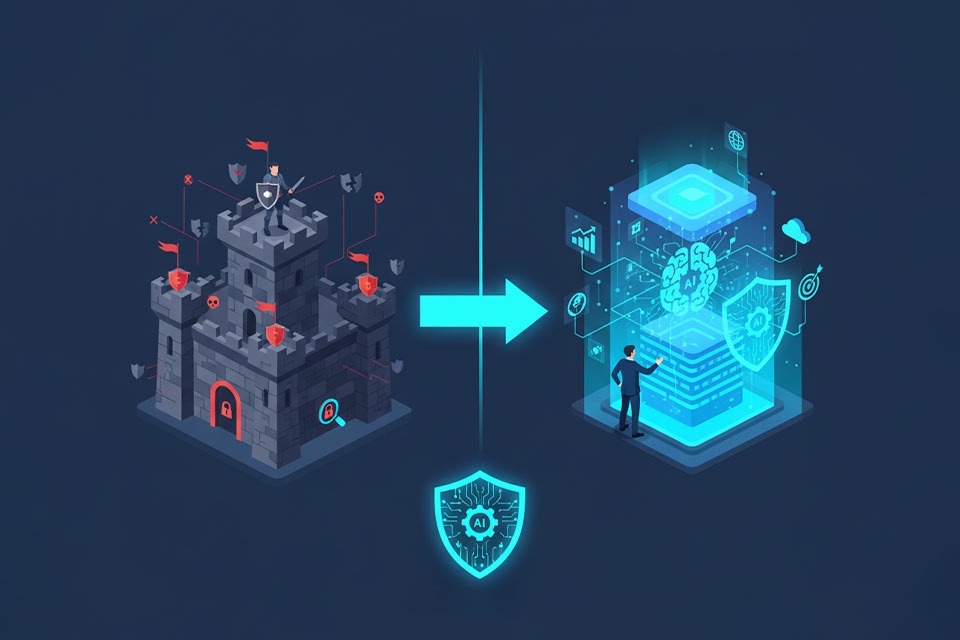
More than 60% of Chief Information Security Officers (CISOs) at Fortune 500 businesses reported to the board at least once every three months in 2024. This is twice as often as it was five years earlier. The modern CISO is becoming more and more important in determining business risk, strategy, and digital innovation. They used to be just a number in technical reports and breach logs. It’s a huge change that marks the beginning of a much bigger one: the rise of CISO 2.0.
The CISO’s main job for years was to protect the perimeter. Firewalls, antivirus software, intrusion detection systems, and the old saying “keep the bad guys out” were all part of their toolkit. Mean time to detect (MTTD) and mean time to resolve (MTTR) were two of the measures used to quantify success. It was rare for the board to be aware of anything, and when they were, it was typically because of a breach or failing to follow the rules. The role was meant to be reactive, always one occurrence away from being looked at.
But the situation has changed for good. Cybersecurity isn’t just the job of the IT department anymore. It runs through every area of the business, from how workers work together from afar to how customers use the products and how AI models are made. As generative AI, automation, and cloud-native technologies become more important to businesses, the security risks have grown in both number and severity.
You can see this most clearly in how companies are using AI. Companies are utilising machine learning to make customer journeys more personal, guess market trends, make decisions automatically, and make operations run more smoothly. But these benefits also come with additional hazards, such as model partiality, hallucinations, data leaks, and not following the rules. Who is in charge of the algorithms? Who makes sure that training data is safe and that privacy rules are followed? More and more, the answer is the CISO.
Today’s CISO can’t just be a technological sentinel who only looks at one thing. The dangers of the AI age aren’t simply outside of us; they’re built within the system and often aren’t seen until it’s too late. The modern CISO needs to be able to see into the future, understand the subtleties of the business, and deal with the supply chain risks that third-party AI tools bring. They also need to be able to think ahead about how generative AI could be used in phishing or impersonation attacks.
Welcome to the age of the CISO 2.0, a leader with many skills who combines technical expertise with strategic power. This new role is not only about defence; it’s also about governance, resilience, and enabling. The CISO 2.0 gives advice on how to utilise AI in an ethical way, works with legal and compliance on data governance, teams up with HR to teach employees how to use AI responsibly, and works with marketing to make sure that digital campaigns that leverage customer data are safe. In a lot of cases, they’re helping to create the products and services the firm offers, making sure that security is built in and not added on.
This change isn’t just something you want; it’s something you need. As hackers get smarter and the attack surface grows at an alarming rate, businesses need CISOs who can talk about risk, strategy, and growth. People who only fix systems and respond to alerts will quickly find themselves on the sidelines. But those who become strategic consultants and builders of safe digital ecosystems will not only keep the business safe; they will also help it move forward.
Also Read: CIO Influence Interview with Liav Caspi, Co-Founder & CTO at Legit Security
Welcome to the time of the strategic CISO. Governance is now the front line, not firewalls.
From Gatekeeper to Governance Architect
For a long time, the CISO (Chief Information Security Officer) worked behind the scenes of enterprise IT. People mostly knew him or her as the person in charge of firewalls, compliance checklists, and incident response methods. The job was tactical, reactive, and often separate from the bigger picture of the firm. But this strategy is not just out of date in today’s world of AI-first, cloud-native, and data-saturated environments; it’s also a risk.
-
The Old Model: CISO as Technical Gatekeeper
In the past, the CISO was like a digital security guard at the edge, keeping an eye on threats, fixing holes in security, and making sure that all the rules were followed. This version of the CISO was mostly in charge of keeping infrastructure safe through Security Operations Centres (SOCs), using encryption, checking for malware, and overseeing audits.
This model was quite essential, yet it had several built-in problems. It saw security as an add-on feature that was often added late in the process of designing a product or coming up with new ideas. Many companies thought of security as the “Department of No” since it was slow, inflexible, and not in line with being flexible and trying new things. This view not only cut off security teams from each other, but it also made it harder for them to have an impact on strategic decisions early on.
As SaaS, remote workforces, and AI integration across departments became more common, perimeter-focused security became essentially useless. Data is everywhere in today’s business, users are everywhere, and risks are no longer beyond the firewall; they are now part of the architecture of innovation itself.
-
The New Model: CISO as Cross-Functional Enabler
In response, a new vision of the CISO has emerged—one that steps out of the server room and into the boardroom. This next-gen CISO doesn’t just protect infrastructure; they shape the frameworks through which innovation occurs. No longer just the enforcer, the CISO becomes the enabler.
This evolved CISO works with people from other departments, like legal, marketing, engineering, and data science, to set the rules for safe and moral innovation. They don’t just point out problems; they also help come up with remedies. This change is very important in the age of generative AI.
For example, in a corporation that uses AI, the data used to train models must be clean, legal, and free of prejudice. It’s not only a technological issue; it’s also a moral and reputational one. The CISO is becoming more and more responsible for this data, making sure that integrity is incorporated into pipelines from the start.
The CISO helps set rules for data minimisation, access control, and model explainability in this function. They help legal teams understand how regulations affect them and work with data scientists to make sure that privacy is built into the development of algorithms. Some organisations even want CISOs to help write the company’s internal AI codes of conduct.
From Blocking to Empowering Secure Innovation
The CISO who designs governance is not against innovation; they are what makes it happen. This is probably the most extreme change. The CISO now gets involved early on, which helps establish secure-by-design architecture instead of slowing down projects with late-stage security reviews. CISOs make it easier for new ideas to be safe by making reusable privacy layers, compliance frameworks, and standardised protocols.
One good example is DevSecOps, which combines security with the development process. In this case, the CISO becomes a supporter of automation, working with engineering teams to add security testing to CI/CD pipelines and giving developers the tools they need to design secure systems from the bottom up.
The CISO’s position in AI governance is even more critical. As companies use chatbots, autonomous agents, and machine learning to talk to customers, the requirement for supervision goes through the roof. Who checks these systems for bias? Who keeps an eye on attacks from the other side? Who gets to decide whether to retrain a model that has gone off course? More and more, the solution points to the CISO.
A Strategic Role for a Strategic Age
This new CISO isn’t just in charge of risk; they’re also in charge of making the business less complicated. As AI and digital technologies change everything from how customers interact with businesses to how goods are delivered, everyone needs to be concerned about governance. The CISO is at this crossroads, able to speak both the language of risk and the language of opportunity.
Not only do boards want their security leader to know about encryption methods, but they also want them to know about geopolitics, data sovereignty, ethical AI, and cyber insurance. In a lot of companies, the CISO is the only executive who can see all of these connections and has the authority to make them happen.
In the end, the change of the CISO from a technical gatekeeper to a governance architect shows a bigger change: security is no longer a side issue. It is what makes digital trust possible. And in a time when every business is a software company and every product has built-in intelligence, trust is not an option. It’s part of a plan.
The CISO’s New Mandate in the AI-First Enterprise
AI is no longer only a separate project in research and development labs or data science teams. It now affects every part of a modern business, from predictive maintenance in manufacturing to personalised customer experiences in marketing to smart routing in supply chains. This shift to AI-first requires a change in the way security leaders think about their jobs. The CISO is at the heart of that change, and their position has changed.
The CISO used to only be in charge of securing the edges of the network and running threat detection systems. Now, they have a bigger, more important job: making sure that AI is used safely, ethically, and in accordance with the law across the whole company. The CISO is no longer merely a specialist in cybersecurity in this new age. They are now in charge of making rules for how AI should work.
- AI Is Everywhere, and So Are Its Risks
As AI technologies grow more common in business, they bring with them new types of risk that old security methods weren’t made to deal with. Model drift is when AI performance gets worse over time because the input data changes. This can lead to bad decisions that go unnoticed. Training data leaks can let anybody see private information that was used to make AI models. Shadow AI, which is when departments use tools and models without IT’s knowledge, can make the whole organisation more vulnerable.
These are real problems, not just ideas. In the real world, they lead to bad credit checks, biassed recruiting algorithms, wrong demand projections, or even reputational disasters caused by rogue chatbots or unvetted generative content. The CISO must now take these risks into consideration ahead of time, before they become big problems.
- From reactive oversight to AI governance that is proactive
To deal with these AI-related threats, organisations need to change the way they manage their data and algorithms. The CISO‘s new job isn’t just to fix AI security holes; it’s also to create strong AI governance frameworks. These frameworks must say who can use models, how they are trained and evaluated, where the data originates from, and what checks are in place to make sure that everything is fair, accountable, and open.
This includes setting up rules for how AI can be used across departments, creating standards for model validation, and allowing for ongoing monitoring for security breaches or ethical infractions. Security has to be built into AI applications from the start, not added on after.
The CISO‘s role has changed from that of a gatekeeper to that of a strategic enabler. Instead of stopping innovation, the CISO becomes the person in charge of making AI innovation safe, legal, and reliable.
- Cross-Functional Leadership Is No Longer Optional
The CISO needs to stop working only on security and start being a cross-functional leader in order to do this job well. That entails working closely with the CHRO, CIO, CTO, and CDO, and more and more with the CHRO. Each of these jobs deals with a distinct part of how AI is used, such as data infrastructure, software engineering, employee experience, and automating the workforce.
These leaders must work together to make sure that AI is not only effective, but also safe, ethical, and in line with the company’s values. The CISO adds the important points of risk, resilience, and following the rules to these talks.
As AI becomes more common in HR tasks like resume screening bots, workforce analytics, and productivity monitoring, it’s important to cooperate with the CHRO. These solutions can swiftly break privacy laws or make employees angry if there aren’t any security and governance guardrails in place.
The CISO must also collaborate with the CDO to make sure that the data pipelines that feed AI models are not only safe, but also open to inspection and free of bias. They need to work with the CTO and CIO to make sure that AI development environments and APIs are protected from threats and misuse.
A Mandate That Sets the Future of Trust
In the end, the CISO’s bigger job in the AI-first business is about trust. In a world where algorithms make more and more decisions, it’s really important to keep faith in those systems. Customers need to be sure that their information is being utilised in a responsible way. Regulators need to be sure that the company is following the rules. Employees also need to believe that AI will add to their worth at work, not take it away.
Companies that make secure AI a part of their DNA will be able to move faster, react more quickly, and design operations that can handle more stress in the future. But they won’t get there by chance. They’ll get there because their CISO was ready to do more than just protect the business; he or she was also ready to lead it into the future.
Collaborating Across the C-Suite: How the CISO Shapes Enterprise Resilience
The modern CISO doesn’t just work in server rooms or on SOC dashboards anymore. The CISO is stepping into a new limelight in an age where data, trust, and technology are the keys to competitive advantage. This spotlight requires the C-suite to work together across departments.
The CISO is now responsible for making sure that all parts of the business are on the same page when it comes to risk and resilience, from talking about cyber insurance with the CFO to AI governance with the CMO and CHRO.
This change isn’t just needed; it’s been needed for a long time. Digital transformation, AI use, and regulatory pressure are all speeding up at the same time, so the business can no longer rely on compartmentalised security thinking. Business risk is cyber risk. The CISO is the best person to make that obvious, actionable, and in line with other leadership roles.
- The CISO and CFO: Putting a Number on Cyber Risk
The CFO has always been in charge of predicting the company’s finances and keeping an eye on operational expenditures. But because data breaches, ransomware, and AI-related failures may hurt a company’s brand and cost it money in fines, the CISO and CFO need to work together more strategically.
They need to figure out how much money they could lose if something goes wrong with their computers. This shared lens helps people make better choices about cyber insurance, putting money into AI defence systems, and planning for how to respond to a breach. Now, the danger of model failure, delusion, or hostile manipulation in AI must be looked at with the same level of financial care as supply chain problems or changes in currency value.
A smart CISO doesn’t only beg for more money; they also help the CFO realise why some security investments lower risk instead of raising costs.
- The CISO + CMO: Guarding the Frontlines of Customer Trust
The line between innovation and invasion gets very thin as marketing teams use hyper-personalization, generative AI, and data-driven targeting more and more. The CISO and CMO need to work together to stay on the right side of that queue.
Protecting consumer data privacy is a minefield for both reputation and the law. The CMO requires the CISO‘s help with how to safely and responsibly acquire, store, and use data, whether it’s to make sure GDPR compliance or to handle opt-out preferences in AI-generated ads.
At the same time, generative AI technologies used to interact with customers, including auto-generated emails and chatbot scripts, need to be watched for security. These systems can have prompt injection, content manipulation, or data leaks that happen by accident. A collaborative approach gives marketing the freedom to come up with new ideas without making the news for the next data breach.
- The CISO and CHRO: Making Sure Employees Have a Good Experience
Employees are the driving force behind any business, but they can also be a weakness. The CISO and CHRO need to work together to find a balance between new ideas and keeping the company safe.
As AI technologies like performance monitoring, recruitment filters, and productivity analytics make the work experience better for employees, it’s important to make sure those tools are safe. In a hybrid work environment where BYOD rules, remote access, and shadow IT are common, insider risks, whether they are planned or not, are much worse.
The CISO needs to work with HR to protect endpoints, set up access rules, and make sure that AI’s use of employee data is clear. Also, they should help with digital literacy training by teaching employees how to use AI safely and how to spot social engineering concerns.
It’s not enough to just stop bad people; you have to provide every employee the tools they need to be a security ally.
- The CEO/Board and CISO: Making Security Part of Business Strategy
The CISO needs to build a strong relationship with the CEO and the board, which may be the most crucial one. Cybersecurity is no longer just an IT problem; it’s a top priority for the board. Security problems, such ransomware attacks and AI governance scandals, can quickly hurt shareholder value and public trust.
The CISO needs to describe technological threats in terms of how they could affect operations, growth, and brand equity, not just what could go wrong. This includes showing how to use scenario modelling, breach simulations, and ROI analysis to find ways to stop problems before they happen.
More and more, boards are asking about resilience, not simply compliance. If an AI model fails badly, is the business ready to keep running? Is the way you handle consumer data strong enough to stand up to legal examination in more than one place? Only a CISO who has been in the job for a long time can answer these questions.
Today’s organisation doesn’t need a security gatekeeper; it needs a cross-functional navigator who knows as much about firewalls as it does about business levers. The CISO makes sure that security is a shared responsibility, not just a last-minute checklist, by being involved in every leadership meeting, from financial planning to brand development. In this age of AI, hybrid work, and more complicated digital systems, companies that do well will be those where the CISO works well with others and thinks beyond the box.
AI-Powered Security: The Double-Edged Sword That Every CISO Must Use
Artificial intelligence is changing cybersecurity by making it easier for defenders to protect themselves and giving attackers a potent new weapon. In this high-stakes change, the CISO is no longer only in charge of security infrastructure; they are now also in charge of how AI is used, managed, and protected.
The ability of machine learning to see risks in real time, automate actions, and learn from new attack patterns is a huge step forward for business security. But the same capability may cause problems on an unparalleled scale and speed when it is used by bad people.
This is the strange thing about AI in security: It is both a shield and a sword. And the CISO is in charge of making sure it doesn’t turn on the person who uses it.
- The Smart Guardian: Defensive AI
The most important use of AI in cybersecurity right now is for defensive AI. Machine learning tools can now look through billions of data in real time to find anomalies, identify strange behaviours, and connect unrelated events. AI-powered Security Information and Event Management (SIEM) systems can find possible breaches far faster than people can.
Threat detection has gone from using signatures to using behavior-based anomaly detection. AI can find a bad login from an unknown place or flag strange file access patterns without having to wait for threat feeds to be updated. AI also makes reaction automation possible by cutting off compromised endpoints, cancelling credentials, or creating clean environments—all without waiting for human approval.
In a world where speed is important and attack surfaces are growing, these features are quite important. The CISO must now push for AI to be used not only as a new technology, but as a standard feature of any security architecture that can stand up to attacks.
- Offensive AI: A Dangerous New Arsenal
AI helps defences move faster, but it also makes attackers move faster. There is no longer any doubt that offensive AI exists. We can already see how generative AI is being used to make hyper-personalized phishing campaigns, deepfakes that seem like real executives, and synthetic identities that look shockingly real.
The growth of large language models (LLMs) has opened up new ways for hackers to attack. For example, quick injection attacks can change how AI works, while LLM manipulation can taint training data or force models to reveal sensitive information.
In this situation, the CISO needs to think like both a defender and an attacker. Understanding how AI might be misused, like to automate social engineering, hide malware, or mimic the behaviour of trustworthy users, is becoming a key element of the security mandate.
And here’s the thing: these threats are always changing and learning. Every time an AI-powered enemy fails, they get stronger. Defenders also need to change quickly, like machines.
New Responsibilities for the CISO
As AI becomes more common in the business world, from chatbots for customer service to self-driving supply lines, the CISO will have to take on new duties.
- Safe Model Deployment
Any company that uses LLMs or AI agents needs to make sure that these models are safely hosted and properly sandboxed. This includes defining limits on who can see training datasets, making sure models can’t see prompts that aren’t allowed, and setting authorisation restrictions.
- Adversarial Testing
The CISO needs to approach AI models like any other piece of software that might be used for bad things. Regular adversarial testing is needed to mimic assaults, check how well the system responds, and find out if it is vulnerable to prompt injection, delusion, or data leaking.
- Keeping records and being able to check them
The CISO may need to set up mechanisms for strong logging of AI activities as a top priority. What data did the model get? What outputs were made? Did AI have an effect on decisions? This kind of traceability is very important for both internal accountability and following the rules, especially in industries like finance and healthcare.
This is especially essential because AI is being used more and more to make important business decisions like hiring, credit rating, and fraud detection. Without comprehensive logs and audit trails, businesses could face legal problems and damage to their brand.
The Governance Layer: Where Strategy and Action Come Together
The CISO isn’t the only one fighting this battle, but they are the most important. To make sure that enterprise AI is not just powerful but also manageable, security teams need to work with AI/ML teams, compliance officers, and legal departments. That entails making clear rules about where and how AI can be used, keeping track of all the models that are in use, and defining limits on what kinds of use cases are acceptable.
Also, security measures need to be built into AI-native systems from the start, not added after. A lot of the tools we have now aren’t good in checking or controlling LLM outputs or making sure that only certain people can access models. The CISO needs to urge vendors and partners to make AI systems that are easier to understand and explain, and that can be audited and regulated just like any other IT asset.
The Double-Edged Sword Must Be Mastered
AI gives us a new level of protection and a new level of danger. In this case, the CISO needs to stop thinking about firewalls and start thinking of themselves as real AI governance architects. They need to think about not only how AI will be attacked, but also how it will attack the business from the inside through bad logic, biassed data, or unforeseen results.
The CISO’s success will depend not only on using smarter technologies, but also on making smarter plans that include clear rules for how AI should be used, strict discipline for how it should be used, and constant, precise monitoring. In a time when algorithms make it hard to tell the difference between a defence and an attacker, the CISO is the last person who is responsible.
Culture Change: Taking Charge of the Change from Within
It’s not just technologies and workflows that need to change as AI changes the digital world. People’s attitudes, actions, and the culture of the company also need to change. Not only outside attacks are the largest cybersecurity problem for businesses today. Teams stay stuck in old ways of thinking because of internal inertia. The CISO is a key leader in this area, not just as a technical expert but also as a culture leader.
- Human Firewall 2.0: More than Just Phishing Tests
For a long time, security training programs have focused on how to avoid phishing and keep your passwords safe. Those things are still vital, but AI, data protection laws, and digital-first workplaces require something more complex. People who work today need to know how to use AI in an ethical way, how to design for privacy, and what automated decision-making means.
The CISO should be in charge of training everyone on the team, not only IT and security specialists, but also product managers, marketers, HR professionals, and developers. Security can’t just sit in a silo anymore. Everyone now works with technologies that might be used to attack or pose a risk, from classifying data to building prompts.
This change needs more than just compliance checks once a year. It needs interactive learning, contextual instruction, and constant reinforcement. One action at a time, it’s about making the whole business more digitally fluent.
- Security as a Way to Help Business
One of the biggest changes in the last few years is how the CISO’s interaction with new ideas has changed. In the previous way of thinking, security was the “no” team, the group that made things harder to keep risk at bay. But such stance doesn’t work anymore in today’s fast-paced world.
Security executives today need to stop being roadblocks and start being enablers. That doesn’t imply decreasing standards; it means making guardrails that work better. The new question is: how can we enable business and product teams move quickly and safely?
Security needs to be integrated from the outset, whether you’re using generative AI tools, constructing data-driven apps, or looking into new services for customers. This proactive alliance speeds up construction while lowering risk by including protection into the design from the start, not as an afterthought.
In this model, the CISO acts as a translator between risk and return, finding a balance between smart safeguards and business goals. It’s not simply a seat at the audit desk; it’s a seat at the innovation table.
- Change your mindset: from following the rules to managing risk all the time
Another important change is to stop thinking about compliance first and start thinking about risk management that is always changing and adapting. Regulation is needed, but it typically happens after the fact. AI innovation, cyber threats, and digital transformation are all moving too quickly for a static security posture to keep up.
This implies getting rid of static policies and putting in place dynamic frameworks. It means giving teams the power to report problems, ask questions, and change controls without being afraid. And it means that the CISO should encourage openness above perfection by fostering experimentation, learning, and open communication.
It shouldn’t be about punishment; it should be about being strong. Mistakes will happen, but companies that encourage psychological safety, open communication, and shared responsibility will bounce back faster and become stronger. In a business that puts AI first, culture is the first and last line of defense for security. The CISO is no longer just in charge of managing risks; they are also in charge of changing people’s opinions. They don’t only run security; they also lead change from the inside out.
Case Snapshots: CISOs Who Did Things Right
In a time when data breaches are all over the news and AI is changing every part of business, the CISO role has changed a lot. The best security leaders today do more than just enforce firewalls; they also come up with new business strategies, help people innovate, and protect digital ethics.
The following case studies show how a new type of CISO is changing companies from the inside out, getting results while keeping risk under control in the age of AI.
-
Financial Services: From Compliance Enforcer to Strategic Enabler
Name: Eliza Moreno Sector: Banking
Company: NovaBank, EU-based FinTech
When NovaBank released its first AI-powered wealth management platform, worries about following the rules and managing the model almost stopped the launch. Eliza Moreno, the CISO, didn’t just raise the alarm. She worked with data scientists, lawyers, and product leads to develop a framework that was safe by design.
Her team set up automatic audit trails, red-teaming simulations, and AI drift monitoring that happened in real time. What happened? The platform went live six weeks early and passed the compliance review in record time.
Impact:
- AI deployments are approved six times faster
- 22% less fraud when signing up new customers
- $4 million saved on costs that were delayed going to market
Eliza’s job as a cross-functional collaborator made her not only a gatekeeper but also a competitive asset for the organization.
- Healthcare: Putting Security into Patient-Centered AI
Name: Dr. Thomas Lien
Field: Health Care
MedSentry Health Systems is the name of the company.
AI can change the way doctors diagnose patients and get them involved in their care, but it also makes data privacy and ethical use more risky. Dr. Thomas Lien, who used to be a doctor and is now a CISO, observed this early on. When MedSentry tested a generative AI assistant for electronic medical records, he wasn’t just worried about security; he was also worried about trust.
Dr. Lien worked with the CHRO to check for bias, the CMO to make sure the company was following the rules, and the CIO to make safe APIs. He also introduced “AI Ethics Rounds,” which all developers and doctors had to go to.
Impact:
- Cut down on concerns about model bias by 40%
- Better trust in AI tools within the organization (82% of doctors use them)
- Cut down the time it took to investigate patient data breaches from weeks to hours.
Dr. Lien’s dual credibility as a doctor and CISO helped create a culture of responsible AI, showing that security and empathy can—and must—go hand in hand.
- E-Commerce: Making Security a Valuable Part of Your Brand
Name: Maya Kohli
Sector: Retail/E-Commerce
Company: StyleBotix
StyleBotix, a firm that uses AI to suggest clothes, was growing quickly, but so were the ways people could attack it. Their digital footprint was complicated and always changing, from generative content to tracking client behavior. Meet Maya Kohli, a CISO who used to be in charge of products.
Instead of making engineering follow strict rules, Maya put security champions on product teams, added adversarial testing to the design phase, and built a “Data Confidence Dashboard” that customers could see.
Impact:
- 95% fewer abandoned carts because of worries about data privacy
- Response times to incidents are three times faster
- Being on the EU’s list of the Top 50 Ethical Tech Brands
Maya made security a brand differentiator, proving that trust isn’t simply a cost center; it’s also a way to develop.
Lessons Across Industries
The thing that connects these great CISO executives is not a certain set of tools, but a change in how they think. Each one went from “guarding the gates” to “enabling business,” becoming a key part of strategy, operations, and culture.
- They knew that in the AI-first business:
- Security needs to keep up with pace and testing.
- Governance needs to change to keep up with changing models and data.
- And trust, which is built on openness, flexibility, and honesty, is the new currency.
As AI changes the way firms work and come up with new ideas, the future generation of CISOs will seem less like an auditor and more like a diplomat, technologist, and strategist all in one.
Call to Action: Redefine or Risk Irrelevance
The writing is clear. CISOs who solely think about firewalls, encryption, and compliance audits will be left behind. As companies put more emphasis on AI governance, using technology in a responsible way, and risk strategies that involve people from many departments, a CISO who only knows about technology will become less important.
The CISO, on the other hand, needs to lean in. That includes teaching security and business teams how to use AI.
- Putting governance into the creation and use of AI.
- Promoting openness, responsibility, and responsible new ideas.
- Working together with the rest of the C-suite to make sure that security is in line with company strategy.
The CISO who accepts this change will not only survive, but will also be in charge. They will affect how businesses ethically come up with new ideas, how they earn and keep customer trust, and how they deal with the rising overlap of AI, data, and cybersecurity.
Conclusion: The Age of the Strategic CISO
The old playbook for the Chief Information Security Officer (CISO) is no longer useful. The modern CISO has taken on a central, strategic function that goes far beyond firewalls and compliance checklists. This is because artificial intelligence is no longer just a separate experiment; it is now something that helps the whole firm.
The change isn’t just skin-deep; it’s at the core. The CISO of today has to work at the crossroads of security, data ethics, AI governance, innovation, and business resiliency. During this change, the CISO has gone from being a reactive risk manager to becoming an active builder of corporate integrity. It’s not just about keeping the bad guys out; it’s also about helping the organisation move faster, with more trust and confidence, in a world that is changing quickly.
AI risk is no longer just a theory; it’s a fact under this new mandate. Model drift, data leakage, shadow AI, synthetic fraud, and adversarial inputs are no longer just small problems; they are major business dangers that need the attention of the CISO.
The strategic CISO needs to be just as comfortable in the boardroom as they are in the security operations centre (SOC). It’s no longer discretionary to explain complicated cyber threats in a way that makes sense to CEOs, CFOs, and board members. It’s expected. AI is becoming a part of every part of business, from personalised marketing to supply chain logistics.
The CISO must not only protect the technology but also show people how to use it responsibly. This means you need to know a lot about data stewardship, how to use AI ethically, and how new technologies affect the law. That change calls for a new way of leading. The modern CISO shouldn’t just say “no.” Instead, they should ask, “How do we do this safely, on a large scale, and in a way that is right?”
Security is no longer a problem for company; it’s an enabler. AI is no longer a black box; it’s a collaborator. Trust gives you an edge over your competitors. Companies who see security as an add-on are already behind the curve. The businesses that are best prepared for the future build security into their culture, workflows, and design processes from the start. In this case, the CISO is a cultural catalyst who leads security training that includes AI ethics, makes sure that risk evaluation is part of product cycles, and makes sure that governance structures are the same across departments.
This change towards proactive security architecture isn’t simply needed; it’s critical. Because AI is changing so quickly, along with more government oversight and new threats, reactive techniques are no longer enough. If yesterday’s breaches were bad, tomorrow’s breaches, which will be possible because of weaponised generative AI, could be life-threatening.
The role of the strategic CISO is not just about protecting assets; it’s also about making change possible. In a world where AI and digital technology come first, security is the key to long-term innovation. The business that does it well will not only be able to move quickly, but also safely. It will make products that customers can trust, use AI with confidence, and keep going even when things are uncertain. The strategic CISO is the one who starts and ends that trip. The future isn’t going to wait. It’s time to take charge.
Catch more CIO Insights: The CIO as AI Ethics Architect: Building Trust In The Algorithmic Enterprise
[To share your insights with us, please write to psen@itechseries.com ]
