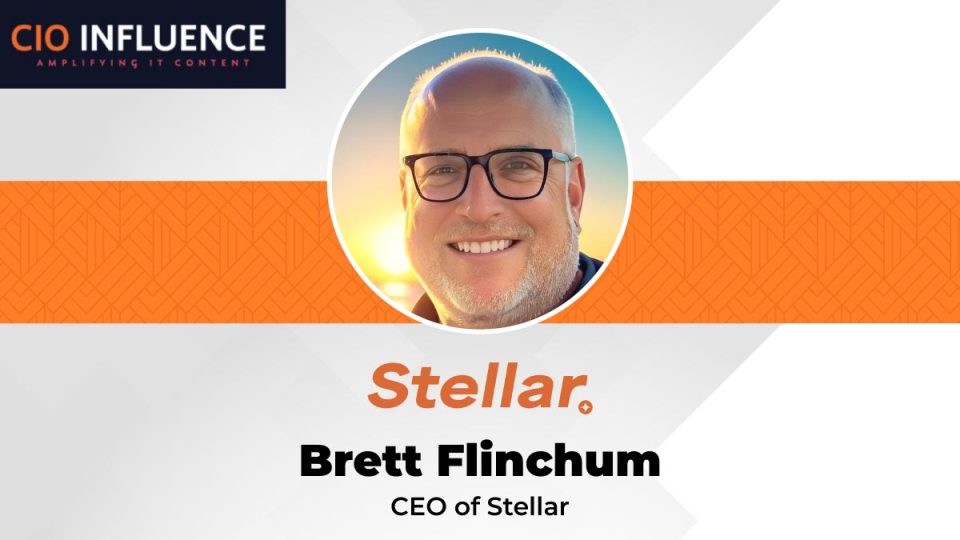
Brett Flinchum, CEO at Stellar chats about Stellar’s latest funding, in-demand AI features and the future of AI in this Q&A:
——–
Tell us more about yourself and Stellar’s journey so far in the AI space
My name is Brett Flinchum and I am the CEO of Stellar. I have had the good fortune to work in the technology arena for over 20 years, most recently leading efforts in AI for clinical trial software and geospatial big data integration for over five years before founding Stellar. Then, when breakthroughs in generative AI capabilities emerged in late 2022 from OpenAI, Anthropic, Meta, and others, I knew AI was going to transform how companies approached their businesses. I joined forces with a team of experts in AI, generative AI, and advanced machine learning to create Stellar to help drive this transformation. It has been one of the most rewarding chapters of my career to make AI accessible to every business.
Many organizations struggle to navigate the complexities of AI, and that’s where we come in—as a trusted partner helping them unlock AI’s transformative potential. At Stellar, we believe AI doesn’t have to be hard. From day one, our mission has been to simplify AI adoption for businesses by bridging the gap between foundational large language models and the tailored solutions businesses need to accelerate growth and optimize costs.
Needless to say, our journey has been remarkable. We recently secured $2.7 million in funding, which is a testament to the trust our clients and investors have in our vision. We started by focusing on industries like healthcare and industrial IoT, where we saw an immediate need for AI-powered operational efficiency and decision-making. Today, we’re proud to be at a pivotal point, delivering scalable, impactful solutions that are driving real results for our clients across multiple industries. It’s been incredible to see how our team’s imagination and dedication have positioned Stellar as a leader in making AI accessible, practical, and impactful.
Also Read: How CIOs Can Take Control of Cloud Costs
We’d love to hear more about Stellar’s latest funding and the immediate roadmap for Stellar
The oversubscription of our $2.7 million seed round reflects strong investor confidence in our vision, aspirations, and ability to execute while delivering value for our customers. This funding enables us to expand our sales and data engineering teams and accelerate the development of solutions that bridge the gap between foundational LLMs and practical, AI-driven applications for businesses.
For example, we recently built tools to enhance SharePoint integration and smart intranet search, helping a client better manage and leverage their internal data. We’re also deploying an AI orchestration platform to empower IT teams with greater control over their AI environments, including privacy, security, and proprietary data management. And, of course, we regularly leverage AI to clean, classify, and organize data, optimizing it for analytics and actionable insights.
Our team spans the globe, with a data engineering hub in Indianapolis, IN, and remote team members across the U.S., India, and Serbia. As we look ahead, our focus remains on delivering innovative solutions that simplify AI adoption and drive meaningful outcomes for our clients.
Can you share a short summary on how you’re observing AI take heavy industries by storm today?
That is a fantastic question, and a fun one to explore. While generative AI is often associated with ChatGPT and B2C chatbots, its impact on business applications is far broader and more profound. That narrow focus sometimes obscures the transformational possibilities for heavy industries like manufacturing, healthcare and financial services.
At Stellar, we’re developing AI-driven applications ranging from emergency response systems for airports and public safety to workflow optimization platforms that integrate with traditional robotic process automation (RPA) capabilities for manufacturing and assembly operations. For the construction industry, we’ve created computer vision applications that analyze job site photos, perform quality checks, and assign error risk scores to completed work. Similarly, for heavy equipment manufacturers, we use AI to ingest product design specifications, refine component tolerances, and align materials and designs with standards and regulations.
These innovations accelerate processes by orders of magnitude while also improving quality. It’s amazing that we’ve progressed from years of effort to improve processes by 10 or 20%, to now innovating to 5, 10 or even 100X productivity improvements in days and weeks. Additionally, AI is revolutionizing customer service by integrating IoT and machine data with unstructured data like notes, photos, and videos, enabling businesses to pinpoint problems—whether due to user error, design flaws, or component failures—and achieve better outcomes in product design, tech support, and customer satisfaction. The possibilities are truly endless.
Also Read: CIO Influence Interview with Stuart Strickland, Wireless Chief Technology Officer, HPE Aruba Networking
What are some of the more in-demand AI features that companies and industries are seeking as of today?
AI opportunities can feel overwhelming, so we encourage companies to start small and focus on areas where AI can deliver measurable impact. Here are three popular applications we’re seeing across industries:
- Creative Content Generation: Businesses are leveraging generative AI to create training materials, marketing content, and interactive assets. For example, AI can ingest internal documents and customer data to produce tailored training materials much faster than traditional methods.
- Hyper-Personalization: AI is revolutionizing customer engagement by enabling personalized marketing campaigns, customized proposals, and targeted lead generation. This not only saves time but increases the precision and effectiveness of outreach efforts.
- Data Optimization: Generative AI is also transforming how companies handle and make sense of large datasets. From cleaning and classifying data to synthesizing insights, AI is helping businesses accelerate decision-making and uncover growth opportunities that were previously buried in disorganized information.
These are just a few ways companies are using AI to stay competitive and unlock new possibilities. As the technology evolves, the applications for AI will only continue to expand.
What about the future of AI most interests you?
There are the commonly discussed use cases, like the power of Artificial General Intelligence (AGI), healthcare breakthroughs, early disease diagnosis, and drug discovery. But what excites me most in the near term is the evolution of “Service as a Software” (SaaS 2.0).
I believe we’re on the cusp of a new era in IT services where businesses will no longer need countless subscriptions and licenses. Instead, they’ll rely on secure, integrated AI platforms tailored to their specific challenges. This vision of SaaS 2.0 includes AI-driven tools that manage inventory, automate customer interactions, and streamline analytics—all from a single, cohesive platform.
The high costs and inefficiencies of traditional SaaS solutions will give way to more flexible, affordable, and impactful AI-powered services. It’s an exciting shift, and I’m thrilled to be part of shaping this future and helping businesses realize its full potential.
A shout-out to some top AI innovators who have piqued your interest of late and why?
I’m consistently impressed by the code-editing applications like GitHub Copilot and Cursor. These tools are fundamentally changing the way software is developed, enabling natural language code generation that makes programming more accessible, even to less technical users. It’s incredible to see how much they accelerate development and innovation in this rapidly evolving space.
I’ve also been following Figure.ai and their groundbreaking work on humanoid robots. Their advancements hold enormous potential for improving safety and efficiency in industrial and warehouse environments. It’s fascinating to think about how robotics could transform these sectors, and I’m eager to see how their innovations continue to unfold.
[To share your insights with us as part of editorial or sponsored content, please write to psen@itechseries.com]
Brett Flinchum is the CEO of Stellar, with over 30 years of Silicon Valley innovation experience, Brett has spent the past decade advancing AI and ML solutions, including accelerating clinical trials, personalizing service experiences, and automating workflows and decision making in financial services, healthcare, and manufacturing.
His unique combination of technical vision and business acumen positions him as a leader in data-driven innovation. Brett holds a B.A. in Economics from Davidson College and an MBA from Duke University’s Fuqua School of Business.
Stellar, is a leading AI services company that believes AI doesn’t have to be hard. Stellar leverages AI, LLMs, machine learning, and data to drive operational excellence, revenue growth, and customer success for mid-market and enterprise businesses.